


Democrats are heading into the final two days of the US midterm elections with a clear national polling lead, but a series of closely fought Senate races could determine which party controls Congress.
The cost-of-living crisis is dominating the closing stages of the campaign, with high prices, tariffs and the US-Israel war on Iran featuring prominently in the parties’ final appeals to voters.
The latest RealClearPolling average puts Democrats on 51.5 per cent, compared with 43.1 per cent for Republicans. A THP/MM survey conducted on October 28 and 29 gave Democrats a 54 per cent to 41 per cent lead, while an Emerson College poll showed a 10-point advantage.
Natalie Jackson, a political analyst and pollster, said the figures reflected dissatisfaction with Donald Trump and the state of the economy.
“Polling shows an environment that is pretty favourable to the Democrats. The president is very unpopular, Americans feel the pinch of high costs, which are partly due to tariffs and the war in Iran, and the general sentiment is that Republicans did not deliver in the last two years,” she said.
Senate races remain difficult to predict
The national picture may not translate directly into individual contests. Senate races in Michigan, Texas, Kansas, Iowa, North Carolina and Alaska are expected to be particularly important in determining control of the chamber.
In Kansas, a Washington Post-Schar School poll put Democrat Adam Hamilton ahead of Republican Senator Roger Marshall by 52 per cent to 43 per cent. An Emerson College survey suggested a closer contest, with Hamilton leading by 50 per cent to 47 per cent.
Doug Heye, a Republican strategist and former communications director for the Republican National Committee, questioned the larger margin in the Washington Post-Schar School poll.
“I don’t know how it plays out, but, you know, we saw an outlier poll in Iowa just two years ago that caused a lot of damage to the whole polling industry,” he said.
Heye was referring to a Des Moines Register poll published shortly before the 2024 presidential election that showed Kamala Harris three points ahead of Trump in Iowa. Trump subsequently won the state by about 13 points.
“A lot of Republicans just don’t want to answer calls from pollsters,” Heye added.
Jackson said that could mean some surveys were underestimating Republican support, although the scale of any polling error would not be known until votes were counted.
Trump and El-Sayed make final campaign appearances
Trump is due to campaign in Iowa and Kansas on Sunday after reversing an earlier decision to cancel both appearances. In Iowa, he will campaign with Republican US Representative Ashley, who is facing Democrat Josh Turek, while in Kansas he is supporting Marshall.
Kansas has not elected a Democrat to the Senate since 1932, but rising farming costs and opposition to Trump’s immigration crackdown have made the race more competitive than expected.
Heye said Trump’s appearances could help demonstrate support for Republican candidates. “They never should have been cancelled to begin with,” he said. “Whether they help or not, they certainly help Trump to show that I’m out there trying to do the things to get my people over the line.”
Abdul El-Sayed, the Democratic Senate candidate in Michigan, is scheduled to hold events in Detroit and Southfield as he campaigns against Republican Mike Rogers. His campaign has made affordability a central issue amid a wave of Islamophobic attacks against him.
Celinda Lake, a Democratic strategist and pollster working with El-Sayed’s campaign, said his message was: “Money out of politics, money in your pockets, and healthcare for all.”
She said the Michigan contest was likely to be decided by turnout, while also acknowledging that voters had concerns about what Democrats would deliver if they took control of Congress.
“The feelings about the Democrats are negative, too, which is very different from, say, 2018, when Democrats were positively perceived,” Lake said.
More than 51 million votes cast early
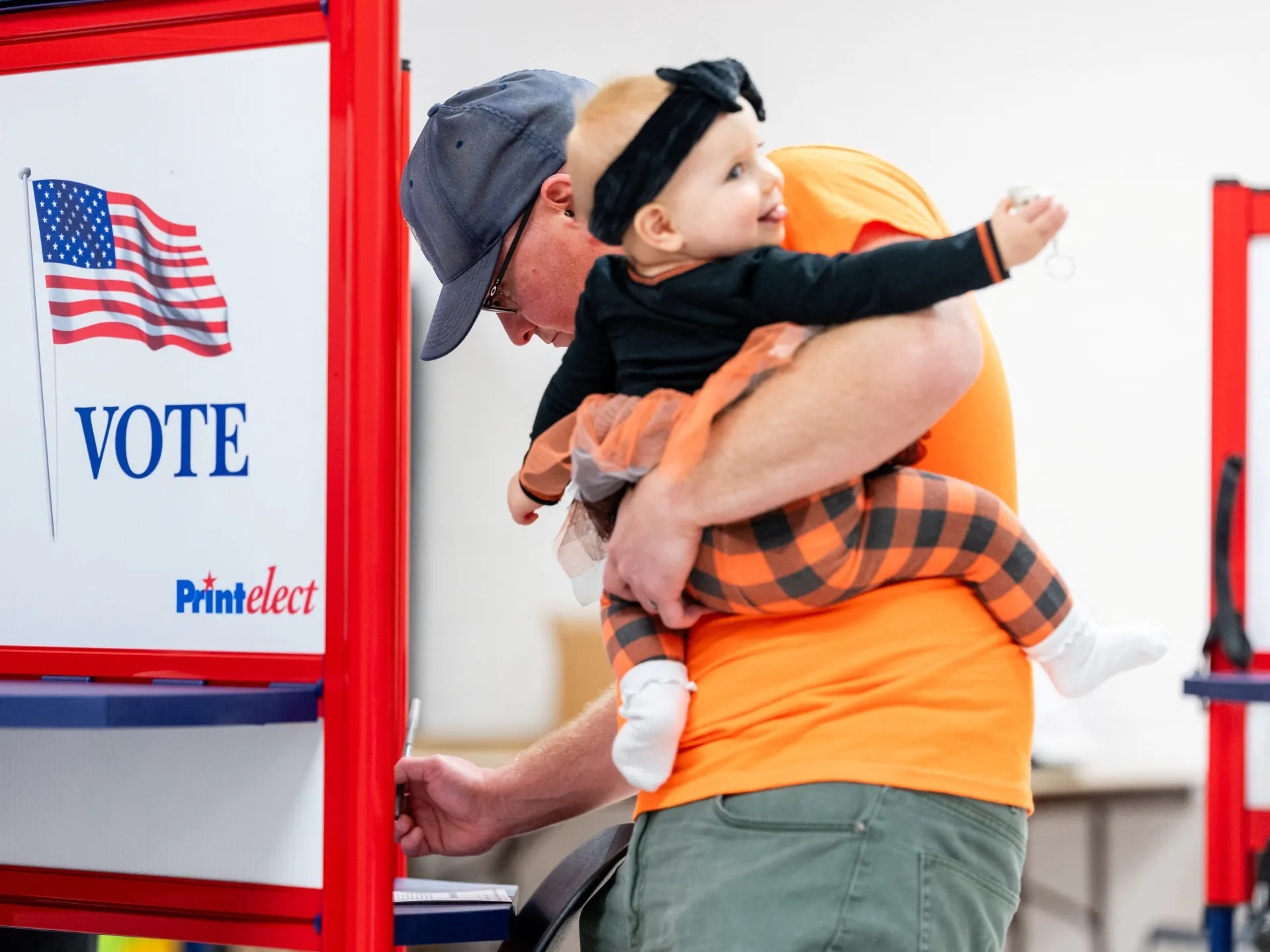
More than 51 million Americans have already voted by mail or through early voting, but the figures do not indicate which party those voters supported.
Lake said turnout among young voters and the gender gap would be important indicators, alongside the question of whether Trump had succeeded in mobilising Republicans and whether Democrats had turned out in record numbers.
Jackson said the national political environment was unlikely to change substantially during the final days, although local developments could still affect individual races.
“It’s unlikely that anything really shifts in the national environment. We could see some local developments in some of these races, but by now things are pretty locked in,” she said.
A total of 435 House seats and 35 Senate seats are being contested. Democrats need a net gain of three House seats and four Senate seats to secure majorities in both chambers.
Jackson said Democrats could be reasonably confident of winning the House majority, but described the Senate as unclear. Heye said Senate contests were more dependent on individual states, campaigns and candidates, making them harder to predict.
Candidates have Sunday and Monday to make their final appeals before polling stations begin closing on Tuesday evening. Early results are expected shortly afterwards, although some of the closest races may take longer to resolve.
