


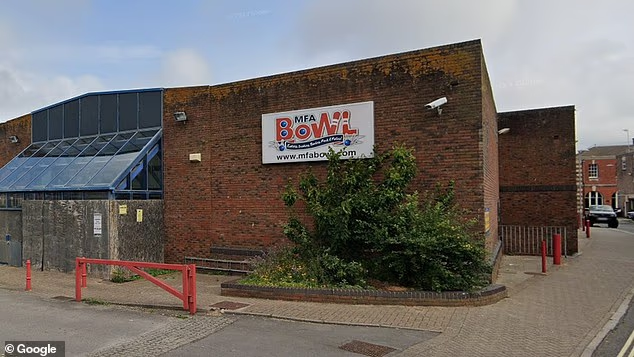
A six-week archaeological dig on the site of a demolished bowling alley in Weymouth is rapidly turning into one of the most significant excavations of the seaside town’s medieval past, with experts uncovering walls, wells and personal artefacts dating back more than 700 years.
The investigation, taking place on the former MFA Bowl site in St Nicholas Street, in the historic Melcombe Regis quarter, has so far brought to light the remains of three 13th-century houses, sections of medieval boundary walls, early cold stores, coins, tiles, pottery and assorted personal effects. According to BBC News, which first reported on the latest stage of the dig, the team is expected to spend a further few weeks on site before the area is paved over to create a temporary car park while Dorset Council weighs up longer-term redevelopment plans.
Senior archaeologist Steve Wallis told the BBC the early returns from the trenches had already exceeded expectations.
“Already, there have been significant discoveries and we can expect more to come,” Mr Wallis said. The next phase of the project will see specialists from the University of Southampton arriving on site in late May to take soil samples that researchers hope will shed new light on one of the most devastating chapters in the town’s history. “These samples will find out what diseases locals of that time had, and include, hopefully, more details about the Black Death,” Mr Wallis added.
The reference is far from incidental. Melcombe Regis carries a particularly grim distinction in British history. According to surviving records, the bubonic plague is believed to have arrived in England through the town’s medieval port in 1348, brought ashore by sailors from Gascony. Within months, the disease had wiped out roughly half the local population and gone on to ravage the rest of the country. Identifying disease markers in the soil could, scientists hope, help piece together how the population of the town lived — and died — during that period.
The current excavation is being carried out by Context One Archaeology on behalf of Dorset Council, building on a much smaller exploratory dig the same firm undertook on the same site in 2022, after the bowling alley was demolished. That earlier work uncovered remains stretching back to the foundation of Melcombe Regis in the late 13th century, alongside the foundations of a Georgian chapel and a Victorian theatre, and demonstrated what experts then described as the “exciting potential” of further work at the location.
This time, the public has been invited to share in the findings. The site was opened up on Saturday for a free open day, drawing local residents keen to see for themselves the layers of history concealed beneath what was, until recently, a popular leisure venue.
Dorset councillor Richard Biggs said the project was as much a community endeavour as a scholarly one. “This dig is about much more than archaeology, it’s about people feeling connected to the place they live,” he said.
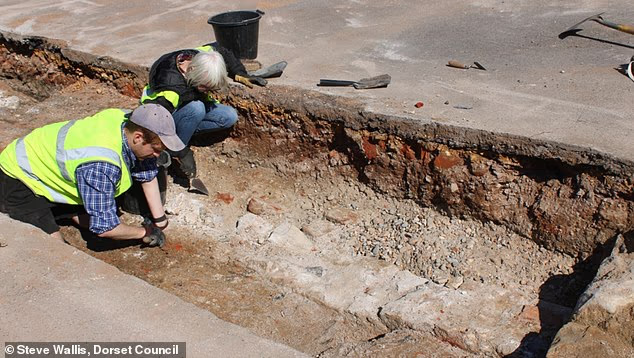
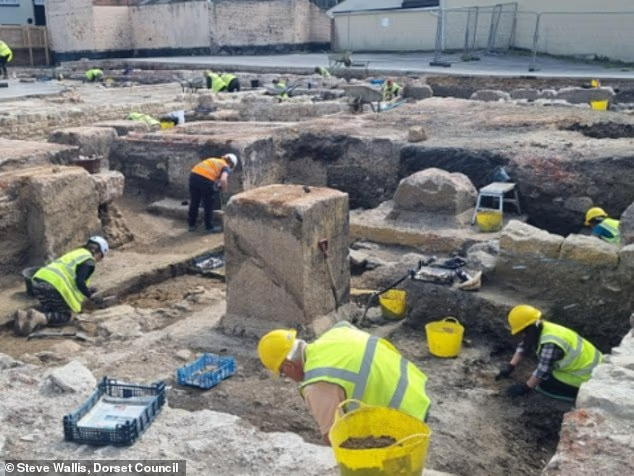
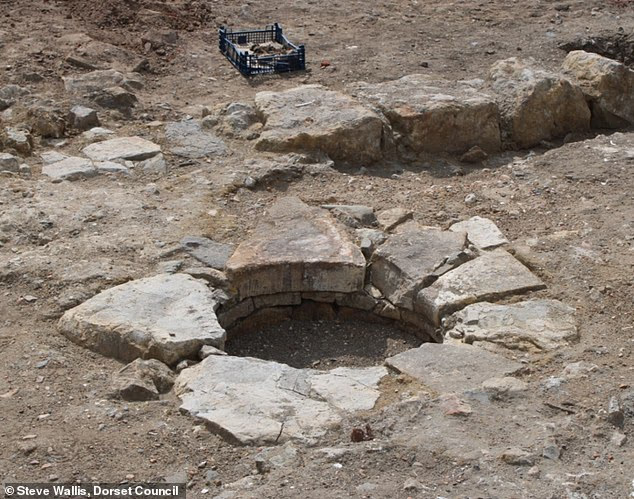
Mr Wallis told the BBC that of all the artefacts recovered so far, his personal favourite was the historic well — described by Mr Wallis as “one of the earliest wells dating back to medieval times.” The wells, he added, were the kind of feature that helped to “bring past lives into focus”.
Melcombe Regis was founded by King Edward I in the 1280s as a planned town. Investigations of its early medieval phase are extraordinarily rare, partly because the area has been continuously redeveloped over the centuries, and partly because urban archaeology offers very few opportunities for excavation on this scale. Richard McConnell, of Context One, has previously described the location as sitting squarely within the “historic medieval core” of the town.
Once the current dig concludes, the recovered artefacts will be removed from the site for cleaning and laboratory analysis. They are expected to go on public display in due course at Dorset Museum in Dorchester, allowing visitors to view objects that lay buried beneath their feet for nearly three-quarters of a millennium.
For now, the trenches at St Nicholas Street offer the rarest of glimpses: a snapshot of life in a 13th-century English port that, only decades after its founding, would become the entry point for the deadliest pandemic the country has ever known.
