


The Trump administration has approved a $2.8 billion arms deal to send 60,000 one-ton bombs to Israel, allowing the country to replenish a stockpile it regards as essential to its military operations.
The agreement is one of the largest arms deals of its kind and is expected to trigger fierce opposition in Congress, amid growing resistance in Washington to military assistance for Israel.
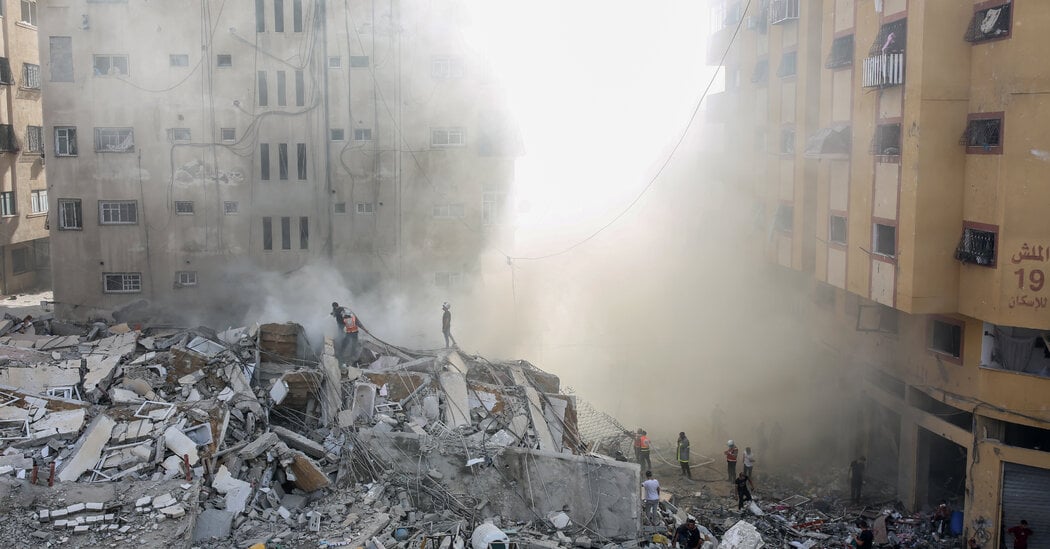
The weapons became a major source of tension between the Biden administration and Israel after similar bombs were used extensively in densely populated areas of Gaza, including locations where civilians had been directed to seek safety.
Analysts said the size of the deal could reflect an effort to build up Israel’s arsenal before political changes in the United States make future deliveries more difficult. The purchase is being financed through the Pentagon’s foreign military sales budget, meaning the money flows from US taxpayers to Israel’s military and then to American arms manufacturers.
What the Israel bomb deal contains
Under the agreement, Israel will receive 20,000 Mk-84 bombs and 20,000 BLU-117 bombs. The two types are both one-ton weapons with similar capabilities.
A further 20,000 I-2000 penetrator warheads are also included. These are designed to break through soil, rock or concrete before exploding, although their heavier casings mean they carry less explosive power than the Mk-84 and BLU-117 bombs.
The weapons can be configured to explode above ground, scattering shrapnel across a wide area, or fitted with delayed fuses for use against underground targets. Guidance kits can also enable them to strike targets more accurately and from a longer range.
US Army procurement officials have described buildings, rail yards and lines of communication as suitable targets for one-ton bombs. The craters they create can be up to 50 feet deep.
Why Israel is seeking one-ton bombs
The Israeli military shifted towards using the largest bombs in its arsenal after the Hamas-led attack on southern Israel on October 7 2023. US government data showed that Israel bought nearly eight times as many one-ton bombs from the United States in 2025 as it had between 2012 and 2015.
Israel has used the weapons extensively against the tunnel network developed by Hamas for fighters, weapons and command centres. Israeli officials have said Hamas deliberately operates among civilians, leaving the military to weigh the risk of civilian deaths when attacking those positions.
The Israeli Air Force has operated across seven theatres in recent years: Gaza, the occupied West Bank, Lebanon, Iran, Syria, Yemen and Iraq. The campaigns have significantly reduced its stocks of munitions.
Amos Yadlin, a retired major general and former deputy air force commander, said Israel’s traditional defence doctrine had been based on short wars, but that the country had been drawn into a prolonged conflict.
“What we saw in the last three years was Israel was dragged — and maybe even with some contributions of Israeli decisions — to a long war,” he said. “And if you’re in a strategy of long wars, you need more ammunition.”
Why the weapons are controversial
One-ton bombs were at the centre of a dispute between Joe Biden and Benjamin Netanyahu in May 2024, when the then US president delayed a shipment of 1,800 bombs in an attempt to deter Israel from attacking Rafah, where many displaced Palestinians were sheltering.
Israel went on to attack and destroy much of Rafah. The Trump White House released the withheld shipment days after Donald Trump took office in 2025.
Israel’s use of the weapons in Gaza has drawn particular scrutiny because bombs of that size are rarely dropped by US forces in densely populated areas. US military officers have said they are unsuitable for urban combat, while American forces have used them sparingly since the Vietnam War.
Israel says the heavy bombs are needed to hit fighters hiding in large buildings and underground tunnels, and that its forces seek to avoid or reduce civilian casualties.
Can Congress stop the sale?
Congressional leaders can register their opposition, but Marco Rubio, the Secretary of State, has emergency powers allowing the administration to proceed.
Mr Rubio used those powers in March to bypass Congress and send Israel $4 billion worth of weaponry, including more than 35,000 bombs of the same types.
Democrats have called for an end to US military aid, and in some cases all aid, to Israel in response to the civilian toll of its campaign in Gaza. Opposition has also grown among some conservatives, including Tucker Carlson, who said the latest delivery could encourage Israel to expand its military operations elsewhere in the region.
The deal also carries a wider message about the US-Israel relationship. Jesse Weinberg, a researcher at the Institute for National Security Studies in Tel Aviv, said Israeli officials and supporters in Washington were seeking to bring forward military assistance because the make-up of a future Congress was uncertain.
“The view at the Kirya, in the prime minister’s office and also among Israel’s supporters on the Hill is that if you want to move things, now is the time,” he said.
