


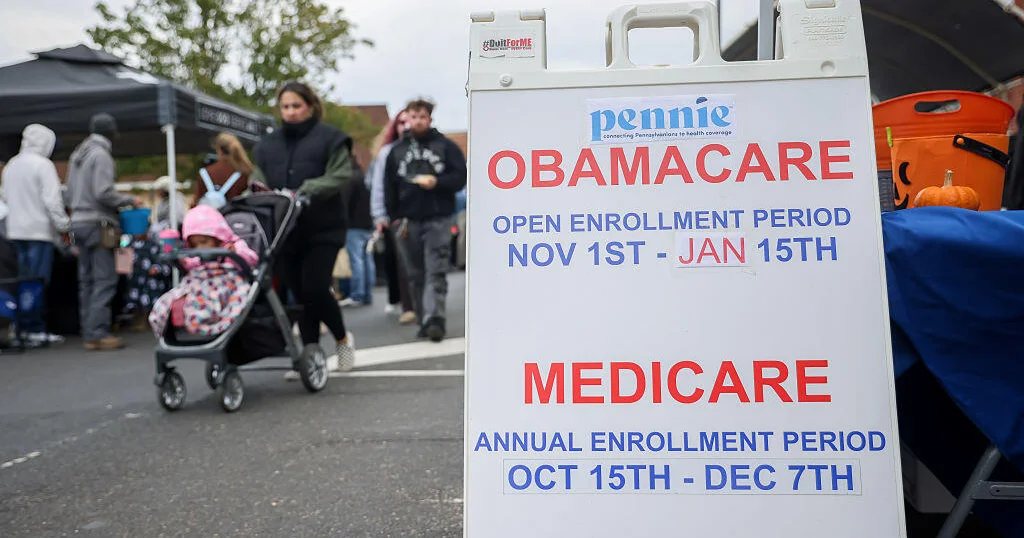
Affordable Care Act open enrollment for 2027 coverage will bring higher premiums, tighter identity checks and fewer brokers for some consumers, while new restrictions are expected to remove subsidies from several groups of lawfully present immigrants.
Open enrollment begins on November 1 in most states, although Idaho, Connecticut and Massachusetts start earlier. Some state-run exchanges have already opened “window shopping”, allowing customers to compare premium rates before choosing a plan.
Overall enrolment is expected to fall again after enhanced subsidies expired at the end of 2025. Policy experts say millions either dropped coverage or lost it during the first months of this year as a result.
The Trump administration has presented the decline as evidence that its efforts to combat fraud are working. In August, it cancelled policies covering 760,000 people suspected of having been improperly enrolled, although a small number have since regained coverage.
New identity checks for some consumers
The most immediate changes will affect people who use agents or brokers to enrol through the federal marketplace, which serves 29 states. State-based exchanges are not covered by the rules and operate their own systems.
Anyone using an agent through the federal marketplace will need a one-time confirmation code or link to authorise that person to enrol them or make changes to their policy. The confirmation will be sent by text message, email or an automated telephone call from the private platform used by the agent.
Customers with outdated contact details will first have to contact the federal marketplace or submit an online application to update their information. People deemed “high-risk” must also prove their identity before authorising an agent.
The category includes first-time applicants, existing policyholders moving to another state, people changing agents and those with monthly premiums of $30 or less. The rules are intended to prevent agents from impersonating consumers or making unauthorised changes.
Joshua Brooker, who runs an insurance agency in Pennsylvania, said the groups may have been selected because “someone who is moving to a new state or switching brokers — that could be a broker trying to impersonate a consumer.”
He said low-cost policies could be particularly vulnerable because customers might not receive a bill. Some rogue agents, he added, pay the small monthly premium themselves while still earning a commission.
High-risk consumers will generally verify their identity through a CMS-approved third party such as Experian. Those who fail the check may need to contact its help desk or apply directly, uploading documents including a driving licence, passport or immigration papers.
Stacey Pogue, a senior research fellow at Georgetown University’s Center on Health Insurance Reforms, said some people could struggle with the process despite being genuine applicants because they lacked a credit file, had moved house or changed their name.
She described the measures as a potentially appropriate response to fraudulent enrolments, but warned that they could also create additional barriers. Brooker said he feared that “up to 1 in 5 consumers is going to have to do extra identity proofing” and that some could abandon the process altogether.
Restrictions on ACA brokers
A separate rule introduced by the Centers for Medicare and Medicaid Services prevents brokers who were not registered with the federal marketplace in 2026 from helping with 2027 enrolments until February at the earliest, after open enrollment has ended.
CMS said newly registered agents accounted for a disproportionate share of significant compliance concerns this year. It has also removed hundreds of agents and brokers it said were not complying with the rules.
Jason Fine, who runs a brokerage in Florida, said the long-term aim made sense but warned of short-term disruption. Smaller firms often reduce their staffing after open enrollment and recruit again towards the end of the year, leaving them with fewer eligible agents available to hire.
Fine said larger call centres could benefit because they can afford to retain teams of 25 or 40 people throughout the year. Agent groups have challenged the policy in court, arguing that it unfairly affects new brokers and the organisations that trained them.
Ronnell Nolan, president of Health Agents for America, said: “Just because you’re a new agent doesn’t mean you are fraudulent.”
Stacey Pogue advised consumers who rely on brokers to arrange appointments early, warning that fewer available agents could mean their schedules fill more quickly.
Premiums and subsidy changes
Price is expected to remain the biggest concern for ACA customers. Most people who buy coverage for 2027 will still receive a subsidy, but it will be less generous than before the enhanced payments expired.
Premiums are expected to rise by about 15 per cent, following an average increase of 26 per cent last year. Insurers have cited higher medical costs, inflation and labour shortages, while also fearing that the loss of subsidies could encourage healthier customers to leave the marketplace.
Subsidies are linked to the cost of the second-lowest-priced silver plan in each area, helping to offset some premium increases. Louise Norris, a health policy analyst, said affordability for many people should remain broadly similar to this year, although that did not mean coverage would be inexpensive.
Support is withdrawn from households earning more than four times the federal poverty rate. For the current open enrollment period, that threshold is $63,840 for a single person, $86,560 for a couple and $109,280 for a family of three.
The maximum amount people can pay towards deductibles, co-payments and coinsurance is also increasing. The limit will rise from $10,600 to $12,000 for an individual and from $21,200 to $24,000 for a family plan, an increase of 13 per cent.
Consumers are being advised not to allow their policies to renew automatically. Premiums, deductibles and other costs can change even where the plan remains the same, while new insurers may offer cheaper alternatives. Several insurers, including Cigna, have reduced or withdrawn coverage in some areas.
Anne Petry, who helps customers buy health insurance in Illinois, said: “There definitely will come a breaking point for people.”
The One Big Beautiful Bill Act has also removed subsidy eligibility for many lawfully present immigrants, including some people with temporary H-1B work visas, refugees, asylees, temporary protected status and pending green-card applications.
Green-card holders, certain Cuban and Haitian immigrants, and citizens of Micronesia, the Marshall Islands and Palau remain eligible for ACA subsidies.
