


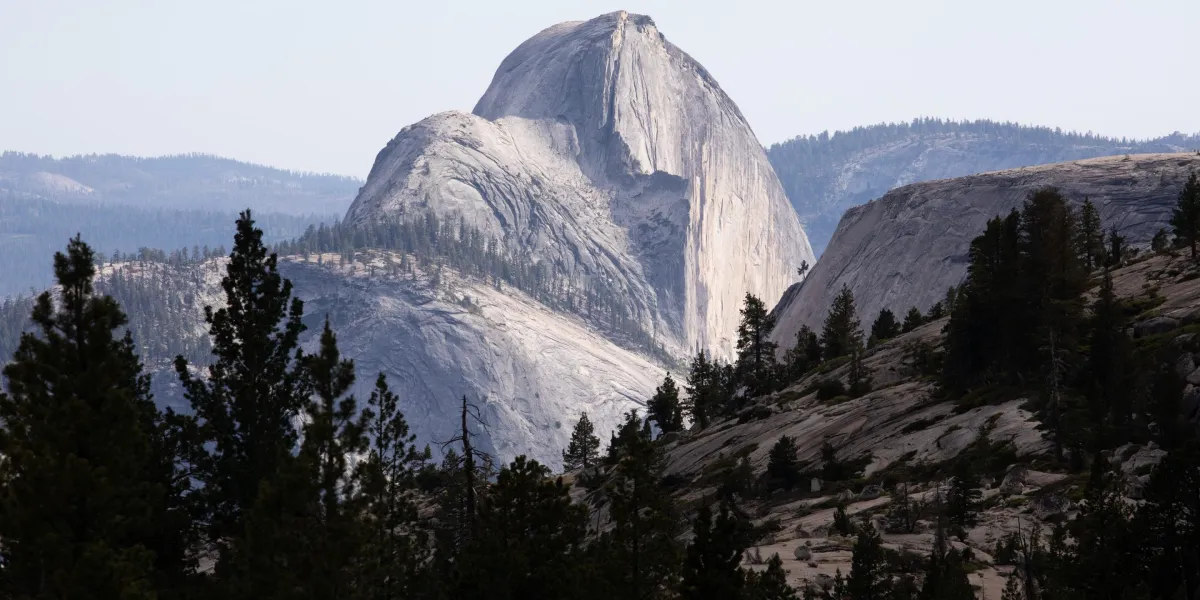
The Trump administration is considering a land swap that could give a private developer access through a small section of Yosemite National Park, allowing it to build a road linking an 83-acre property to one of the park’s main highways.
Kingsbarn Realty Capital is seeking access from its land, historically known as Hazel Green Ranch, to Big Oak Flat Road, which lies a few hundred feet inside Yosemite’s western boundary. The proposed route would cross roughly 700 feet of park land, or about 1.1 acres, according to reports and documents cited by US media.
The Nevada-based company says it has been in discussions with the National Park Service for nearly a year. Rather than buying the federal land, which its representatives say would not be lawful for a private developer, Kingsbarn is pursuing an exchange for land of equivalent value elsewhere in California.
The Department of the Interior, which oversees the National Park Service, said no final decision had been made and denied that officials were under political pressure to approve the proposal.
“Any land exchange or access proposal involving National Park Service lands would be subject to all applicable federal laws, regulations and Departmental policies, including required environmental review and public notification processes,” the department said.
It added that, if the proposal advanced, officials would follow procedures designed to ensure “appropriate coordination, transparency and public involvement consistent with federal law”.
Yosemite land swap would unlock private development
Kingsbarn chief executive Jeff Pori has said the company hopes to develop short-term accommodation on the site, including a lodge and rental cabins. Previous plans for the property included more than 80 cabins, a 150-room hotel and associated parking and amenities, although the company says its own project has not yet been designed.
The proposed access road would replace an existing route of about 11 miles through the Stanislaus National Forest. Kingsbarn argues that the shorter connection would improve safety, reduce traffic on forest roads and ease congestion in Yosemite.
Lanny Davis, the lawyer representing the company, said the road would be built and maintained by Hazel Green at its own expense and would meet federal, state and local standards. He said the arrangement would be in the public interest because it would reduce vehicle journeys on the existing forest route.
Environmental and park-protection groups have rejected that argument. Neal Desai of the National Parks Conservation Association said the proposal would enable a commercial development to profit from access to public land and could bring more visitors and vehicles into an already congested national park.
The National Park Service has previously rejected attempts to secure a similar private road. The property’s former owner took the dispute to court, but judges ruled in 2012 that he had no right to demand a new road through Yosemite when an existing access route was available.
Kingsbarn bought the property in February 2024 for about $4 million through a company linked to the firm. The site was once a stagecoach route into Yosemite during the late 19th and early 20th centuries, before motor vehicles led to the development of alternative entrances.
The proposed exchange would require the park land to be appraised and matched with property of equal value. The Washington Post reported that the project had been included on an administration list sent to congressional appropriators for possible consideration under the Land and Water Conservation Fund, although Congress has not advanced it.
Senator Alex Padilla’s office said it was working with the Senate Appropriations Committee to try to block the plan. The proposal has also prompted criticism from conservationists, local officials and National Park Service employees, who have warned that transferring park land for private development could set a wider precedent.
