


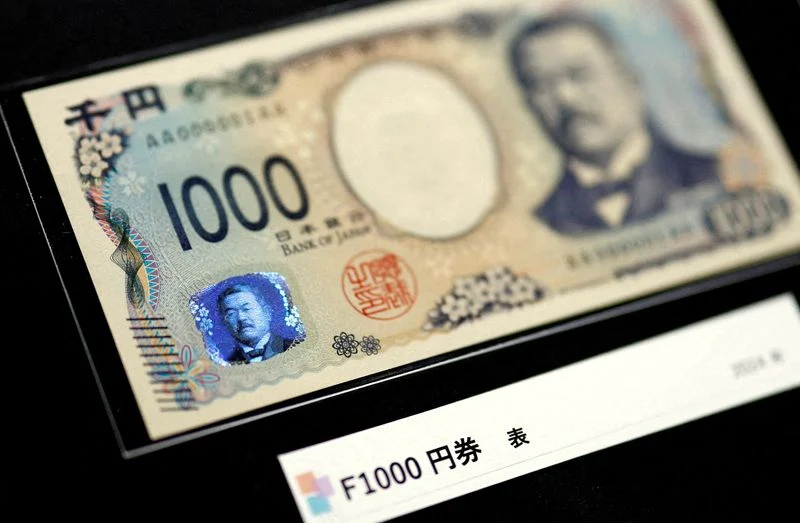
The yen’s sharp recovery from a 40-year low is beginning to unsettle traders who have spent years betting on further weakness in the Japanese currency, as expectations of higher interest rates, changing investment flows and US pressure on Tokyo combine to alter market sentiment.
The currency is on course to gain 2.3% against the dollar this week, its strongest weekly performance since Japan and the United States mounted a rare joint intervention at the end of July.
Six weeks ago, the yen fell to 163.99 against the dollar, its weakest level since 1986. It has since attracted renewed buying, with positioning data from Citigroup indicating that investors have shifted from bearish to bullish bets since the beginning of August.
Interbank flows this week showed leveraged funds, banks and long-term investors all buying the yen, suggesting that the move is broader than a short-lived reaction among currency speculators.
Bank of Japan rate decision in focus
Attention is now turning to the Bank of Japan’s monetary policy meeting on September 17 and 18. Markets are pricing in a strong probability of a 25-basis-point increase in the policy rate, which would take it to 1.25%, while a small but growing number of traders are considering the possibility of a larger rise or a faster sequence of increases.
A 50-basis-point move in September remains widely regarded as unlikely under Governor Kazuo Ueda’s cautious leadership. But comments from board member Hajime Takata, who dissented from the Bank’s decision to leave rates unchanged in July, have encouraged speculation that the pace of tightening could accelerate.
The Bank of Japan’s official schedule confirms that its next policy meeting will take place later this month. Takata’s latest public remarks, delivered in Sapporo on September 2, have added to scrutiny of the central bank’s approach as inflationary pressures persist.
“The market psychology around the yen appears to be changing,” said Rong Ren Goh, a fixed income portfolio manager at Eastspring Investments. He said investors appeared less willing to take aggressive short positions while the prospect of a September rate increase remained on the table.
The yen’s weakness has also drawn increased attention from Washington. US Treasury Secretary Scott Bessent met Mr Ueda on the margins of the G20 Finance Ministers and Central Bank Governors Meeting in Asheville, North Carolina, on August 30.
According to a Treasury readout, Mr Bessent expressed strong support for Japan’s efforts to address what he described as the substantial undervaluation of the yen, while highlighting the contribution of currency weakness to domestic inflation in Japan.
Investors weigh repatriation and carry-trade risks
Higher Japanese government bond yields are encouraging speculation that domestic institutions may begin bringing more money home. Official data showed Japanese investors selling foreign bonds at their fastest pace in four years, raising the prospect of further demand for the yen if overseas assets are liquidated.
The shift could prove significant because Japanese pension funds, insurers and other large investors have traditionally sought higher returns abroad. State Street data indicated that real-money investors’ short positions in the yen were at their highest level in five years, leaving room for a sizeable reversal.
At the same time, a narrower gap between US and Japanese interest rates could weaken the appeal of the so-called carry trade. The strategy involves borrowing cheaply in yen to invest in higher-yielding assets elsewhere, leaving traders exposed if the Japanese currency rises rapidly.
Stephen Jen, chief executive and co-chief investment officer of Eurizon SLJ Asset Management, said the risk of a sudden unwinding of yen-based carry trades was increasing. He compared the build-up of positions to pressure between tectonic plates before an earthquake.
JPMorgan estimates that short positions against the yen have reached about 17 trillion yen, equivalent to roughly 108.7 billion dollars, since Prime Minister Sanae Takaichi took office last October.
The bank’s analysts said a complete unwinding of those positions could push the dollar down to between 142 and 146 yen. Such a move would represent a substantial strengthening of the Japanese currency from its recent lows, although analysts stressed that the timing and scale of any reversal remain uncertain.
