


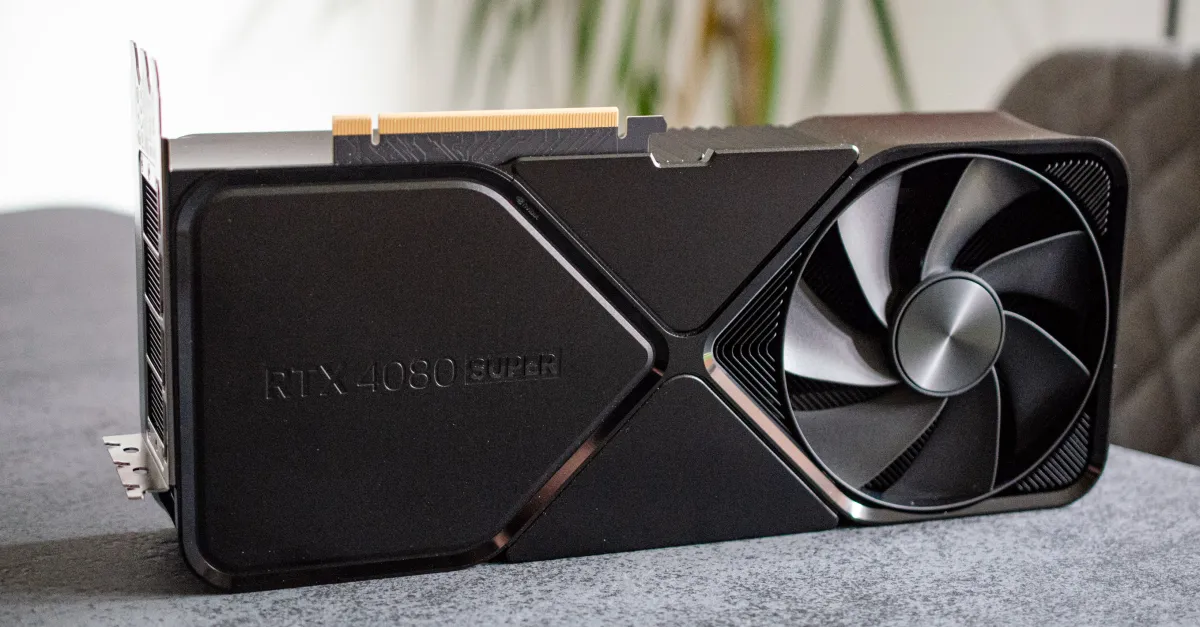
Nvidia has revised its plans for DLSS 5, confirming that the AI rendering technology will eventually support GeForce RTX 40-series graphics cards as well as its latest RTX 50 range.
The announcement follows the unofficial adaptation of a leaked version of DLSS 5 by modders, who have managed to run it on a wider range of Nvidia hardware. The technology had initially been expected to launch first only on RTX 50-series GPUs.
Nvidia spokesperson Rajal Maharaj said the company was concentrating on improving performance on its newest cards before expanding compatibility.
“Our current focus is on optimizing performance for the GeForce RTX 50 Series with model updates expected later this fall. Once RTX 50 Series performance is more fully tuned, we plan to work on expanding official support to the GeForce RTX 40 Series,” Nvidia said.
DLSS 5 controls will remain with game developers
Owners of supported graphics cards will not be given access to the full range of DLSS 5 adjustment settings. Nvidia said the feature would be presented to players as a straightforward on-or-off option.
“For gamers, DLSS 5 is a simple on-or-off toggle,” the company said. More detailed settings, including model selection, Structure Intensity, Tone Intensity, automatic masking and custom per-pixel masking, will be available to developers.
Game makers may choose to expose some of those options through their own menus, as has happened with earlier versions of Nvidia’s upscaling technology. DLSS Super Resolution was originally offered as a simple switch, but many modern games now provide several quality levels.
DLSS 5 is designed to identify elements within a scene automatically, including faces, fabrics and vegetation, and apply different levels of neural processing to them. Developers can also use engine-level masking to target particular assets, such as glassware, water droplets or foliage.
Nvidia said DLSS 5 can be applied across an entire game or limited to specific scenes, cutscenes or sections of gameplay. Its models operate on every frame, meaning the feature does not require a minimum frame rate to function.
An Unreal Engine 5 plug-in is available, alongside software development kits intended to help studios integrate the technology.
Support for older RTX 30-series and RTX 20-series cards has not been confirmed. Asked about those GPUs, Maharaj said Nvidia was taking its expansion “one step at a time”, with the RTX 50 series remaining the immediate priority.
It also remains unclear how many of the games previously associated with DLSS 5 will support the technology at launch. Nvidia declined to reconfirm individual titles, including Assassin’s Creed Shadows, Hogwarts Legacy, Starfield and Resident Evil Requiem.
“More games are on the way. Many developers are actively integrating DLSS 5, and we’ll share updates on upcoming titles as partners finalize their integrations,” the company said.
