


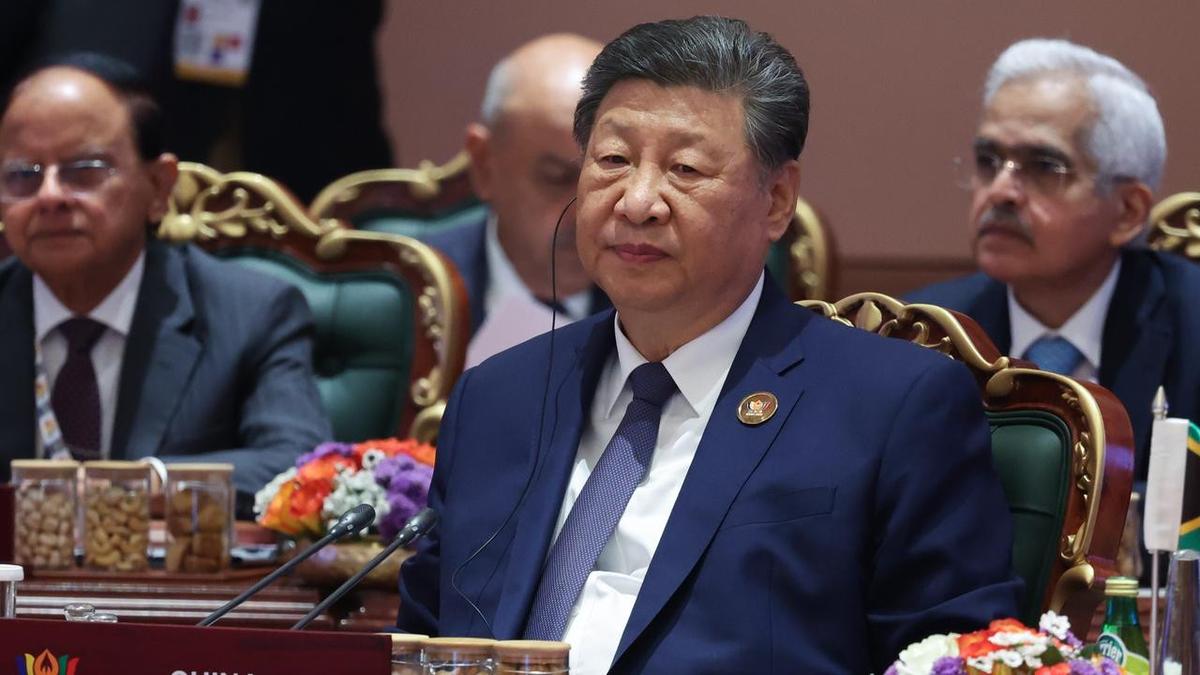
Chinese President Xi Jinping has unveiled a package of measures to deepen BRICS economic co-operation, including plans for an artificial intelligence initiative, a special economic zone partnership and a forum on services trade.
Speaking at the group’s annual summit in New Delhi, Mr Xi said the “Greater BRICS Initiative” could provide a practical platform for development across the Global South, provided its members built a strong foundation for co-operation.
He called on the expanded grouping to protect the stability of industrial and supply chains and develop an integrated market. China will lead the creation of a BRICS AI Open Source Zone, aimed at collaboration on large language models, AI training and an open artificial intelligence ecosystem.
Mr Xi also proposed a BRICS Special Economic Zone partnership and said China would host a BRICS Service Trade Forum in 2027 to strengthen trade and investment links.
BRICS economic co-operation and global influence
BRICS was originally formed by Brazil, Russia, India, China and South Africa two decades ago, with the stated aim of reshaping a world order dominated by the United States. It has since expanded to include Iran, Indonesia, Egypt, Ethiopia and the United Arab Emirates.
Ten further partner countries span Asia, Africa, Latin America and the Middle East. China and Russia sometimes refer to the broader grouping as “Greater BRICS”.
India will chair the organisation in 2026, followed by China in 2027. Co-operation on politics and security, as well as economics and finance, is at the centre of efforts to increase the bloc’s international influence.
Indian Prime Minister Narendra Modi said solutions developed within BRICS should not remain confined to its members, but should be adaptable and accessible to countries across the Global South.
Russian President Vladimir Putin described BRICS as a powerful force for creating a fairer and more multipolar world order, and urged members to combine the competitive strengths of their individual economies.
The summit also produced a joint declaration backed by Iran and the UAE, amid renewed fighting in the Gulf region. The declaration expressed deep concern at the escalation of tensions in the Middle East and called for maximum restraint.
Iranian President Masoud Pezeshkian separately met Abu Dhabi’s Crown Prince on the sidelines of the summit. They discussed de-escalation, stability and efforts to advance regional peace and development.
