


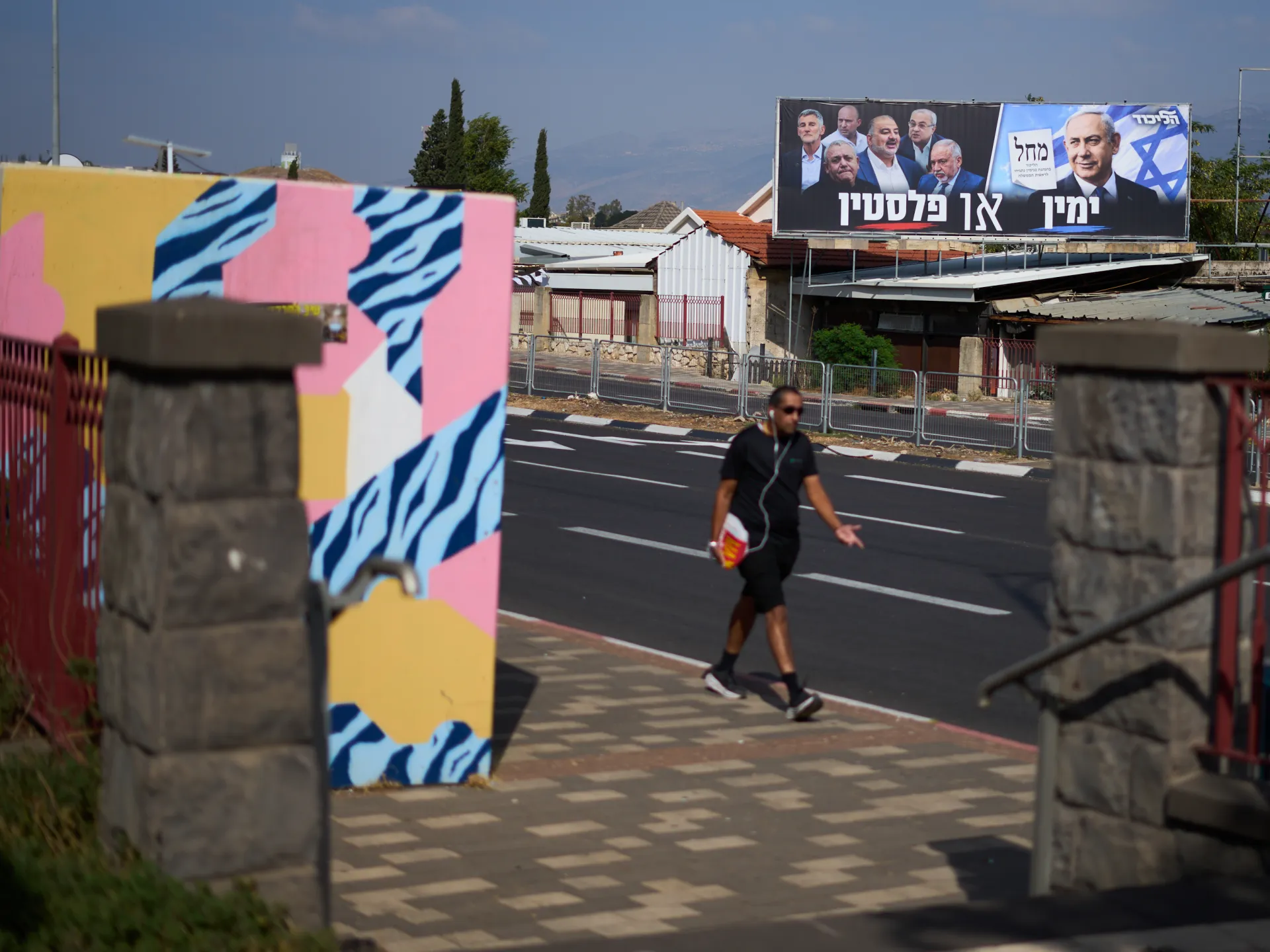
Israel’s first election in four years is bringing more than half a million first-time voters to the ballot box, with polls indicating that most young Jewish Israelis identify with the political right or centre-right.
The new voters, aged between 18 and 22, were added to the electoral roll since the previous election in 2022. The Israeli Central Elections Committee says about 80% intend to vote in the legislative election on October 27.
The figures have prompted some commentators to describe Israel’s Jewish youth as “Generation Right”, although the term does not include Palestinian citizens of Israel.
A Channel 12 poll found that roughly three quarters of Jewish first-time voters considered themselves right-wing or centre-right. That is a higher proportion than among the wider Israeli population, which has itself moved to the right over recent years.
The trend comes as Prime Minister Benjamin Netanyahu faces an election widely seen as crucial to his political future and to the continuation of his right-wing agenda. It is the first vote since the October 7, 2023 attack and has taken place amid deep political polarisation.
A survey by the Israel Democracy Institute found that many young Jewish Israelis believe voting can influence events and shape the country’s future, despite limited political activism and participation in public life.
Young Israeli voters and the rise of the far right
More than 16% of new voters told the Israeli newspaper Yedioth Ahronoth that they planned to support far-right parties.
Critics accuse Mr Netanyahu of empowering extreme politicians in order to remain in office. They point to the senior government roles given to National Security Minister Itamar Ben-Gvir and Finance Minister Bezalel Smotrich, saying their policies have helped bring far-right views into the mainstream.
Mr Smotrich has previously argued that only Israelis should have national self-determination, while Palestinians should either emigrate, remain without political representation or face treatment as “terrorists” if they refuse. In 2022, he gained a role in the defence ministry where, according to the source material, he has facilitated land seizures and supported Israeli settlements in the occupied West Bank.
Views hostile to Palestinians have also featured in videos filmed by Israeli satirist Lior Schleien, who has visited schools and spoken to young people before their military service.
In one video, a student said he would kill Arabs if given a knife and said he had “always been racist”. He also said Arabs should not be allowed to live in Israel. The video was later removed after a public backlash, although the student’s face had been partly concealed.
At another meeting, a female student questioned whether Israel should carry out what she described as genocide in Gaza. When Mr Schleien denied that Israel was doing so, she asked: “Do you think it should be done?” A friend sitting beside her chuckled as she insisted that the question was serious.
Not all young Israelis support the right. At a gathering of young supporters of the left-leaning Democrats party in Tel Aviv, 18-year-old Gili told AFP that Israeli society had abandoned the idea of peace.
She said the trauma of October 7 had created fear and made it difficult for people to believe that peace was possible. However, the shift to the right began before the attack, according to the material.
In southern Israel, 18-year-old Amihai attended an event calling for Israeli settlements to be established on Palestinian territory. Wearing a shirt bearing Mr Ben-Gvir’s image, he said he planned to vote for Otzma Yehudit, the party led by the national security minister.
Mr Ben-Gvir has been convicted of supporting organisations described as terrorist groups, as well as other criminal offences. Despite this, surveys suggest that first-time voters form part of his potential support in the election.
His public appearances, including visits to Israeli prisons and detention centres, are frequently filmed and shared online. The Israel Democracy Institute found that social media and messaging services including WhatsApp and Telegram are major sources of information for young people, who are often exposed to political content through their feeds rather than seeking it out.
