


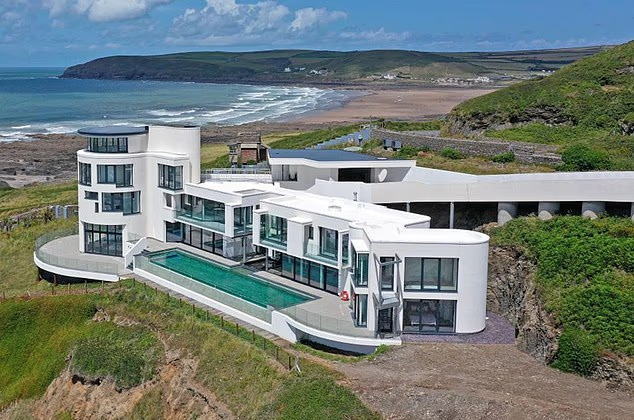
Chesil Cliff House, the Devon property made famous by Grand Designs, has become embroiled in a money-laundering probe linked to an alleged £1.3 billion fraud scandal and is expected to be sold again.
The five-bedroom home, built in the style of a modernist lighthouse, was bought for £4.15 million in October 2024 after creditors seized control of it from its original owner, Edward Short.
It is now held by a company belonging to Sanjay Patel, a former driving instructor whose property businesses have entered insolvency proceedings. Administrators say the company that owns the house is not viable and that no rent has been collected.
The investigation centres on Paresh Raja, a British financier who went from stacking shelves at Tesco to building the mortgage lending firm Market Financial Solutions (MFS).
Mr Raja is alleged in court filings to have diverted hundreds of millions of pounds into personal accounts to fund a luxury lifestyle and property portfolio. He has denied any fraud or dishonesty and has categorically denied wrongdoing.
MFS is under investigation by the Financial Conduct Authority, while Mr Raja is subject to a global asset-freezing order. He is thought to be living in Dubai.
Mr Raja is said to have borrowed as much as £2.6 billion from banks, hedge funds and private credit institutions through MFS. Court allegations state that he used funds to support a portfolio including a luxury home in Monaco and several high-value cars.
Chesil Cliff House set to be sold again
Chesil Cliff House was bought through Hare Gate Property Ltd, a company established by Mr Patel in October 2024. The business owes £4.975 million to Twinwin Ltd, which is also in liquidation and is alleged to have been created to help divert investor funds.
Official documents show that Hare Gate, Twinwin and another company involved in the purchase share the same central London office.
Hare Gate’s only asset is Chesil Cliff House and its only source of income was intended to be rent. Administrators have concluded that the company cannot continue, meaning the property is likely to be put on the market to repay creditors.
Mr Patel, 61, lives with his partner, Agni de Ankerburg Wagner, in a rented semi-detached home in Edgware, north London. Neighbours said he had described himself as a property investor backed by a wealthy sister in India.
He controls a number of property companies, many named after animals or birds. Eighteen of those businesses have reportedly either been dissolved or placed into administration in recent months, while companies linked to him own at least 11 homes in areas including Chelsea, Mayfair, St John’s Wood and Belgravia.
Mr Patel is not believed to be suspected of wrongdoing. He is said to be receiving cancer treatment and was unable to discuss the investigation.
Ms de Ankerburg Wagner said: “I’m not aware of this and there is nobody who can speak to you on his behalf.”
The Grand Designs house that brought financial ruin
The property’s latest troubles follow the collapse of Mr Short’s own ambitious project to build a dream home overlooking the Atlantic near Saunton, on the rugged North Devon coast.
Mr Short and his then-wife Hazel bought a 1950s clifftop house for £1.4 million in 2008. It was demolished three years later to make way for Chesil Cliff House, which was originally expected to cost £1.8 million and take 18 months to complete.
Instead, construction continued for 12 years. The project featured in a 2019 episode of Grand Designs, during which the couple’s original loan rose to £4 million as problems mounted and work repeatedly stopped.
Mr Short borrowed a further £500,000 from a hedge fund and £2.5 million from private investors. He later said he needed another £2 million to repair the driveway.
The finished house includes a four-storey circular tower, a spa, steam room, cinema room, 60ft infinity pool and private beach cove. It was initially offered for £10 million, but attracted no buyer.
By the time creditors took control, the property had been listed at £5.25 million. It eventually sold for £4.15 million, but Mr Short, who said he had been left more than £10 million in debt, received nothing from the sale.
The project also contributed to the end of his 20-year marriage to Hazel. In 2022, Mr Short said his “ambition and vanity” and pursuit of his “messed-up dreams” had damaged his family.
He said: “It was awful for the family because I pulled the stability rug from under them, without being able to give answers of how we were going to get out of it, other than that I had to carry on.”
Mr Short later found work as a prison officer. He has said he never gave up hope of one day living in the house, despite accepting that his original dream had been lost.
“I know my ‘grand design’ is now gone,” he said. “But I can still buy a lottery ticket and dream.”
