


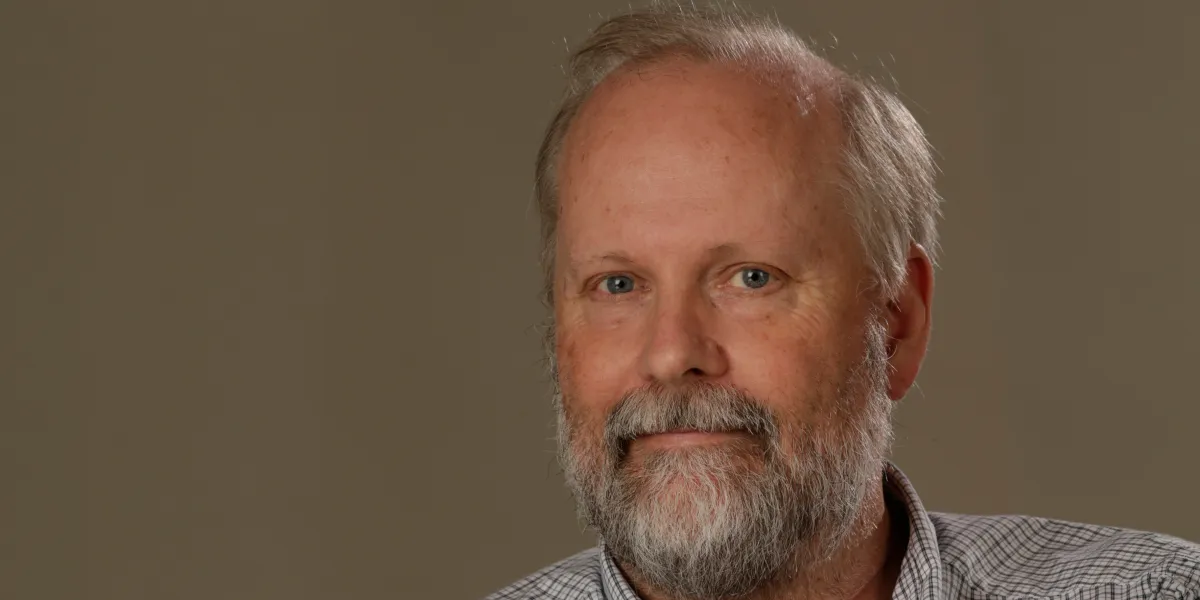
Anthropic has appointed Harvard astrophysicist Christopher Stubbs to the Long-Term Benefit Trust, the body with the power to elect a majority of the artificial intelligence company’s board.
The appointment comes as Anthropic prepares for a potential stock market flotation, which the company is widely expected to pursue as soon as next month. The Trust’s unusual governance role is likely to face greater scrutiny if the listing goes ahead.
Stubbs fills one of two vacant positions on the Trust. He is the first physicist to join the body, which is chaired by Neil Buddy Shah, chief executive of the Clinton Health Access Initiative.
The Harvard professor is known for research into the accelerating expansion of the universe, a discovery scientists have linked to a previously undocumented force known as dark energy. He later led the ESSENCE supernova cosmology project, which collected further evidence about the phenomenon.
In 2015, Stubbs and other members of the High-Z Supernova Search Team received the Breakthrough Prize in Fundamental Physics. He was also the first project scientist for what is now the Vera C Rubin Observatory in Chile, which began a decade-long survey of the southern sky this summer.
Stubbs served as Harvard’s Dean of Science from 2018 to 2024 and is a member of JASON, an independent group of scientists advising the US government on defence and technology.
Daniela Amodei, Anthropic’s co-founder and president, said Stubbs had shown a willingness to follow data and evidence “even when it went against the prevailing wisdom of the field”.
“As AI starts to transform how science itself is done, [Stubbs’] intellectual honesty, rigor, and commitment to the truth are the values we want shaping the future of this technology, and I’m grateful he’s bringing his deep expertise to the Trust,” she said.
Anthropic said Stubbs had recently written about the difficulty of ensuring research assisted by AI remains reproducible when models can produce different answers to the same question.
“I use AI tools in my research every day and see what they make possible, and as an educator I have confronted some of the hard questions they raise,” Stubbs said. “As a grandfather, I want to help ensure that AI is developed and deployed for the long-term benefit of humanity.”
He joins Shah, Richard Fontaine, chief executive of the Center for a New American Security, and former Federal Reserve chair Ben Bernanke, who joined the Trust in July. The remaining vacancy was created in August when former California Supreme Court justice Mariano-Florentino Cuéllar left to become Anthropic’s first chief global affairs officer.
Anthropic’s governance structure faces scrutiny
Anthropic is a Public Benefit Corporation and is legally required to weigh its stated mission of the “responsible development and maintenance of advanced AI for the long-term benefit of humanity” alongside shareholder returns.
The Trust holds a special class of shares with no economic value. Those shares give it the right to elect an increasing proportion of the company’s seven-member board, eventually giving it a majority. Its trustees are independent of Anthropic’s management and investors and advise on major decisions, particularly those involving AI’s risks and effect on society.
Anthropic confidentially filed a draft registration statement with the US Securities and Exchange Commission in June. Reports have suggested a flotation could value the company at more than 2 trillion dollars, after it was valued at 965 billion dollars in a funding round in May.
The company has also reportedly planned super-voting shares for its founders. Critics argue that this arrangement, combined with the Trust’s powers, could leave public shareholders with limited influence over Anthropic’s strategic direction.
Last weekend, Anthropic said it would place 5% of its shares into a separate Public Benefit Fund. The fund is intended to make donations to philanthropic organisations and could also support people adversely affected by AI, including workers who lose their jobs through AI-powered automation.
