


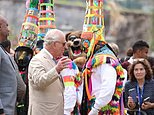
King Charles is expected to use his visit to Antigua and Barbuda in late October to urge the country to remain in the Commonwealth, even if it ultimately removes him as its head of state.
The King and Queen Camilla will visit the Caribbean nation from 27 October, ahead of the Commonwealth Heads of Government Meeting in St John’s from 1 to 4 November.
The trip comes after Antigua and Barbuda removed allegiance to the monarch from the oath taken by ministers and other senior officials. Under the Oaths Act 2025, the declaration now pledges loyalty to the state, its Constitution and its laws, rather than to King Charles, his heirs and successors.
The change took effect on 1 January 2026. The Government of Antigua and Barbuda later acknowledged that an outdated oath pledging allegiance to the Crown had initially been administered to Prime Minister Gaston Browne and the Attorney General before a second ceremony was held using the new wording.
Despite the constitutional change to the oath, King Charles remains the country’s head of state. The move has instead been seen as part of a wider debate over whether Antigua and Barbuda should become a republic while retaining its membership of the Commonwealth.
The King’s autumn tour, announced by Buckingham Palace, will run until 4 November and will also include visits to the Bahamas and Guyana. Charles will visit the Bahamas before travelling to Guyana for a state visit marking 60 years of bilateral relations between Britain and the South American nation.
His visit to Antigua and Barbuda will coincide with the Commonwealth summit, which is expected to bring together leaders from the organisation’s 56 member countries. The palace said the tour would celebrate communities, cultures and nature across the Commonwealth family.
Antigua and Barbuda has been independent since 1981 and is one of the Commonwealth realms where the King remains the constitutional head of state. Its decision to change the official oath means Charles will be visiting a nation that is seeking to separate its national identity from the Crown while maintaining its links with the wider Commonwealth.
