


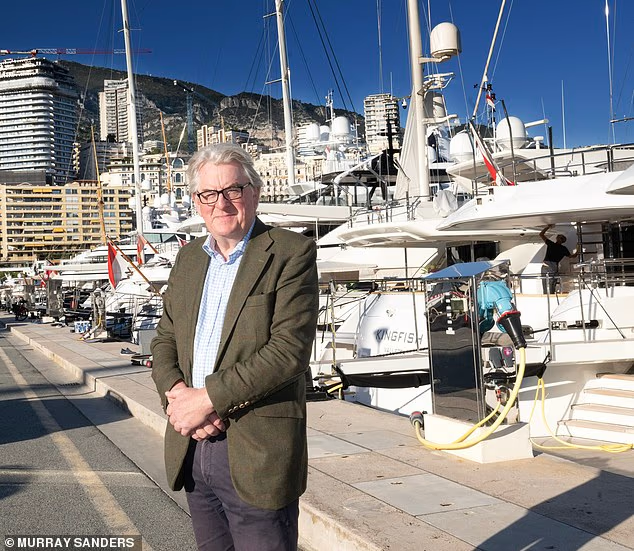
British entrepreneurs are moving to Monaco in increasing numbers as concerns over inheritance tax and the UK’s wider tax regime prompt wealthy families to relocate, according to property and financial professionals in the principality.
The number of British residents in Monaco has reached a record 3,100, almost twice the figure recorded a decade ago. Britons are now the fastest-growing group among the 144 nationalities living in the city-state, excluding French residents, and account for about 8 per cent of its population.
Those arriving are not limited to retired millionaires or sporting stars. Estate agents say more people in their late 30s and 40s are moving with young families, with inheritance planning increasingly influencing their decisions.
“We are getting more and more people in their late 30s and 40s coming here with young families because they are already starting to think about issues like inheritance,” said Mark Thomas of Knight Frank, who has lived in Monaco for more than 30 years.
Mr Thomas said the appeal extended beyond taxation to health, education and security. The average age of a British newcomer is 44, compared with 49 for the average British adult, while the average age of an adult resident in Monaco is 47.
Inheritance concerns drive British entrepreneurs to Monaco
Property prices in Monaco average about £56,000 per square metre, nearly twice the level found in the most prestigious parts of London. An £18 million deal for a four-bedroom town house was nearing completion, while a two-bedroom flat measuring about 1,000 square feet was placed on the market for £5 million and quickly attracted interest.
Mr Thomas said many buyers had built successful companies and were worried about what would happen to their businesses after their deaths.
“These are usually people who have built up businesses and companies and they have paid all their taxes,” he said. “Now, they look at what might happen if they are run over by a bus. Suddenly, the family face a fire sale to pay the inheritance tax and so a business is wrecked.”
One British billionaire who moved to Monaco after the election said he had been prepared to pay income tax but objected to being unable to pass his trading company on to his children without potentially dismantling it.
“I was happy to pay income tax. But to create a successful trading company, whether it’s metal-bashing or hospitality, and then not be able to hand it on to your kids – that’s the straw that breaks the camel’s back,” he said.
He added that he had dismantled several trusts and company structures which would be difficult to recreate if he returned to Britain, and therefore did not expect to come back.
The concerns echo those voiced by farmers protesting against Labour’s plans to impose inheritance tax on farms valued above £2.5 million. The source material states that the threshold was increased from an original proposal of £1 million, but could still force the break-up of some farms.
Figures cited from the latest annual list of Britain’s highest taxpayers also point to an exodus among some of the country’s wealthiest individuals. Betfred founders Fred and Peter Done, who were estimated to have paid £400 million in tax during the year, have since moved their property arm offshore to Jersey, while hedge fund manager Chris Rokos, estimated to have paid £330 million, has moved to Greece.
A Bloomberg study cited in the source material estimated that £120 billion had left the UK over the past two years. The figure was described as equivalent to the annual education budget and twice the defence budget.
The departures began with the previous government’s decision to dismantle non-dom status for foreign millionaires and have accelerated amid Labour’s higher tax take, according to the account.
Monaco’s appeal extends beyond tax
Monaco’s population includes about 39,000 residents, with millionaires making up around 40 per cent of the total. Demand for homes continues to rise despite the principality’s limited space, pushing sales prices up by about 5 per cent and rents by 10 per cent, according to Mr Thomas.
Security is another attraction for British expatriates. Victoria Barker, a British-born tennis professional who is now a senior executive at the Fairmont hotel, said residents could walk home late at night without concern.
“Security is second to none. I happily walk home at midnight without a thought,” she said.
Estate agents also point to schools, leisure facilities and the ease of family life. The International School of Monaco, which has an alliance with King’s College School Wimbledon, is said to have an expanding waiting list, while the principality has seen growth in hair salons and spas.
Political continuity is also valued by residents who have moved from Britain or Italy, where governments can change direction rapidly.
“Britain or Italy might be sound one year and then it’s all change the next,” said Nick, one of a group of British expatriates who spoke anonymously. “This place doesn’t do change.”
He was among five British men who had previously lived, worked and paid tax in Britain but now live permanently in Monaco. Their combined wealth was estimated at close to £1 billion.
Monaco’s appeal has also been strengthened by instability elsewhere in Europe. War in the Middle East has made Dubai less attractive to some people, while discussion in Italy of a new exit tax has reduced the appeal of that country as a destination for wealthy residents.
Concerns over crime and Monaco’s financial reputation
The principality has not been untouched by serious crime. The body of Antoine de Massy, 29, was found in a private park after he failed to attend a family lunch. He had been pursuing a technology business after studying international relations in the United States and had previously hoped to represent Monaco in tennis.
A 42-year-old Ukrainian national who has lived in Monaco for 30 years was charged with involuntary manslaughter and failure to assist a person in danger. Authorities have not ruled out the possibility that the death was accidental.
The case followed a separate incident in which Ukrainian financier Vadym Yermolayev, his partner and teenage son were badly injured by a bomb outside their home. An alleged hitwoman was later found shot dead in a wood near Kyiv.
Monaco has also faced scrutiny over illicit wealth. Following Russia’s invasion of Ukraine, the principality came under pressure to root out Russian money. The source material states that it was removed from the global Financial Action Task Force’s grey list last month.
Despite those incidents, expatriates continue to describe Monaco as safer than other European cities. Its dense network of cameras and large police presence are regarded as important advantages by residents, particularly those with young families.
With space at a premium, even parking commands a substantial price. A garage space can cost about £320,000, while a row of eight spaces recently sold for £2.2 million to a buyer who wanted to house a collection of Ferraris.
For the British families arriving in their thirties and forties, however, the decision to move is increasingly being made with the future of their businesses and children in mind.
