


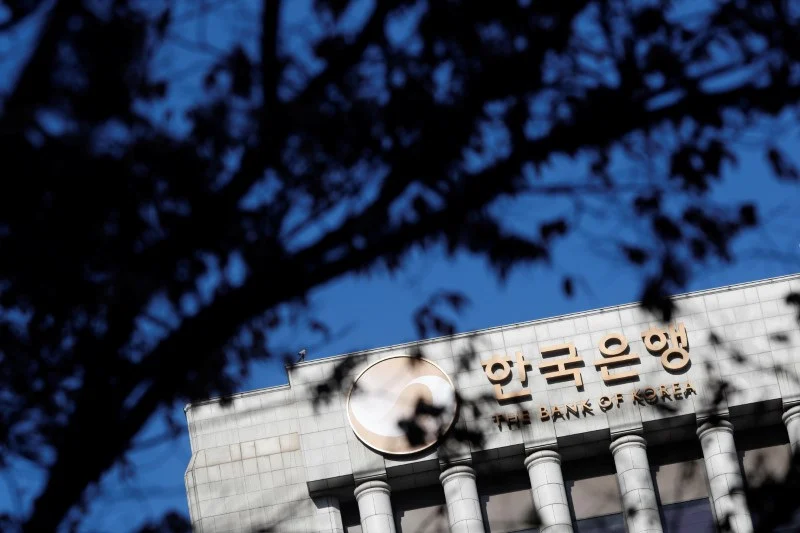
The Bank of Korea will assess domestic and international economic conditions before deciding the timing and pace of any further interest-rate increases, board member Kim Jong-hwa has said.
Mr Kim said the central bank would examine the effects of its previous two rate rises, alongside changes in policy and economic conditions at home and abroad. His comments were released with the Bank of Korea’s semi-annual monetary policy report.
“I think it is necessary to assess changes in external and internal conditions to determine the timing and pace of additional hikes,” Mr Kim said.
South Korea’s central bank raised its benchmark rate by 25 basis points to 3% in August, following an identical increase in July. The decision marked a second consecutive rise as inflation remained above target and concerns over financial stability persisted.
Mr Kim said economic growth was expected to remain robust, while inflation could stay above the Bank of Korea’s target for a considerable period. He identified price pressures linked to the conflict in the Middle East and the country’s strong export performance as key factors.
The bank has also pointed to vigorous investment in artificial intelligence as a continuing support for South Korea’s semiconductor exports. It expects global AI investment to expand for some time as demand grows and competition intensifies.
Official forecasts published after the August rate decision projected South Korean economic growth of 3.3% this year and 2.9% next year. Consumer price inflation was forecast at 2.7% for 2026 and 2.3% for 2027.
The Bank of Korea has warned that rising house prices in Seoul and surrounding areas, together with faster household-loan growth, remain risks to financial stability. It has said future rate decisions will depend on incoming data covering inflation, economic growth and those financial risks.
