


The City Bridge Foundation, the charity responsible for maintaining five of London’s Thames bridges, has faced criticism after awarding £1.2 million to the Muslim Charities Forum, whose treasurer is the chief executive of another charity alleged to have links to Hamas.
The Charity Commission has opened a statutory inquiry into Al-Khair after one of its associates was arrested in the UK and charged in the United States with allegedly providing material support to Hamas. There is no suggestion that City Bridge Foundation knew of any alleged connection when it approved the grants.
The foundation said the money was given specifically for the Muslim Charities Forum’s work in London and that all applications were subject to checks and continuing monitoring.
But the award has intensified scrutiny of the organisation’s wider spending, as critics question why a charity established to maintain bridges is distributing large sums to social justice and campaigning groups while several crossings in the capital remain in poor condition.
Criticism over City Bridge Foundation spending
City Bridge Foundation has assets of about £1.5 billion and maintains Tower Bridge, London Bridge, Southwark Bridge, Blackfriars Bridge and the Millennium Bridge at no cost to taxpayers.
Its new 12-page strategy document, Standing With Londoners, places significant emphasis on equity, diversity and inclusion, climate action and social justice. The Thames is mentioned only once.
The organisation has given away £840 million to hundreds of charities since its role was expanded in 1995. Recipients have included established charities such as Age UK and Mencap, as well as organisations involved in racial justice, migration and other campaigning causes.
Among its grants were £1 million to Spectra CIC to help “build capacity in the trans and sex-worker sector”, and £1.5 million to Race On The Agenda to “combat racial injustice”. It also awarded £5 million to the Esmée Fairbairn Foundation for work described as tackling “the causes of deep-rooted structural injustices facing people in towns and cities across the UK”.
Research by the pro-business campaign group Looking For Growth found that the charity was funding lobbying groups and activists as well as conventional charities.
Dr Lawrence Newport, the group’s chief executive, said Hammersmith Bridge had been closed since 2019 but City Bridge Foundation’s rules prevented it from intervening.
“Instead of using its money to fund social justice causes – including a group campaigning against a new river crossing – the City of London Corporation must change the Foundation’s rules to get it back to its original purpose,” he said.
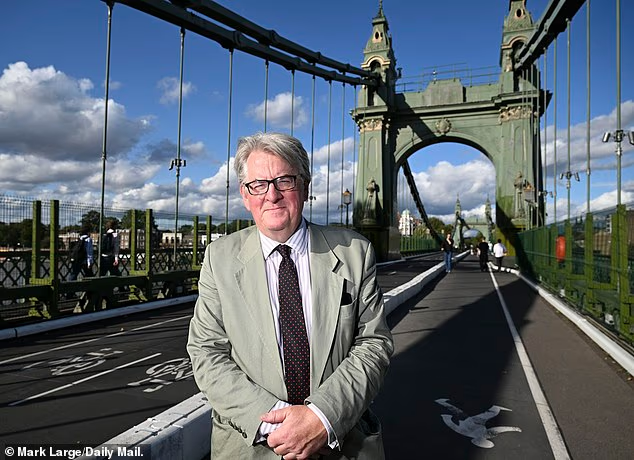
Hammersmith Bridge remains closed to motor traffic after six years, while Albert Bridge has been closed for a year. Waterloo Bridge has also been identified as potentially facing serious problems.
The condition of Hammersmith Bridge has caused disruption across west London, with responsibility for resolving the issue caught between the two councils linked by the crossing and the Mayor of London.
Foundation says its bridges are in good condition
City Bridge Foundation said its primary responsibility was the five bridges in its care and that only money not required for their maintenance was available for other charitable work.
“Our first responsibility is the maintenance of five Thames bridges at no cost to the taxpayer,” a spokesman said. “Only funds not required for the bridges are available for our charitable work supporting Londoners.”
Responding to concerns about the Muslim Charities Forum award, the spokesman added: “Our grant was specifically made to Muslim Charities Forum for its work in London.
“Every grant application is subject to robust checks and ongoing monitoring.”
The foundation said it had no role in maintaining other crossings. “Our five bridges are open, safe and in good condition,” it said. “London’s other bridges are the responsibility of other organisations, which we work with through other industry groups.”
Supporters of the charity’s position argue that local authorities and other public bodies, rather than City Bridge Foundation, should pay for bridges outside its remit.
One senior figure within the foundation questioned why a charity that had managed its funds for centuries should have to spend hundreds of millions of pounds because of failures by modern local authorities.
Critics counter that the foundation has already chosen to spend hundreds of millions on responsibilities that might otherwise fall to the state, including support for elderly people and campaigns against racial injustice.
They also argue that the charity’s rules are not immutable. Bridge House Estates, the organisation’s former name, applied successfully to change its purposes in 1995. It later took responsibility for the Millennium Bridge in 2003, despite its insistence that its core role is confined to the five City bridges.
Calls for changes to the charity
The foundation was established in the 12th century by monks and merchants to build and maintain London Bridge. Toll income was reinvested, helping to fund further crossings including Blackfriars and Tower bridges.
Its sole overarching trustee is the City of London Corporation, which appoints the board responsible for overseeing the charity and its grants.
Critics say the make-up of the organisation is also a concern. Of the 15 people involved in its board and funding committee, only two are engineers, despite its responsibility for major infrastructure.
Chris Philp, the Conservative MP for Croydon South and shadow home secretary, called for the board to be replaced.
“Our bridges have been left to wrack and ruin, making it more difficult to get around and leaving Londoners more divided,” he said.
He added: “They should spend less time and money on divisive campaigning and more time building bridges.”
Mr Philp urged a “clean sweep” of the board so that the charity could focus on London’s infrastructure rather than what he described as “woke nonsense”.
Ike Ijeh, head of housing, architecture and urban space at the Policy Exchange think tank, said the foundation’s revenues belonged to Londoners and should be used to benefit the wider population.
“At a time when London’s bridges are increasingly in need of urgent repair, the City Bridge Foundation should be reminded that its vast revenues are not its inheritance but Londoners,” he said.
The dispute leaves the foundation facing renewed pressure to reconsider how its vast funds are used, particularly as the capital continues to struggle with the prolonged closure of Hammersmith Bridge and concerns over other crossings.
