


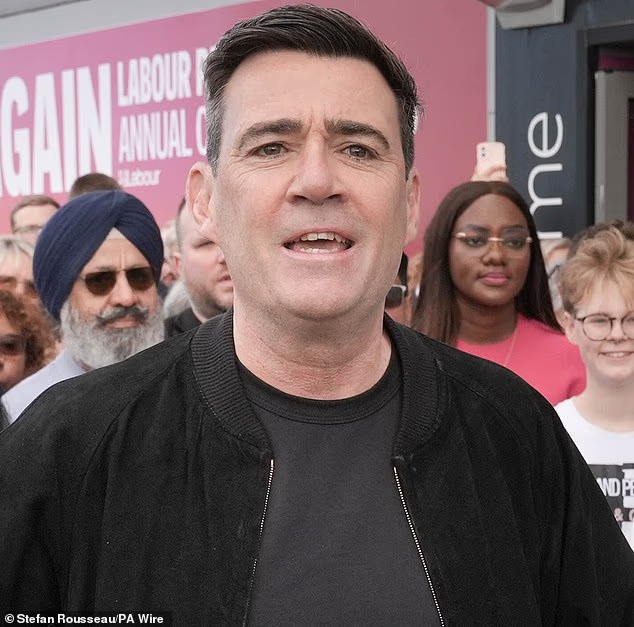
Andy Burnham has been accused of lacking a credible plan to deliver economic growth, as criticism grows within Labour over the Government’s emphasis on taxation and spending.
The criticism comes as the Prime Minister prepares for his first Labour conference since entering Downing Street, with some Labour MPs questioning whether his frequent TikTok videos and social media messages are matched by a workable economic strategy.
Former business secretary Peter Kyle said on Saturday that the Government was not acting with sufficient urgency on growth. “Why wouldn’t we put our foot down and get there quicker?” he asked.
Mr Kyle has also suggested introducing a growth test to assess the economic impact of each tax. However, the proposal is unlikely to be adopted, amid claims that Labour remains committed to raising taxes to fund additional spending.
The Government’s tax burden is already at its highest level since 1945 and is expected to rise further in next month’s Budget, according to the criticism.
Mr Burnham has argued that people judge growth by what they see in their communities rather than by economic data alone. “People don’t measure growth by looking at a spreadsheet. They measure it by looking at their local high street,” he said.
But critics say business costs, revenues and profits are equally important measures, arguing that Labour has placed further pressure on employers through measures including the rise in National Insurance, described as a tax on jobs.
The criticism extends to Mr Burnham and Chancellor John Healey, who are accused of offering broad promises on growth without setting out how the economy will be revived or how additional commitments on benefits and migration will be funded.
Attention has also turned to the Government’s borrowing. Before last year’s Labour conference, Mr Burnham said the country should not be “in hock to the bond market”.
However, government bonds provide the borrowing needed to finance public spending and debt. The argument put forward by critics is that reducing dependence on the bond market requires spending and borrowing to be brought under control.
The 30-year gilt yield reached 5.89 per cent this month. Each one percentage-point increase in borrowing costs adds more than £10 billion to annual debt interest, increasing pressure on the Government to reduce its liabilities.
The central charge is that ministers are prioritising political messaging over the difficult decisions required to promote growth, control spending and improve the economy.
