


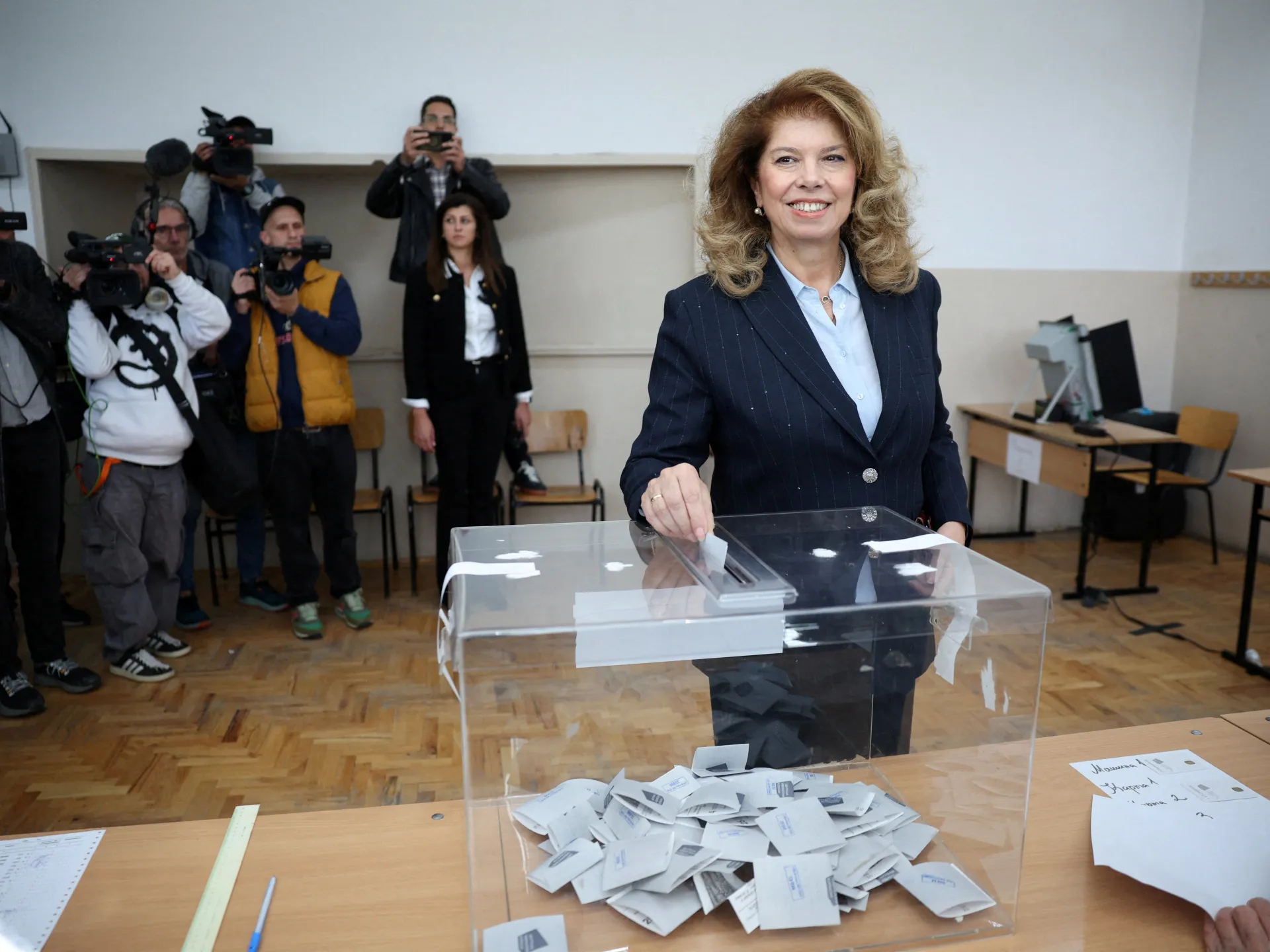
Bulgaria’s presidential election will go to a run-off after no candidate secured the required majority, with incumbent Iliana Yotova set to face former caretaker prime minister Andrey Gyurov on November 1.
Exit polls put Ms Yotova on between 35% and 36.5% of the vote, while Mr Gyurov received between 31% and 33.5%. Turnout stood at 22.2% by 8pm local time, according to the Measure polling agency.
A first-round victory required more than half of the votes and turnout of over 50% of registered voters. Twenty-seven candidates contested the election in the European Union and Nato member state.
Interior Minister Ivan Demerdzhiev said the vote had taken place “peacefully, without the usual practices of vote buying and vote manipulation”.
Black Sea attacks and cost of living dominate campaign
Rising energy costs, inflation, attacks in the Black Sea and Russia’s war in Ukraine were central issues during the campaign. A series of drone strikes on ships off Bulgaria’s coast, condemned by both candidates, also dominated the final weeks before polling.
Ms Yotova, a former vice-president who became president in January, ran as an independent with the backing of Progressive Bulgaria and the Socialist Party. She is supported by Prime Minister Rumen Radev, whose Progressive Bulgaria party performed strongly in April’s parliamentary elections.
After voting, Ms Yotova said she wanted to tackle “the dire issue of poverty” as well as “inequalities and regional disputes”. She added: “I believe that there must be peace, stability, and security.”
Mr Gyurov has the backing of the country’s pro-Western opposition and signed a security co-operation agreement with Ukraine while serving as caretaker prime minister.
Following the vote, he said he wanted “a Bulgaria that looks forward, a country that is European, free, and proud”. He called on Ms Yotova to take part in a debate, saying: “Next week, Bulgaria must choose between two personalities, two directions.”
Although the presidency is largely ceremonial, the head of state leads the armed forces, can veto legislation and signs treaties.
