


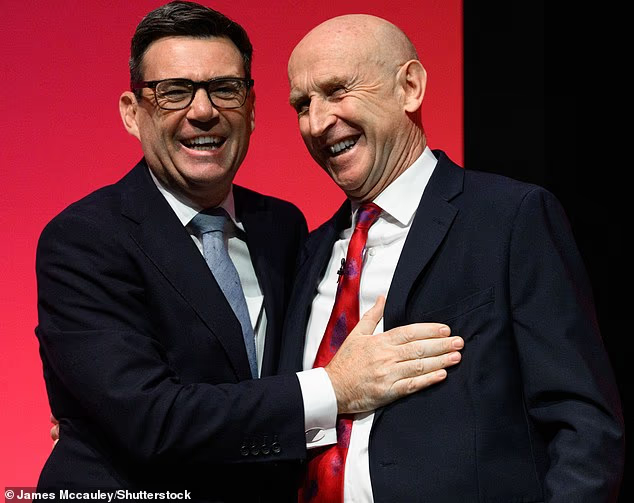
Prime Minister Andy Burnham and Chancellor John Healey are understood to be preparing to approve drilling at the North Sea’s Rosebank oil field, overruling opposition from Foreign Secretary Ed Miliband and Energy Secretary Miatta Fahnbulleh.
The proposal would allow the development of an estimated 500 million barrels of oil from the field, which lies 80 miles west of Shetland and is the UK’s largest undeveloped oil and gas site.
The decision is believed to have emerged during tense preparations for Wednesday’s Budget, as ministers face weak economic growth, high energy prices and mounting pressure on the public finances.
Mr Healey is attempting to assemble measures to support low-income families and struggling businesses while borrowing costs remain high and the Treasury’s fiscal headroom continues to shrink.
Mr Miliband has previously described Rosebank as “climate vandalism”. Aides to Ms Fahnbulleh briefed last week that she was “minded” to reject the drilling proposal.
Rosebank oil field approval would test Labour’s green agenda
More than 90 per cent of Rosebank’s reserves are oil, with most of it expected to be exported on to the global market. Environmental campaigners and Labour MPs have argued that the field would produce seven times the carbon dioxide emissions associated with the Jackdaw gas field, whose exploitation was approved last week.
Approval for Rosebank would therefore represent a further setback for those who oppose new North Sea oil and gas projects.
Ministers are understood to be seeking to ease environmental concerns by directing part of the proceeds into the Energy Wealth Fund, which was created to invest in renewable and low-carbon technology. The fund would receive an initial £2 billion, alongside tax revenues from the drilling.
A minister said: “Both Andy and John have decided Rosebank needs to go ahead. The economic and energy security case is so strong, and the Energy Wealth Fund will help mitigate concerns around the environment.”
The minister added: “The unions are strongly behind the decision and so are the bulk of the PLP [Parliamentary Labour Party]. It’s the only sensible decision.”
Trade unions have pressed ministers to approve the project in order to protect jobs in the industry. In March, Unite general secretary Sharon Graham said: “The Government’s position on oil and gas is putting jobs and national security at risk. Blocking oil and gas production in the North Sea, especially now, is simply an act of monumental political self-harm.”
She added: “Domestic gas from Jackdaw and oil from Rosebank are essential for jobs and for energy security.”
Polling by Lord Ashcroft, the former Conservative deputy chairman, found that 48 per cent of voters wanted the ban on North Sea oil exploration lifted, compared with 32 per cent who wanted it to remain.
The poll also found that 53 per cent did not believe Mr Miliband’s Net Zero ambitions were worth pursuing if the cost was higher household bills. Only 32 per cent thought Britain’s environmental measures made a difference to the global climate, while climate change ranked fourth among national priorities, behind the cost of living, immigration and the NHS.
Baroness Harman, a former Labour deputy leader, has urged ministers to make the environmental case for approving Rosebank by investing the proceeds in renewable energy.
“I think they should approve it, and I think they should strongly make the green argument for doing it by investing the proceeds into turbocharging our homegrown renewable energy,” she said.
The move is also expected to be welcomed by US President Donald Trump, who popularised the phrase “drill baby drill” during his 2024 election campaign and praised the UK after the Jackdaw announcement.
