


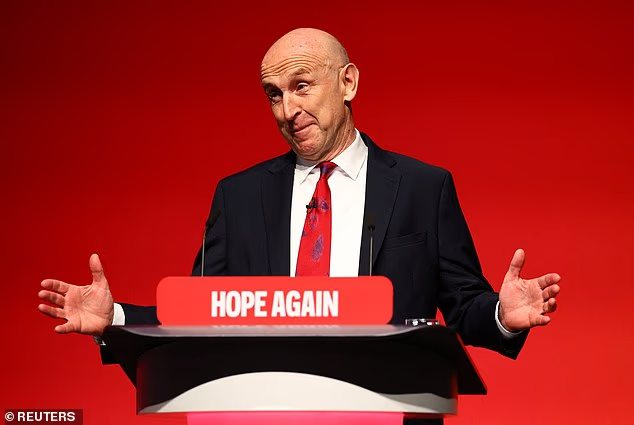
Chancellor John Healey has warned Labour it cannot repeat the spending splurge of the Tony Blair era, as he sought to calm growing concern that taxes will rise in next month’s Budget.
Addressing activists at the party conference in Liverpool, Mr Healey said the money available to New Labour in the 1990s was “simply not there now”. He also insisted that the Government would obey its fiscal rules, increasing pressure on ministers to find savings or raise additional revenue.
The Chancellor said Britain faced a tougher economic environment after 14 years of what he described as “flatlining Tory growth and living standards”. He argued that stronger economic growth was the only lasting answer to pressure on businesses and household finances.
“Labour isn’t just here to cut the cake in a different way, we have to bake a bigger cake and make sure that it’s fairly shared,” he told delegates.
Mr Healey said the cost of servicing Government debt was restricting spending on public services, including the NHS, schools, housing, social care and policing.
“The cost of the nation’s debt is not just a number in a Chancellor’s budget,” he said. “It’s the money that we can’t spend on the NHS, on schools, on housing, on social care, on policing our streets, on controlling our borders, on defending our country.”
He added that he and Prime Minister Andy Burnham were “in lockstep” in their determination to meet the fiscal rules and maintain control of the public finances.
Chancellor rules out bigger benefits bill
Mr Healey also signalled that Labour would focus on helping young people into work rather than allowing welfare spending to expand indefinitely.
“It is not progressive to allow a bigger and bigger benefits bill, and a system which offers an income but doesn’t offer a future,” he said. “I refuse to write off a million young people like the Tories have done.”
The remarks come as the Government faces mounting financial pressures. Inflation has been driven higher by the crisis in the Middle East, while growth remains weak. Lower immigration forecasts from the Office for Budget Responsibility could also reduce expected tax revenues and cut the Chancellor’s room for manoeuvre under the fiscal rules by as much as £7 billion.
There is speculation that taxes including capital gains tax could be increased to raise money and reassure financial markets that the Government will balance its books. The prospect of changing the state pension triple lock has also been raised as a possible way of helping to fund a proposed NHS-style social care service after the next election.
Mr Burnham has pledged that service could cost £18 billion a year. The triple lock increases state pension payments by whichever is highest of inflation, earnings growth or 2.5 per cent.
Economic uncertainty was reflected in a survey by the Confederation of British Industry, which found private sector activity had fallen in the three months to September and was expected to decline again during the rest of the year.
CBI deputy chief economist Alpesh Paleja said rising energy and employment costs, alongside weak demand, were squeezing profit margins. He said uncertainty before the Budget was also holding back activity in some sectors.
Mr Healey attempted to strike a more optimistic note by promising a new local apprenticeships drive overseen by mayors and describing the prospect of a “new age of industrialisation”.
He said the country’s coal mines would not return, but pointed to the transformation of the former Orgreave mine into Rotherham’s Advanced Manufacturing Park as an example of how Britain’s industrial past could be adapted for the modern economy.
The Chancellor also confirmed support for shipbuilding, including plans for three new floating docks at HM Naval Base Clyde in Faslane through a UK-only competition. The facilities are intended to support the next generation of British submarines and are expected to enter service in the early 2030s.
He announced £115 million for a new marine research vessel, also due to enter service in the early 2030s, as part of the Government’s wider reindustrialisation plans.
Shadow chancellor Andrew Griffith criticised the announcements, claiming they lacked clarity over how they would be funded. He said Labour should cut the welfare bill to help pay for defence, while John O’Connell, chief executive of the TaxPayers’ Alliance, said the speech had done little to address the pressure created by rising benefits spending.
