


David Tolbert has been found guilty of capital murder after security footage helped investigators challenge the apparent suicide of his wife, Savannah, in Huntsville, Alabama.
The jury convicted the 47-year-old of killing Savannah Tolbert, 37, who was found with a gun in her right hand in the passenger seat of his red Tesla in November 2022.
Tolbert, a retired corrections officer, was sentenced to life in prison without the possibility of parole. He had denied shooting his wife.
Security footage became central to the case
Police were called to a strip mall on 15 November 2022 after Savannah was discovered dead. Video from the shop where David Tolbert had been working showed him appearing shocked and distressed after finding her in the car.
He was seen walking quickly with his hand over his mouth before crouching on the floor. Shop owners told police he had tears in his eyes and his hands in his pockets when officers arrived.
At first, the scene appeared consistent with suicide. But investigators immediately noticed details they said did not fit that explanation.
Savannah had been shot in the back of the head on the left side, while the gun was in her right hand. First responders also said her fingers appeared to be curled around the weapon.
“It didn’t match up to a suicide,” investigator Greg Hayden said. “Her gun was in her right hand and the bullet hole was on her left side in the back of her head.”
A shell casing was found on the rear seat behind the driver. The Tesla was taken away for forensic testing, while David Tolbert was handcuffed and transported to the police station as a person of interest.
Police said he had not been arrested at that stage and was handcuffed in accordance with their policy for transporting people from a crime scene.
During questioning, Tolbert said Savannah had arrived unexpectedly while he was helping prepare the shop for a health inspection. Store cameras showed her entering shortly before 2pm, greeting her husband with a hug and leaving the building with him.
He then returned to work alone. Another camera captured Savannah crossing the car park towards the Tesla, which investigators believe was the last time she was seen alive.
About 20 minutes later, Tolbert was filmed leaving the shop with a large coffee mug. He told police he had first gone to the Kia Savannah had driven to the site, then decided she might be watching a film in the Tesla.
“I went over there and hit the thing to get in my car and just sat down and looked over and she was there,” he told investigators.
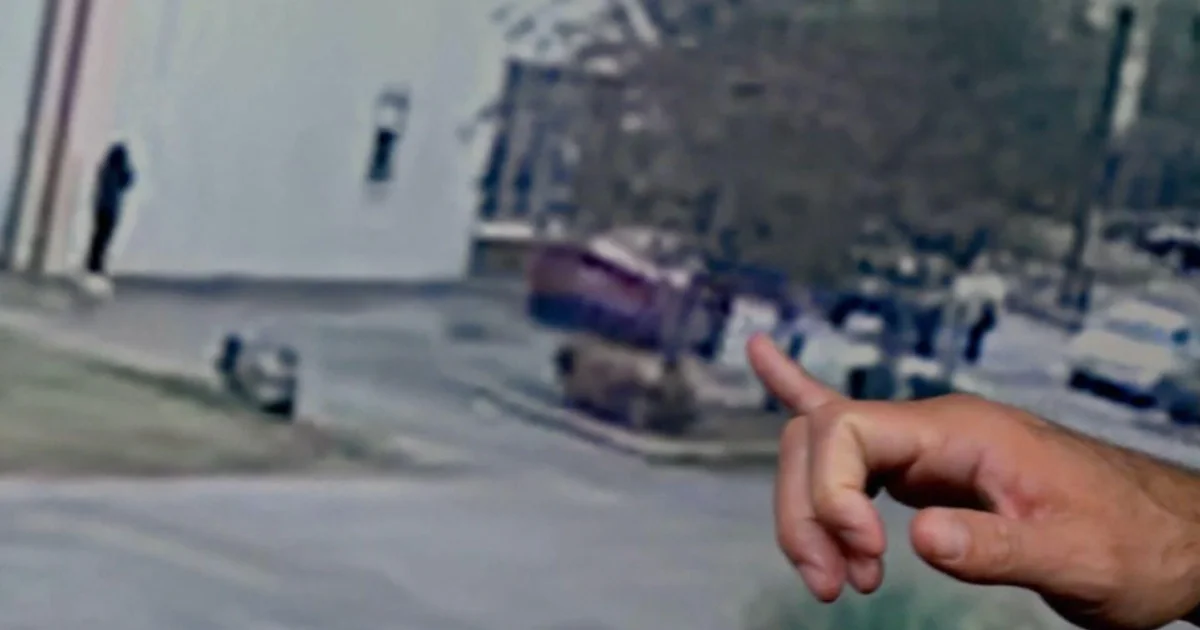
But police found another camera at a nearby business, about 100 yards away, which showed the Tesla from a distance. Although the footage was grainy, investigators used it alongside the shop recordings to construct a timeline.
It showed Savannah approaching the passenger side of the Tesla shortly after 2.15pm and entering the vehicle. An unidentified figure in dark clothing was visible nearby, but investigators said the person moved away without approaching the passenger door again.
About 20 minutes later, another figure approached the driver’s side. Investigators identified that person as David Tolbert, although a tree partly blocked the camera’s view and no face could be seen clearly.
Police said the footage contradicted Tolbert’s account that he had simply opened the car and discovered his wife’s body. Investigator Greg Hayden said he believed Tolbert had taken a gun from the vehicle, shot Savannah and then walked away.
Medical examiner ruled Savannah’s death a homicide
The medical evidence strengthened the investigators’ suspicions. No gunshot residue was found on Savannah’s hands, while the location of the wound raised questions about whether she could have fired the weapon herself from inside the car.
Dr Jonrika Malone, the medical examiner, said the wound was in the back of Savannah’s head near the hairline. There was no mark indicating that the gun had been held directly against her skin, and the absence of gunpowder stippling suggested the weapon had been at least three to four feet away.
“There is no feasible way that she could have done it,” Dr Malone said.
Her report concluded that Savannah had died from a gunshot wound to the head and classified the manner of death as homicide.
Investigators also examined the Tesla’s Sentry Mode, which can record activity around the vehicle. Tolbert was known to use the feature and had encouraged others to keep it switched on, prosecutors said.
On the day Savannah died, however, Tolbert told police he had no memory card in the car to store recordings. Investigators said the absence of footage was significant because the system might otherwise have captured what happened beside the vehicle.
Tolbert later raised the presence of a small hobbyist cannon in the Tesla’s boot, suggesting it could explain gunshot residue found on him. Investigators said video showed him neither visiting the boot nor approaching the passenger side when he arrived at the car.
Prosecutors said affair supplied a motive
Police learned that Tolbert and Savannah had been living apart for several months and that he had begun an intimate relationship with Chelsea Finch.
Finch told investigators that she and Tolbert had said “I love you” to one another and that she believed he intended to leave Savannah. Divorce papers given to Savannah were found in the Tesla three days after her death.
“He wanted Savannah out of the way so that presumably he could be with his mistress,” assistant district attorney Ben Gibbons said.
Finch was not accused of involvement in the killing. She accompanied Tolbert to the police station when he was arrested and told him: “I know you didn’t do it.” She later testified for the prosecution and said she ended their relationship a few months after his arrest.
Savannah’s sisters, Holly and April Hancock, rejected the suggestion that she had taken her own life. They said she had been receiving treatment for mental health difficulties, but believed she was frightened rather than suicidal.
Savannah had previously spoken publicly about her mother’s suicide and had urged people struggling with their mental health to talk rather than suffer in silence. Her family said she was devoted to her daughter, Avery Foster.
During the trial, the defence argued that Savannah had killed herself and focused on her history of depression, anxiety and hospital treatment. Tolbert did not testify and the defence called no witnesses.
Dr Malone acknowledged that suicide could not be completely ruled out while the investigation was continuing, but stood by her conclusion that the death was a homicide.
Jury convicted Tolbert after three-hour deliberation
Tolbert went on trial in Huntsville in May 2025. Prosecutors described him as a manipulator who had used Savannah’s mental health struggles to make her death appear self-inflicted.
The case relied heavily on the combination of shop security footage and the distant recording of the Tesla. Prosecutors accepted that no camera clearly showed Tolbert firing the gun and that no witness heard the shot.
They argued that Savannah entered the Tesla and never left, while Tolbert was the only other person shown approaching it. They said he may have fired through the rear door after Savannah saw the gun and turned her head.
After three days of evidence, the jury deliberated for about three hours before returning a guilty verdict.
Juror Andrea Mendoza said she watched Tolbert closely as he was handcuffed after the verdict. Another juror, John Grzybowski, said the evidence had left the panel largely in agreement.
Savannah’s family said the conviction could not bring her back. Her daughter, Avery, said she hoped to pursue a career with Nasa and become a naval pilot, adding that her determination came from her mother.
Tolbert is serving his sentence at Limestone Correctional Facility, where he had previously worked as a corrections officer.
