


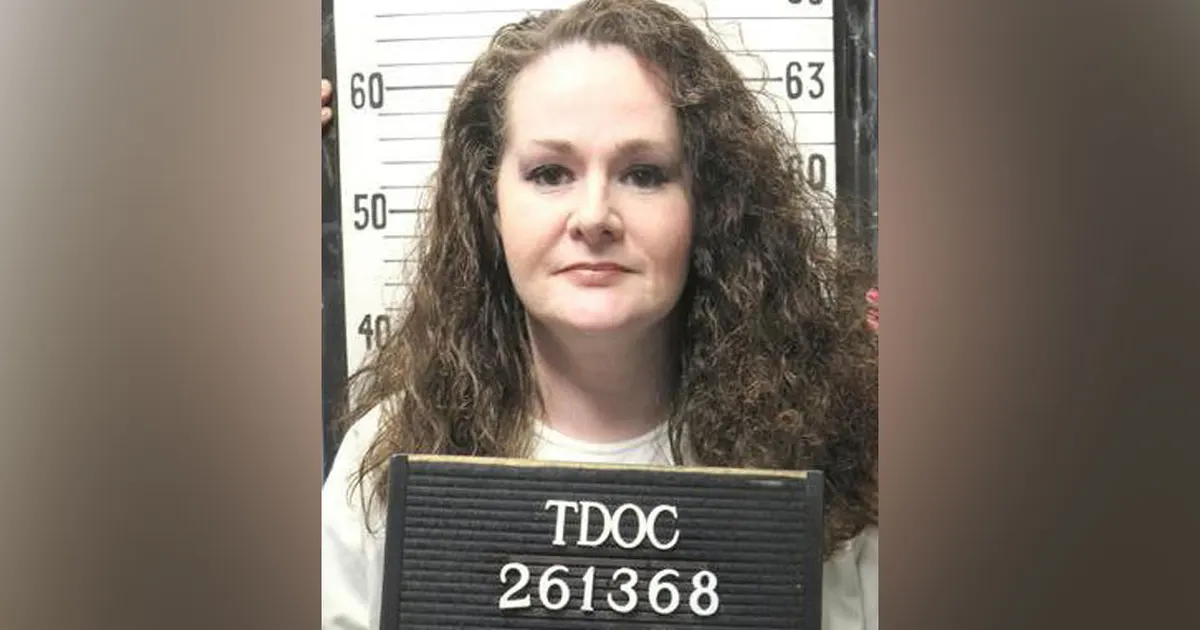
Christa Pike was up and walking around her hospital room on Wednesday, a day after regaining consciousness following Tennessee’s failed attempt to execute her, her lawyers said.
The 50-year-old death row inmate remained seriously injured and faced an uncertain recovery after being given two doses of pentobarbital at Riverbend Maximum Security Institution in Nashville on September 30.
Attorney Stephen Farrell told BBC Radio that Ms Pike had managed to walk a short distance but was suffering significant injuries to her arms.
“She is up and walking for the first time today, but just around the room, not very far,” he said.
“What’s been described to me is that physically there’s quite a bit going on, that her arms are very injured and she’s not able to use them very much.”
Farrell said Ms Pike was alert at times but had difficulty concentrating and could quickly lose her train of thought.
“Good that she is fairly with it, but she’s also somewhat foggy,” he said. “She can lose her train of thought really easily and forgets where she’s going. There could be some permanent damage. We don’t know that yet.”
Her lawyers have said she is angry and confused about what happened. They are also calling for psychological support alongside her medical treatment, saying it is now clearly necessary.
What happens next for Christa Pike?
A judge has ordered the Tennessee Department of Correction to preserve evidence connected to the failed execution, including medical records and material relating to the lethal injection.
The order could assist any future legal action brought by Ms Pike, although her lawyers said they had been unable to begin a lawsuit while she was unconscious and unable to give instructions or consent.
Her legal team is urging Republican Governor Bill Lee to commute her death sentence to life imprisonment without parole. They argue that the failed execution and its medical consequences amount to punishment greater than any previously endured by a death row prisoner.
Mr Lee has halted executions in Tennessee for the remainder of 2026 and ordered an independent investigation into what went wrong. The state’s Department of Correction has said its approved execution protocol was followed and that the procedure did not allow for additional steps beyond those carried out.
Whether Tennessee could lawfully attempt to execute Ms Pike again remains unresolved. Legal experts told the Associated Press that any second attempt would raise complex questions, including whether she remained medically and legally competent to face execution after the failed procedure.
Ms Pike is believed to be the only person to have survived after lethal injection drugs were administered during an execution attempt. Other executions have been halted because medical staff could not establish intravenous access, but no previous case is known to have involved a prisoner remaining alive after receiving the drugs.
The failed execution began after a last-minute court battle. A federal appeals court briefly halted the procedure on September 30 while it considered claims relating to Ms Pike’s history of alleged childhood abuse and rape. The US Supreme Court later allowed Tennessee to proceed.
Witnesses said Ms Pike remained conscious during parts of the procedure and complained that her arm was hurting or burning. After the second dose was administered, she continued breathing and was heard making snoring-like sounds before being taken to hospital.
Ms Pike was sentenced to death for the 1995 killing of her 19-year-old classmate, Colleen Slemmer. She was 18 at the time of the crime and had been due to become the first woman executed in Tennessee in more than 200 years.
Her lawyers have said she now faces a long road to recovery, with her prognosis still unknown.
