


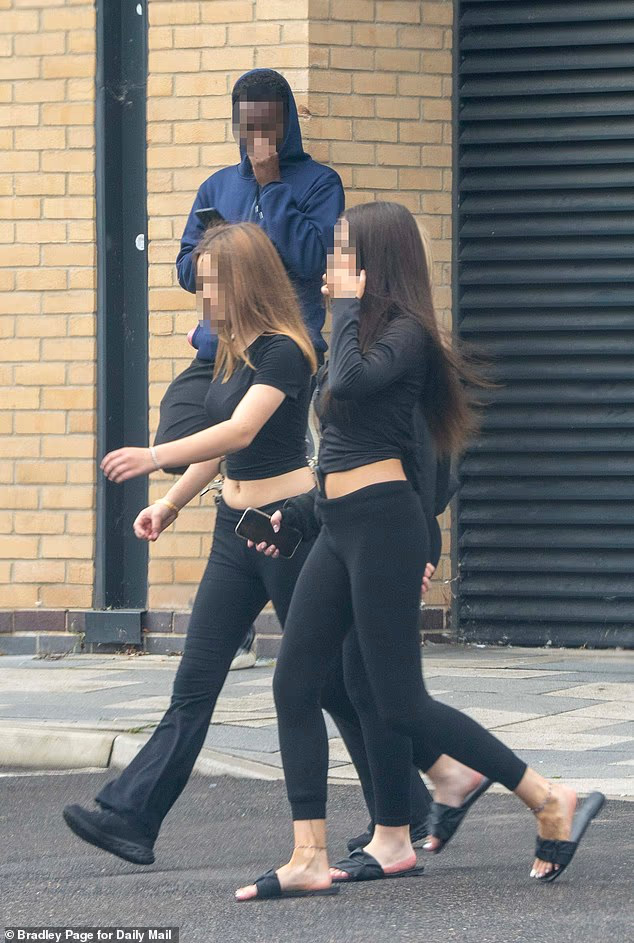
Private security guards are to patrol three Essex town centres after concerns were raised about groups of male asylum seekers allegedly intimidating residents and wolf-whistling at schoolgirls.
Essex County Council, led by Reform UK, said six operatives would begin patrols in Braintree, Colchester and Chelmsford on Monday as part of an initial three-month trial called Operation Vanguard.
The guards will work from 10am to 6pm every day, primarily around locations where asylum seekers are dropped off, while also assisting with other security issues when required.
The council said the scheme was intended to deter anti-social behaviour, reassure residents and gather evidence about whether additional support was needed. It will cost about £118,000 plus VAT and will be funded through a drawdown of up to £150,000 from a community improvement fund.
The move follows Government plans to increase the number of asylum seekers housed at the former RAF Wethersfield site from 800 to 1,245. The Home Office has also told Braintree District Council that the site will remain operational beyond 2027.
Residents at the base regularly travel by bus to nearby towns. Mike Readon, 66, from Braintree, said he had seen groups gathering around the bus station and alleged that schoolgirls were being whistled at as they got off buses.
“It’s horrendous. Lots of women just avoid the town entirely on a Thursday because it’s a totally different environment,” he said.
Mr Readon also claimed groups gathered near cash machines and charity shops, adding that his wife and her friends would not visit the town alone on Thursdays.
Peter Harris, Reform UK’s leader on Essex County Council, said: “Today, Operation Vanguard moves from words to action.”
“Six trained security guards, two each in Braintree, Chelmsford and Colchester, will provide a visible and reassuring presence on our streets, particularly for women and children,” he said. “Our message is simple: the safety of Essex residents comes first.”
Criticism of private security patrols
The plans have been criticised by opposition councillors, who said there was no evidence of a rise in crime linked to asylum seekers in the area.
Labour county councillor Lee Scordis said the decision was “clearly driven by prejudice” and questioned what powers the guards would have and whether police had been consulted.
A council report said the Home Office had found no evidence that the Wethersfield accommodation site had affected crime levels. It added, however, that there was anecdotal evidence, publicly acknowledged by the Home Office, that the presence of asylum seekers had created fear and a perception of increased risk.
Private security guards generally have no more powers than members of the public when dealing with suspected criminality, meaning policing responsibility will remain with the police.
Stephen Robinson, the Liberal Democrat leader of Chelmsford City Council, said communities needed to be safe and cohesive, but accused Reform UK of stoking fear and reinforcing stereotypes about asylum seekers.
“We need effective policing, wherever crime and anti-social behaviour occurs, and investment in projects that really make a difference like Liberal Democrat-led Chelmsford City Council’s Women’s Safety Charter… not ineffective, private security,” he said.
The Home Office said public safety remained its first priority and that criminality should be taken seriously. It said it worked with local police to protect communities around the Wethersfield site, staff and those accommodated there.
“The concerns of communities are central to our immigration reforms,” a Home Office spokesperson said. “We are working to fairly house asylum seekers across the country, close every asylum hotel and move asylum seekers into alternative accommodation including former military sites.”
