


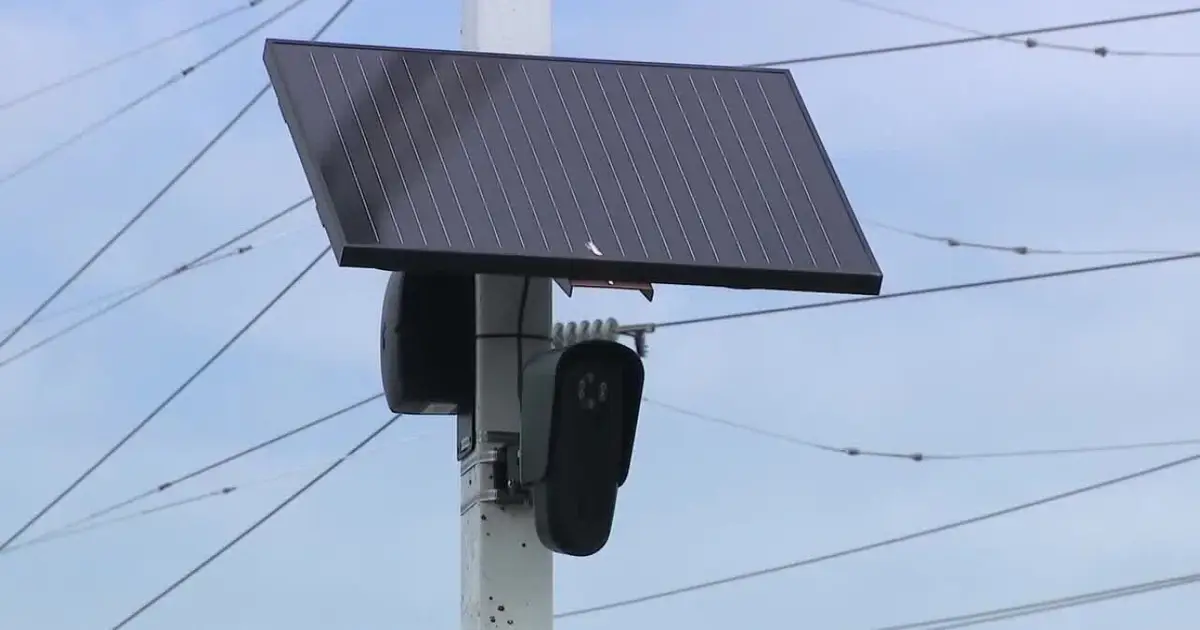
Dallas City Council has rejected a proposal to withdraw $1.5 million in funding for the city’s remaining Flock security cameras, despite growing opposition to the surveillance technology.
Only three council members backed the measure, put forward by Councilman Adam Bazaldua, a prominent critic of the automated number-plate reader system. Had it passed, about 300 cameras still operating in Dallas would have been switched off.
The vote took place on Wednesday, September 2, 2026, as the council considered amendments to the city’s forthcoming budget. Bazaldua had proposed redirecting $1 million towards infrastructure such as pavements and street lighting, with the remaining $500,000 earmarked for eviction advocacy support.
Dallas Flock camera funding proposal rejected
Bazaldua said his objection was not to the technology itself, but to what he described as inadequate oversight of how it could be used.
“Flock’s own chief legal officer has publicly admitted that officers tracking exes is the single most common form of abuse of their platform,” he told the council.
“This isn’t because I want to prevent DPD from doing anything. This is because it’s been done across the country, and there is a lack of control for this to have been abused, and I would hate for that to be something that we heard happened within our own department.”
The cameras capture licence plates and other vehicle details, which are uploaded to a database accessible to law enforcement agencies. Critics have raised concerns about privacy, data retention and the potential for misuse.
Councilwoman Cara Mendelsohn opposed the proposal, warning that it could be seen as “Defund the Police 2.0”. She described the system as an important investigative resource for Dallas police.
“I think, although our violent crime plan is great, part of our violent crime plan has been using Flock to help solve cases,” Mendelsohn said.
Police officials told the meeting that the cameras generate about 13,000 searches each week, covering roughly 2,100 unique number plates. The associated data is retained for a calendar year.
Dallas Police Chief Daniel Comeaux said the system helped officers trace vehicles involved in investigations and narrow searches to specific areas of the city.
“It’s an extra tool to help us solve everything,” he said. “Otherwise, it’s really a needle in a haystack in a city like Dallas.”
The dispute comes after the Dallas Police Department announced that 321 Flock cameras funded through a state grant would be deactivated by September 15. The decision followed Texas Governor Greg Abbott’s pause on state funding for the technology.
More than 300 city-funded cameras are expected to remain in operation after the state-supported equipment is switched off. Dallas police have said they will continue reviewing technology and resources used to support investigations and public safety.
