


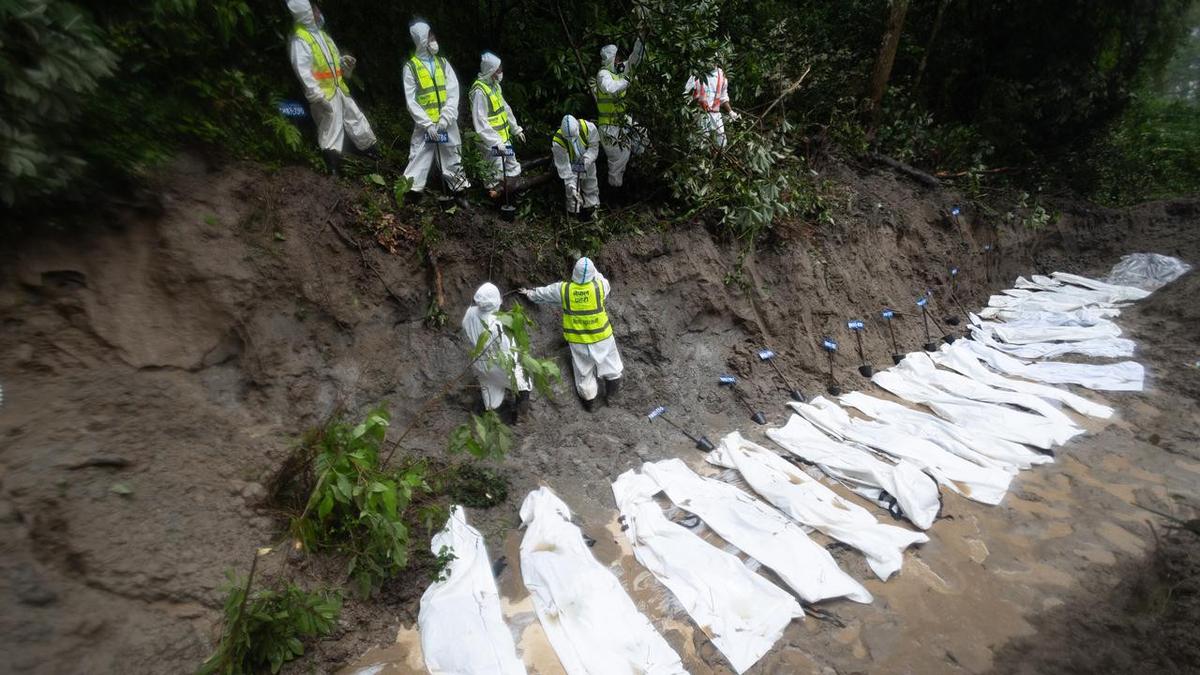
DNA samples are being taken from unidentified victims before they are placed in temporary mass graves in Nepal, as authorities struggle to identify the dead from the catastrophic floods that swept through the Nepal–Tibet border region.
Security forces have established burial sites in forested areas, including Gokarneshwor on the outskirts of Kathmandu and Devghat in Chitwan district. Each set of remains is being photographed, labelled and assigned a reference number so relatives may be able to claim them later.
The disaster began on August 26, when a glacier collapse sent ice, rock, mud and floodwater through communities along the border. More than 1,000 people have been confirmed dead and about 4,000 remain missing, including hundreds of foreign nationals.
In Chitwan, authorities buried almost 100 unidentified bodies on Saturday after the remains began to decompose rapidly. Officials said the bodies had been carried hundreds of kilometres downstream from the disaster zone, with many recovered from rivers and mud.
Ganesh Aryal, Chitwan’s chief district officer, said the decision had been taken because there was no longer enough capacity to store the dead safely.
“We were left with no other option and had to take this step. Our concern was the risk to public health posed by the rapid decomposition of the bodies,” he told Reuters.
Local authorities said 233 bodies had been recovered in Chitwan, but only four had been identified. A 40-member medical team, including forensic pathologists and dental specialists, has been working to preserve DNA and other evidence before further burials take place. ([kathmandupost.com](https://kathmandupost.com/national/2026/08/30/20-identified-out-of-669-flood-victims-as-nepal-prepares-mass-burials))
Nepal Police spokesman Deputy Inspector General Abi Narayan Kafle said 211 of 669 bodies recovered across the affected area were mutilated, partial or severed remains, making visual identification particularly difficult. He said photographs, DNA profiles, clothing, personal effects and burial locations would be permanently recorded. ([kathmandupost.com](https://kathmandupost.com/national/2026/08/30/20-identified-out-of-669-flood-victims-as-nepal-prepares-mass-burials))
Inspector Anil Thapa, who is overseeing the handling of bodies in Chitwan, said many had been submerged for several days before being found.
“The bodies are decaying fast,” he told Reuters. “Of the bodies we have recovered so far, more than half are beyond recognition. Many have no visible faces.”
Forensic DNA specialist Jae Gerhard said samples from close relatives would offer the strongest chance of establishing identities, rather than relying solely on items such as toothbrushes or other personal possessions.
Ms Gerhard, who worked on disaster victim identification after the 2004 Asian tsunami and the 2002 Bali bombings, said remains should be recovered, tagged and documented as quickly as possible. With limited facilities available to store the dead, she said, burial could be necessary provided records were maintained for future identification and repatriation.
Australia’s Department of Foreign Affairs and Trade said on August 30 that 42 Australians remained unaccounted for and that 12 Australian response personnel, including consular officers and Australian Federal Police, had been deployed to Kathmandu. ([ministers.dfat.gov.au](https://ministers.dfat.gov.au/minister/anne-aly/media-release/additional-humanitarian-support-nepal))
Nepal’s authorities have described the burials as temporary. Officials said relatives would be able to use the preserved DNA and other records to identify remains and, where necessary, arrange exhumation for religious funeral rites.
