


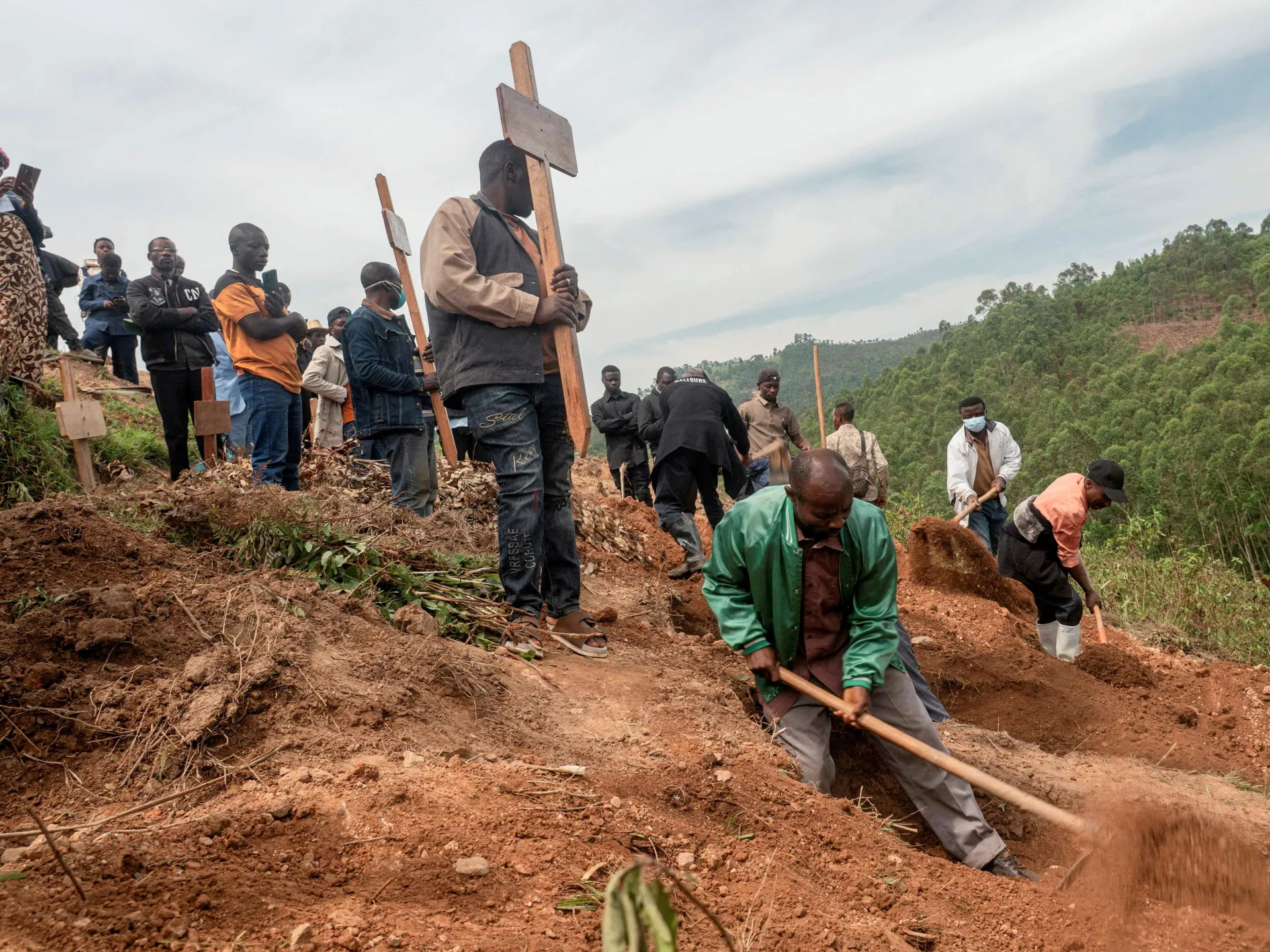
The Ebola death toll in the Democratic Republic of the Congo has risen above 5,000, according to government data, as authorities struggle to contain the country’s deadliest recorded outbreak of the virus.
More than 10,000 people have been infected since the outbreak was declared in May. The latest fatalities were announced on Friday.
The outbreak is being caused by the rare Bundibugyo strain, for which there are no approved treatments or vaccines.
Delayed detection, conflict and overstretched health services have contributed to the spread of the virus, which has reached eight of the Democratic Republic of the Congo’s 26 provinces.
Cases have also been reported in neighbouring countries. Nigeria became the fourth African country to record an Ebola case last week, extending the outbreak’s spread to West Africa, while Kenya and Uganda have also reported cases.
The outbreak is the second-largest Ebola epidemic on record. It is exceeded only by the 2014-2016 epidemic, which infected more than 28,600 people and killed more than 11,000 across Guinea, Liberia and Sierra Leone.
Several governments have introduced travel restrictions or quarantine measures for people arriving from affected countries.
Saudi Arabia suspended travel to and entry from Kenya on Friday, according to the Saudi Press Agency. The measures include stopping Saudi citizens from travelling to Kenya and suspending all types of visas for travellers from the country.
Travellers arriving from Kenya are also barred from entering Saudi Arabia if they have transited through a third country after staying in Kenya or another Ebola-affected country within the previous 21 days.
In June, Saudi Arabia suspended travel to and entry from the Democratic Republic of the Congo, Uganda and South Sudan.
