


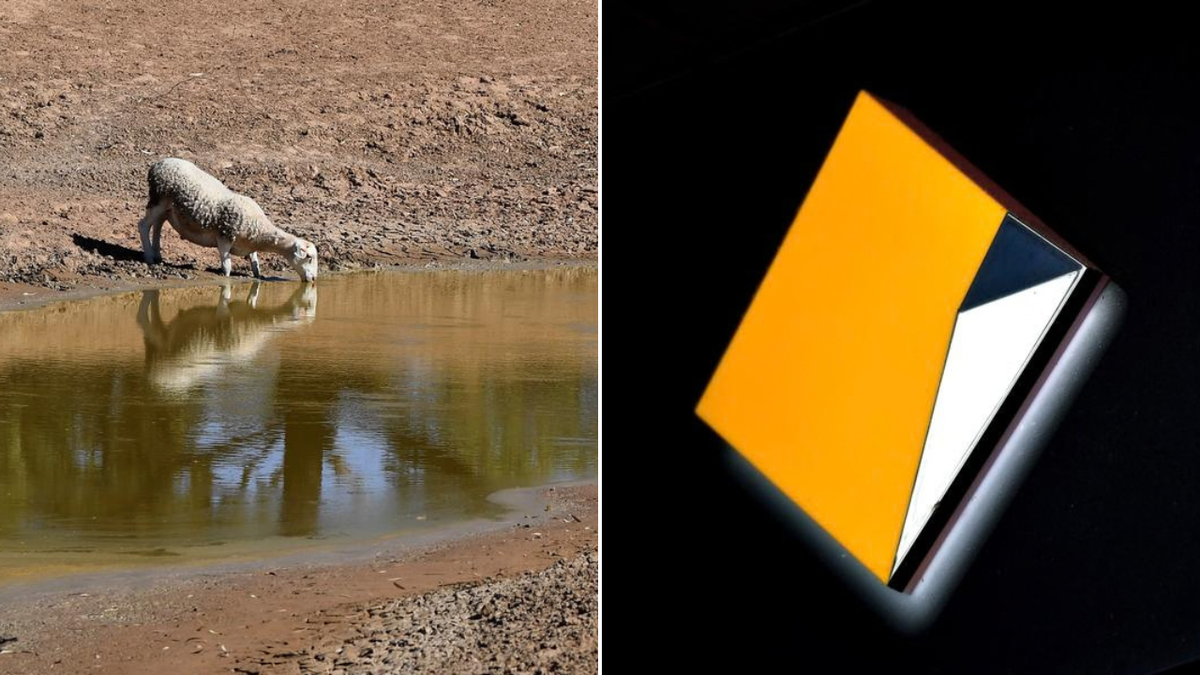
Australia’s economy could lose about A$13.4 billion over the next two years as a strengthening El Niño threatens agricultural production, Commonwealth Bank analysis has found.
The hit would leave gross domestic product about 0.45 percentage points lower than it otherwise would be, while drier conditions risk pushing up food prices and adding to inflationary pressure.
The outlook comes as farmers contend with higher oil and fertiliser costs, rising interest rates and labour shortages. East coast producers have so far avoided the worst effects, although northern New South Wales and Queensland have experienced particularly dry conditions.
Dennis Voznesenski, an agricultural economist at Commonwealth Bank, said the winter cropping season had begun before El Niño took hold, shielding most regions from severe dryness so far.
The Australian Bureau of Agricultural and Resource Economics and Sciences is forecasting a 61 million tonne harvest, which would make 2026 the country’s fourth-best season on record.
However, Mr Voznesenski warned that a strengthening El Niño through summer and spring could deplete moisture reserves and cause much greater damage to the 2027 crop.
Farmers change plans as dry conditions threaten production
Farmers are reducing planted areas and shifting towards less water-intensive grains such as wheat and barley, according to Vitor Pistoia, a senior grains analyst at Rabobank.
That means relying less on potentially more lucrative crops such as canola and chickpeas, limiting farmers’ income prospects and leaving them more exposed to movements in the wheat market.
Beef and sheep producers face a similar challenge as they reduce herd numbers, increasing the supply of animals sent to slaughter and putting downward pressure on livestock prices.
Consumers, however, may not see cheaper meat. Beef prices are expected to remain high because of record export demand from the United States, Mr Voznesenski said.
Hamish McIntyre, president of the National Farmers Federation, said he had been selling older animals on his farm in south-west Queensland and stockpiling feed in preparation for more difficult conditions.
Higher irrigation costs could also reduce production of water-intensive fruit and cotton, as well as meat and grain output. “Which drives up the costs in our metropolitan areas, which is inflationary, which is a worry,” Mr McIntyre said.
El Niño could add to inflationary pressure
Using the 2002-03 Millennial drought as a guide, Mr Voznesenski and Commonwealth Bank colleague Harry Ottley estimated that a comparable production shortfall in 2026-27 could add 0.25 percentage points to inflation.
Sarah Hunter, chief economist at the Reserve Bank of Australia, has previously warned that El Niño could make it harder for the central bank to bring inflation down from 4 per cent in August to its 2.5 per cent target.
A severe outbreak of H5 bird flu among commercial producers could cause egg prices to rise by 60 per cent and poultry prices by 20 per cent, adding a further 0.12 percentage points to inflation in the first year, the analysts predicted.
Those figures represent a severe scenario. The base-case forecasts for both El Niño and bird flu are more moderate.
After two strong seasons, farmers across eastern Australia have built up reserves to help withstand a poor harvest. Mr Pistoia said the sector was better placed than in previous El Niño events, while improvements in agricultural technology and science had strengthened its preparations.
“As Australian farmers, we’re always hoping for the best, but preparing for the worst,” Mr McIntyre said.
