


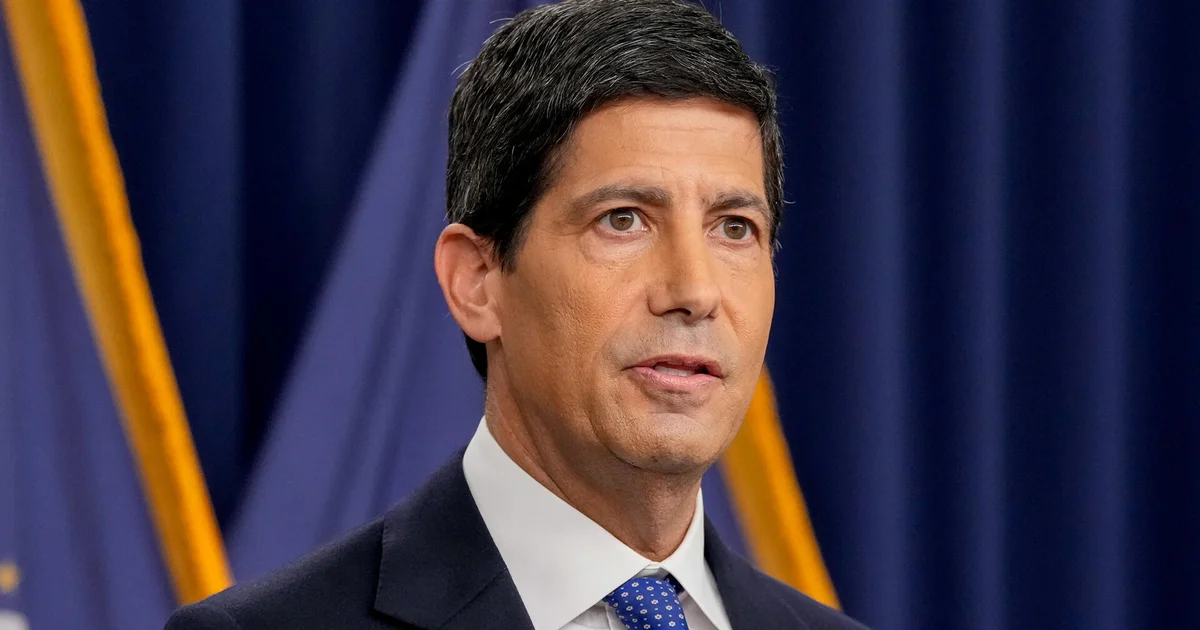
The Federal Reserve has raised interest rates by a quarter of a percentage point, its first increase in three years, as chairman Kevin Warsh signalled that further rises could follow if inflation remains too high.
The widely expected decision unsettled financial markets. The Dow Jones Industrial Average fell by 631 points, or 1.2 per cent, as investors focused on the central bank’s more hawkish tone.
Federal policymakers forecast one further increase in 2026 and none in 2027. However, Mr Warsh indicated that the Fed would be prepared to go beyond those projections if necessary to bring price rises under control.
“The plain fact is that inflation is too high, and has been for too long,” Mr Warsh said at a press conference after the decision. He said the central bank wanted to take a “timelier” approach to curbing price increases.
The Fed rate hike puts inflation at the centre of policy
Mr Warsh, who was named by Donald Trump to succeed Jerome Powell earlier this year, had previously vowed to tackle inflation while also echoing the president’s view that the economy could benefit from lower interest rates.
Inflation has accelerated since Mr Warsh’s nomination in January, driven largely by the impact of the war in Iran on global oil prices. Consumer prices were rising at an annual rate of 2.4 per cent in January, close to the Fed’s 2 per cent target, but reached a three-year high of 4.2 per cent in May. Although the rate eased to 3.4 per cent in August, it remains above the level officials want.
Jaison Davis, an economic research analyst at GlobalData, said Mr Warsh’s remarks pointed to “higher rates for longer”. He said the threshold for cutting rates was now much higher and would require clear evidence that inflation was returning to target.
Tim Duy, chief US economist at SGH Macro Advisors, said Mr Warsh had shown “his true inner hawk and a willingness to lead in that direction”.
Iran war adds to pressure on the Federal Reserve
Mr Warsh cited the conflict in Iran as one reason officials had unanimously backed the rate rise. The war has sharply reduced oil flows from the Persian Gulf, while fighting between Saudi Arabia and Iran-backed Houthis in Yemen threatens another important waterway.
Crude oil prices have climbed above 100 US dollars a barrel in recent weeks. Diesel prices in the US reached a record 6.40 dollars a gallon on Thursday, up 73 per cent on a year earlier, while petrol rose to 4.44 dollars a gallon, according to AAA data.
“There’s no hiding from hot spots around the world, and our judgment about what is the most likely or least likely of the geopolitical situation has changed,” Mr Warsh said.
He acknowledged that the Federal Reserve could not control oil prices, but said it had to prevent higher energy costs from spreading through the wider economy.
“We cannot affect any individual price, whether it be oil prices, whether it be foodstuffs at the grocery store. But what we can do and will do is ensure that any changes in relative prices don’t broaden out,” he said.
Warsh signals independence from the White House
The tougher stance has strengthened Mr Warsh’s credibility with investors, according to economists, who said it suggested the Federal Reserve was willing to prioritise inflation even if that put it at odds with the White House.
Chris Low, chief economist at FHN Financial, said the new chairman had established his credibility through both the rate rise and his hawkish tone.
After the meeting, Mr Trump called for interest rates to be cut to “1% or less”, saying the US was “the Best Credit in the World — BY FAR”. He added: “LOWER THE INTEREST RATES FOR THE UNITED STATES OF AMERICA, AND FAST!”
Heather Long, chief economist at Navy Federal Credit Union, said the increase had restored confidence that the central bank would curb inflation “no matter what the White House or anyone else says”.
