


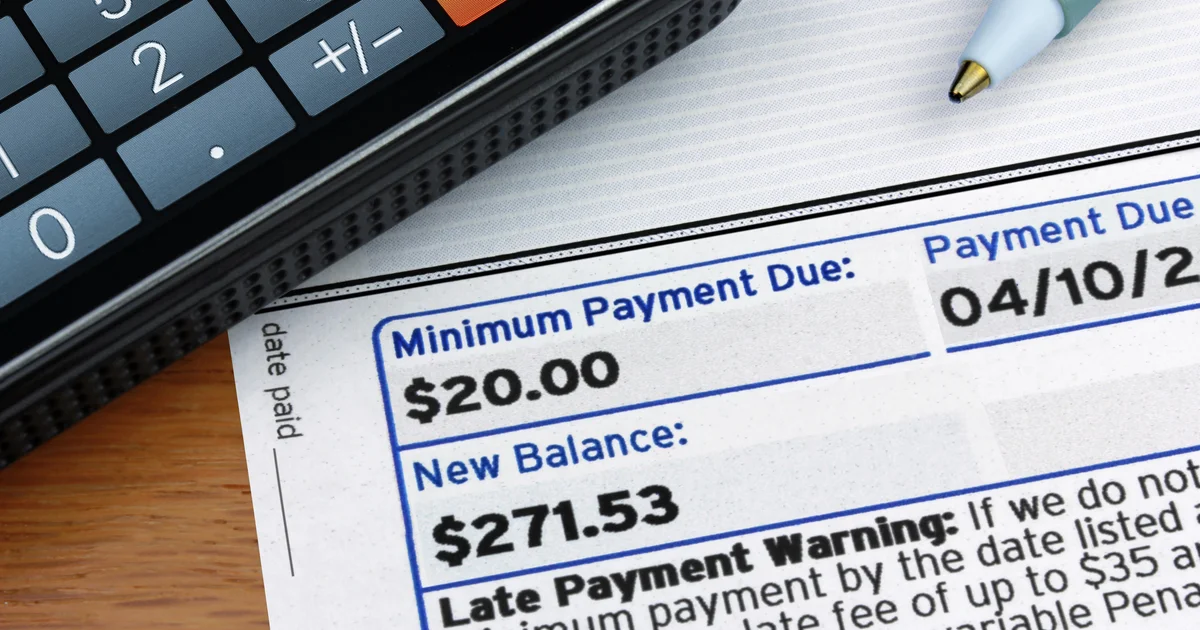
Paying less than the minimum payment on a credit card will generally be treated as a late payment, even if money has been sent to the card issuer. The account may incur a late fee, while interest continues to build on the outstanding balance.
For someone facing rising household costs and expensive credit card debt, making a partial payment can seem preferable to paying nothing. But sending, for example, £190 towards a required £200 minimum would not normally meet the monthly obligation.
What happens if you pay less than the credit card minimum?
A payment is usually considered on time only when at least the full minimum amount has reached the issuer by the due date. Paying part of the sum does not necessarily satisfy that requirement, even where the issuer accepts the money and the overall balance is reduced.
The unpaid amount can leave the account classified as late. Alongside a possible late fee, interest will generally continue accruing on the remaining balance, increasing the cost of borrowing.
Depending on the card agreement and the account’s payment history, failing to meet the minimum may also result in the loss of a promotional interest rate or trigger a penalty annual percentage rate on new purchases.
A partial payment does not reset the arrears clock. If the account remains unpaid for long enough to become 30 days overdue, the issuer may report the missed payment to credit reference agencies, potentially damaging the borrower’s credit score and making future borrowing more difficult or expensive.
Continuing to fall behind can lead to further credit damage, the closure of the account and, eventually, the debt being charged off or passed to collections. Paying something towards the balance may reduce the amount owed, but it should not be confused with bringing the account up to date.
What to do if you cannot afford the minimum payment
Anyone who is repeatedly unable to meet the minimum should contact the card issuer as soon as possible. Some issuers have hardship programmes that can temporarily reduce the interest rate, lower the monthly payment or alter other account terms.
Where several credit cards are involved, a debt consolidation loan could combine the balances into one fixed monthly payment, potentially at a lower interest rate. A debt management plan arranged through a credit counselling agency may also help restructure payments and reduce interest costs.
Debt settlement may be considered by people facing serious financial difficulty who cannot realistically repay their unsecured debts in full. However, creditors are not required to accept a reduced amount, and the approach can carry significant financial and credit consequences.
Acting early can leave borrowers with more options. Waiting until several payments have been missed may result in a larger balance, more serious delinquency and fewer straightforward ways to regain control of the account.
