


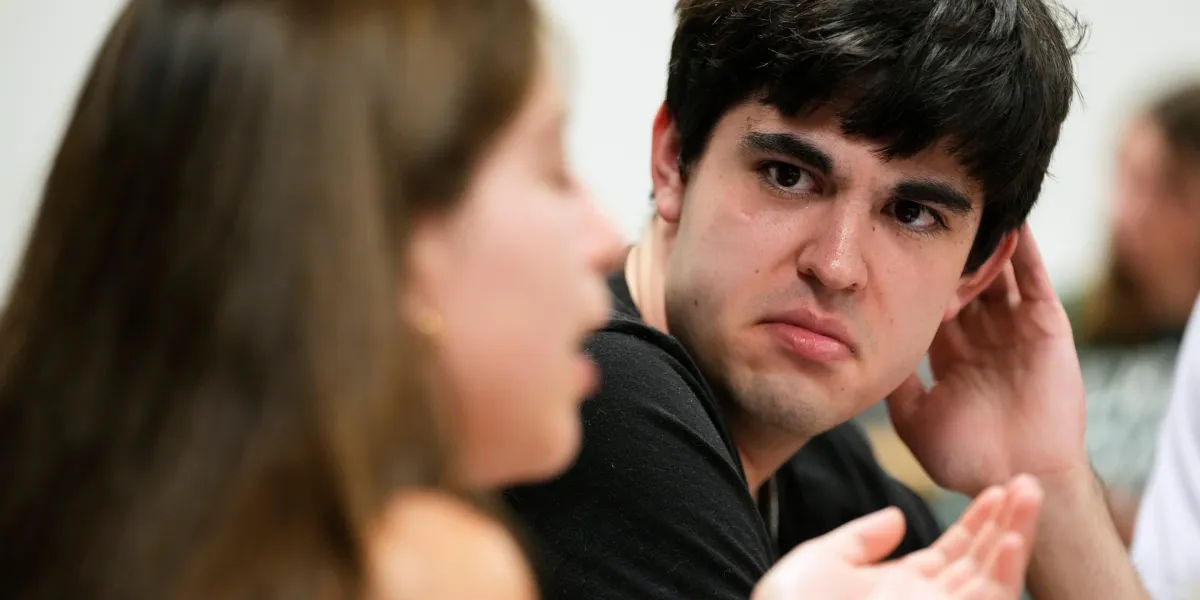
Gen Z economic anxiety over jobs, housing and the prospect of artificial intelligence reshaping work is fuelling political disillusionment among students at Michigan State University and across the US.
Many young Americans say traditional routes into adulthood no longer appear reliable, with internships difficult to secure, homeownership out of reach and starting a family delayed. Their frustration is also feeding support for candidates who promise to challenge the political establishment.
Frankie Llerandi, 21, is due to graduate in the spring with an economics degree and an interest in data analytics. But after three years at Michigan State, he has not secured a single internship.
He said most of his cousins had been unable to buy a house or start a family even after reaching their thirties, adding to his sense that “true adulthood” remained distant.
Praveen Amunugama, a 21-year-old biochemistry student, said owning a home had become something he joked about, despite genuinely wanting one. He plans to continue into postgraduate study in the hope that the job market will improve.
“They want to be able to afford things, raise a good family,” he said of his friends.
Young Americans face an uncertain job market
The economic picture for younger people is mixed. Unemployment among those aged 22 to 27 stands at 7.2%, above the overall rate of 4.1%, while unemployment among recent university graduates is 5.6%.
Kathryn Edwards, an economist based in Texas, said those figures, combined with historically high house prices and rising costs for essentials including food and healthcare, created a particularly difficult environment for young people.
“It’s pretty bad for them,” Ms Edwards said, arguing that younger Americans were also recognising wider warning signs in the economy.
A 2024 study found that Generation Z was on course to become wealthier than millennials, who in turn were wealthier than the generation before them. But Kevin Corinth, an economist who co-authored the study, said the uncertainty facing young people was understandable.
He pointed to the potential impact of artificial intelligence and the fact that many people were taking longer to leave home and start families. “For previous generations, if you took certain paths you were likely to succeed, to do better than your parents,” he said. “For young people now, that path is not as clear.”
Students are also navigating a job search dominated by online applications and AI-powered recruitment systems. Marla McGraw, assistant dean of career management at Michigan State’s business school, said students were frequently unsure whether vacancies were genuine.
“Think about the amount they get spammed and scammed, and there are tons of fake jobs out there,” Ms McGraw said. “They’re always coming in here going, ‘Is this real?’”
Her message to disheartened students is that “the job market is tough, but you’re tougher”.
Economic anxiety is reshaping political loyalties
The unease has extended beyond personal finances. Kira Saiti, a 19-year-old student, said repeated images of violence and suffering on her phone, including from the Middle East and the US, had affected her view of the future.
“It’s kind of hard to look at that and say, ‘This world is a great place,’” she said.
Julian Bautista, 20, said cuts by the Trump administration had severely damaged the environmental sector he hoped to enter. He now plans to seek work in the Netherlands after graduating and described the US as a failure of democracy led by corrupt politicians, in his view.
“Throughout my life, we’ve either stagnated or declined, we haven’t improved,” Mr Bautista said.
Two years ago, economic pessimism helped Donald Trump win 47% of the young vote, according to AP VoteCast, a higher share than Republicans typically receive. Since then, concerns about AI and the Iran war have been added to the pressures shaping young voters.
Mr Llerandi, Ms Saiti and Mr Bautista support progressive, anti-establishment Democratic candidates in Michigan, including Abdul El-Sayed, a former public health official running for the US Senate, and Will Lawrence, a liberal activist seeking to unseat Republican congressman Tom Barrett in the university’s swing district.
Mr Lawrence told students that organising had given him a sense of direction when he was younger. Yet Mr Bautista said afterwards that many young people now wanted more sweeping change from their leaders.
“Our leaders are representing us less,” he said. “People are desperate for big stuff.”
The frustration is not confined to the left. Karlee VanAntwerp, a 21-year-old Michigan State senior and local Turning Point leader, said political divisions had become more extreme and made it harder to work with people who held different views.
She said successive administrations appeared to undo one another’s policies, leaving young people feeling that the country was going in circles. “That contributes to the political temperature being so high, because people feel nothing changes,” she said.
