


Social media companies could face fines of up to $109.2 million for failing to keep under-16s off their platforms under legislation due to return to the Australian Senate on Tuesday.
The Albanese government is seeking stronger enforcement powers for eSafety Commissioner Julie Inman Grant, amid continuing concerns that children are still accessing Facebook, Instagram, TikTok and other age-restricted services.
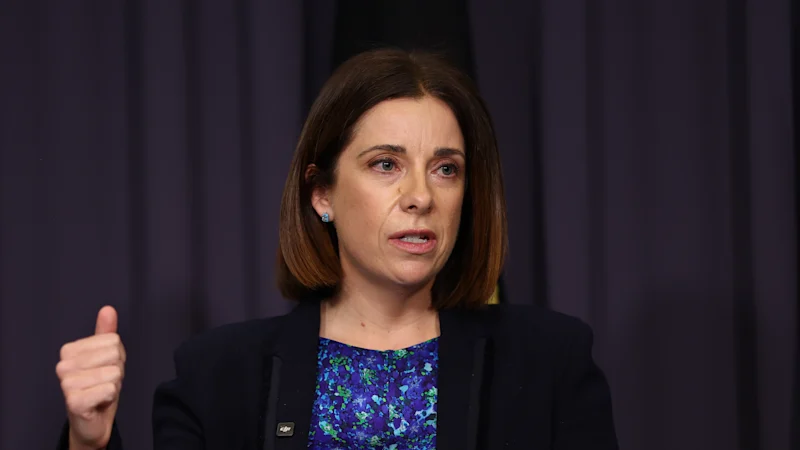
Communications Minister Anika Wells has urged senators to pass the bill without further delay, arguing that platforms have not done enough to comply with Australia’s social media minimum-age laws.
“Australian kids and parents needed these laws eight weeks ago,” Ms Wells said, accusing the Coalition and Greens of sending the bill to an eight-week inquiry instead of allowing it to proceed immediately.
The proposed changes would expand eSafety’s powers to obtain information from technology companies and double the maximum civil penalties for breaches of the minimum-age framework.
Parliament’s Environment and Communications Legislation Committee reported on the bill in August after hearing evidence from child-safety groups, technology companies, academics and digital-rights organisations. It found broad agreement that children needed greater protection online, but disagreement over whether the proposed powers were proportionate and effective.
eSafety is investigating Facebook, Instagram, Snapchat, TikTok and YouTube over possible non-compliance with the existing rules. The regulator has warned that the continued presence of children on a platform is not, by itself, proof that a company has broken the law, but that it must show it has taken reasonable steps to prevent under-16s from holding accounts.
Ms Wells said more than five million under-16 accounts had been removed or restricted, although eSafety’s March compliance update cautioned that the figures referred to accounts rather than individual users. It also found that around seven in 10 parents whose child had held an account before the restrictions began said the child still had one on Facebook, Instagram, Snapchat or TikTok.
Digital duty of care plan faces free-speech concerns
The fines are expected to form part of a wider digital duty of care regime, with the government preparing to publish an exposure draft for public comment later this week.
The proposed framework would place greater responsibility on online services to identify and reduce foreseeable harms, including illegal pornography and material linked to bullying, body image and other forms of psychological harm affecting young people.
Draft measures are also expected to give users a clearer choice over whether algorithmic systems determine what appears in their social-media feeds.
The proposals have already exposed divisions within the Coalition. Opposition leader Angus Taylor said he was concerned the government could be moving towards censorship and argued that ministers should first address the continued use of social media by under-16s.
“It’s not working,” Mr Taylor said, referring to the existing restrictions. He warned against launching a separate scheme that could create “enormous ministerial discretion around censorship on the internet”.
Shadow communications minister Sarah Henderson said the Coalition would examine the exposure draft but objected to the prospect of ministers being given power to regulate categories of online harm without direct parliamentary oversight.
However, opposition home affairs spokesman Jonathan Duniam said there could be a case for allowing users to choose whether they were shown algorithmically curated material, provided the rules did not unnecessarily restrict individual rights.
