


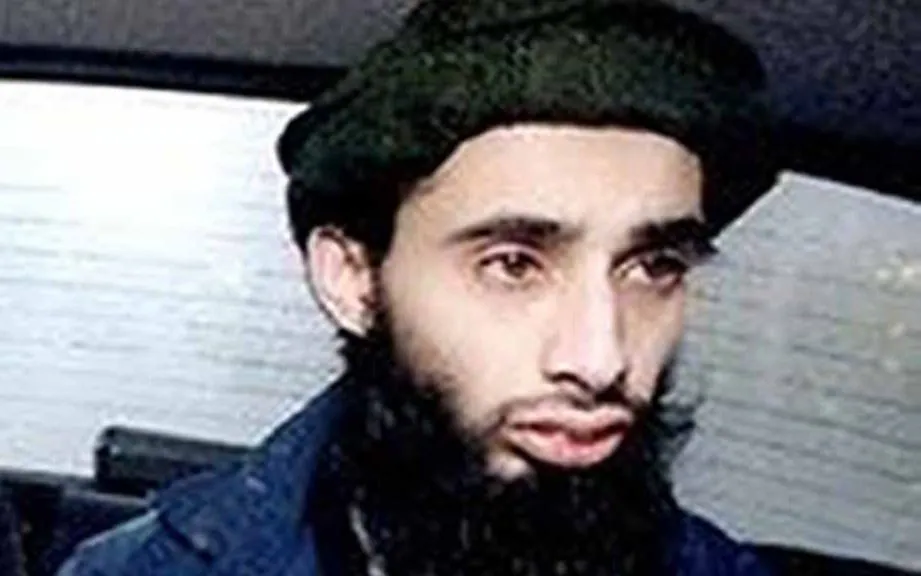
An Islamist extremist with confirmed links to the 2005 London bombings has been released from the secure psychiatric hospital where he had been detained, despite repeated warnings from police and a psychiatrist that he continues to pose a threat to national security.
Haroon Aswat, 50, has been discharged from Bethlem Royal Hospital in Bromley, south-east London, the Telegraph understands, with a Home Office source confirming he has been transferred to another institution where he will receive specialist support. The move follows a High Court ruling last year that Aswat, originally from Batley in West Yorkshire, could be released once he had completed treatment for his mental illness.
Aswat first came to the attention of British authorities in 2005, when police traced 20 phone calls made by the 7 July suicide bombers, in the hours before their attacks, to a phone linked to him. The bombings killed 52 people and injured more than 800 in central London. Aswat was arrested and detained in Britain, but what followed was a prolonged legal battle with the United States, which sought his extradition over an earlier allegation: that in 1999, under the direction of the hate preacher Abu Hamza, he had plotted to establish an extremist training camp in Oregon. He was also said to have trained at a camp in Afghanistan in 2001 and to have stayed at an al-Qaeda safe house in Pakistan, where he met two of the future 7/7 bombers.
Aswat was finally extradited to the US in 2014, and the following year a New York court sentenced him to 20 years in prison for supporting a foreign terrorist organisation. According to US court documents, Aswat told prison staff in 2017 that Osama bin Laden had been his “commander” and that he would “behead all of you,” and separately stated that he had been “a mastermind” behind both the 9/11 attacks and the 2005 London bombings. His sentence was ultimately reduced to seven years to account for time he had earlier spent detained at Broadmoor Hospital in Berkshire, and he was deported back to Britain in December 2022, where he was detained at Bethlem Royal Hospital under the Mental Health Act — a move understood to have been driven by national security concerns.
Aswat has been diagnosed with schizoaffective disorder, a condition that can produce unpredictable and aggressive behaviour, and officials warned he could radicalise impressionable individuals around him. Notably, a psychiatrist’s report prepared in 2022, before his extradition, found no evidence that Aswat had the condition at the time of the Oregon offences in 1999. The same report concluded that “even when in a relatively stable mental state [Aswat] has continued to express violent extremist Islamic ideology,” noting that he was “highly ambivalent about the need for medication and had relapsed twice as a result of stopping treatment,” coinciding with violent outbursts. It warned that “there remains the risk of Islamic violent extremism.”
Despite this, the High Court found last year that Aswat could be released once his treatment was complete, even after hearing evidence from several police officers who assessed that he “remains a risk to national security.” The case has also drawn scrutiny over a gap in the legal process: because Aswat’s release falls under mental health law rather than the standard framework for freeing convicted terrorist offenders, he has not undergone a full, formal counter-terrorism risk assessment. Remarks made by the presiding judge, Mr Justice Jay, at an earlier hearing in the case — in which he was reported to have wished Aswat well as proceedings concluded — subsequently drew strong criticism from senior political figures, including calls for the judge to face sanction. Under the terms of his release, Aswat will be subject to a notification order requiring him to inform police of his home address, any vehicles registered to him, and details of any foreign travel.
Chris Philp, the shadow home secretary, condemned the decision, telling the Telegraph: “It is staggering this man is being released. Aswat is a violent Islamist terrorist with serious mental health problems. He has been involved in plots that led to mass murder, and a psychiatrist concluded that he still espouses extremist views. Psychotic Islamist extremists like Aswat are an ongoing danger to the public and should not be released at all. If there is any basis upon which to deport him, then that would be a good alternative.” The prospect of his release had previously drawn similarly strong criticism from other senior opposition figures when it first emerged last year.
A Home Office spokesman said: “Protecting the British public is the Government’s first priority. We have some of the most robust counter-terrorism measures in the world, including powers for police and intelligence services to monitor and manage the risk posed by terrorist offenders and criminals. We do not routinely comment on individual cases, but where individuals are released from detention, appropriate measures are in place to manage risk and ensure public safety.”
