


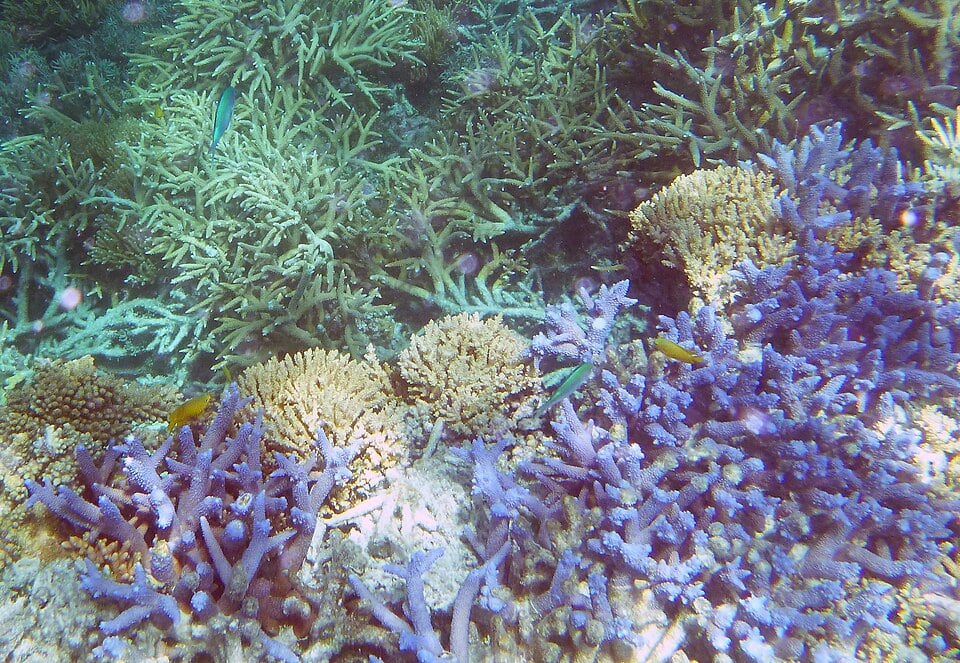
The Great Barrier Reef will not be recommended for listing as an endangered World Heritage site, according to a draft decision from UNESCO, though the finding still requires formal sign-off from the World Heritage Committee before it becomes final.
The draft, released in Paris on Friday, found that Australia was making progress addressing the reef’s main pressures — climate change, water quality, sustainable fisheries management and land clearing — and recommended against placing it on UNESCO’s list of World Heritage sites in danger. According to the South China Morning Post, the finding will now go before the full World Heritage Committee at its annual meeting in Busan, South Korea, running from 19 to 29 July, where a final decision is expected.
Australia’s assistant tourism minister, Nita Green, welcomed the news on Saturday, saying the decision “recognises Australia’s continued efforts to protect and manage this important icon.” Speaking from Canberra, she added: “Australia welcomes UNESCO’s decision to not list the reef as endangered, and recognise all of the work that’s been going into protecting the reef.” The Great Barrier Reef Marine Park Authority also acknowledged the draft finding, crediting what it called enhanced collaboration between the federal and Queensland governments in tackling the threats facing the reef, and thanking UNESCO’s World Heritage Centre and the International Union for Conservation of Nature for their assessment.
Queensland’s state government offered its own response, welcoming the decision and pointing to a newly announced $330.5m investment in reef health in its 2026–27 budget. The reef supports an estimated 77,000 jobs in the state and contributes around $9bn to the national economy each year, according to the state government, a similar figure to the more than A$9bn (US$6.25bn) cited by Reuters. It is that economic weight — along with the more than 2 million visitors the reef attracts annually — that has driven years of lobbying by the Australian government to keep the site off the danger list, amid concern that such a listing could deter tourists.
The reef’s underlying condition remains a serious concern for scientists, even as it avoids the formal “in danger” designation. UNESCO has monitored the site annually since 2021, when it first warned the reef was at risk of being added to the endangered list, and a UN scientific panel recommended in 2022 that it should be listed. The South China Morning Post reported that hard coral cover declined substantially during 2024–2025, when above-average water temperatures triggered what it described as the reef’s sixth mass bleaching event since 2016 — an update on earlier assessments that had put the total at five such events over the same period. Bleaching occurs when unusually warm waters cause coral to expel the algae that give it colour and much of its energy, turning it white and leaving it more vulnerable to death. The Queensland government has identified climate change as the primary driver of the rising sea temperatures behind the trend, with extreme weather, land-based run-off, coastal development and predation by Crown-of-thorns starfish also placing additional strain on the ecosystem.
Stretching roughly 2,300km along the Queensland coast and first inscribed as a World Heritage site in 1981, the reef is home to some 400 species of coral and 1,500 species of fish, making it the largest coral reef ecosystem on the planet. Its long-term fate now rests on both the continued success of Australia’s conservation efforts and the outcome of this month’s meeting in Busan, where the World Heritage Committee will decide whether to adopt UNESCO’s draft recommendation.
