


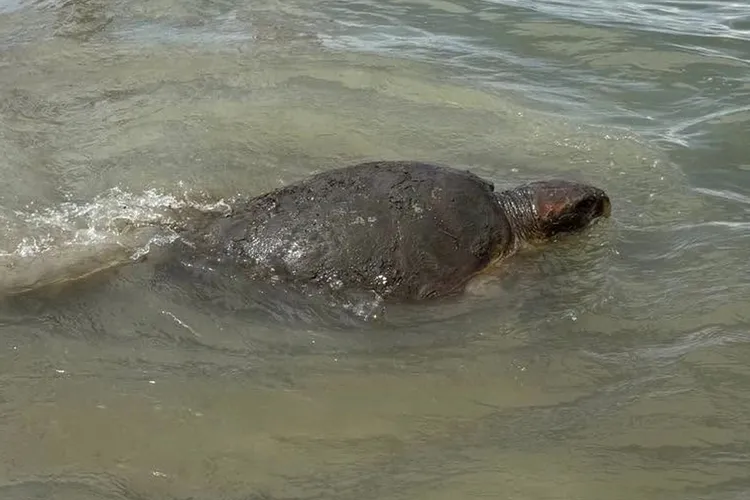
A 250-pound loggerhead sea turtle that wandered nearly a mile off course into a Georgia marsh has been safely guided back to the Atlantic Ocean, thanks to a rescue effort that stretched over several hours and drew together wildlife officials, park rangers and volunteers.
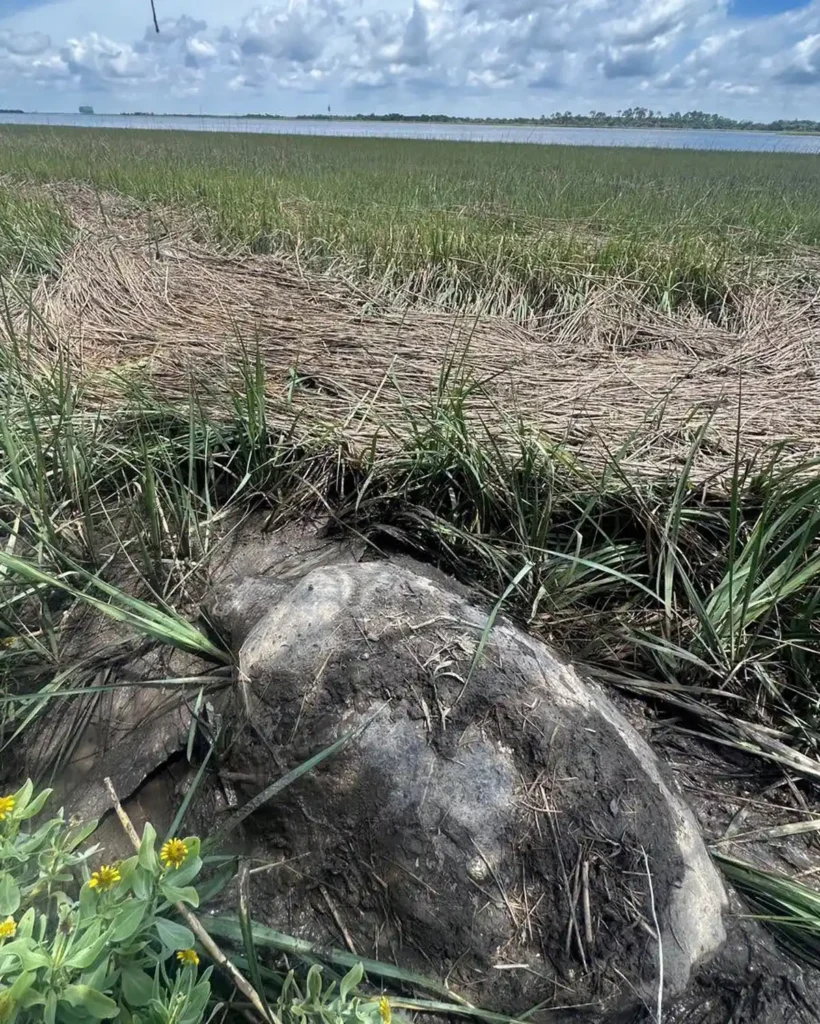
The unusual rescue began when Tammy Smith, a longtime volunteer with the Tybee Island Marine Science Center’s sea turtle project, spotted the animal in marsh grass beside a trail along Highway 80, far from the beach. Sarah Alley, the centre’s curator, responded to the scene and confirmed it was an adult female loggerhead, which had crawled roughly 0.8 miles into the marsh alongside the South Channel of the Savannah River, close to the entrance of Fort Pulaski National Monument. “She had a long crawl through the grass, parallel to the river, and had turned back around and ended up right by the trail,” Alley said in a Facebook post shared by the marine science centre.
After contacting biologists with the Georgia Department of Natural Resources, Alley realised help would take some time to arrive, and settled in to keep the turtle safe in the meantime. “The plan was to keep the turtle cooled off with water and wet towels until Georgia DNR was able to arrive,” she wrote. “Luckily, I also had my beach umbrella in the car and was able to keep her shaded.” Alley stayed with the animal for about three hours, keeping her calm and cool, and gave her a name in the process. “I decided to call her Wilbur because she was like a little marsh piggy, slapping her flippers in the mud when I got there,” she said, adding that the turtle showed no signs of injury and was “very strong, and very large.”
Once help arrived — Georgia DNR Sea Turtle Program coordinator Mark Dodd, biologist Blake Marin, a Fort Pulaski park ranger, marine science centre educator Kayleigh, and Alley’s partner Chris — the team carefully manoeuvred Wilbur into a large Velcro sling and carried her out of the marsh by ATV. From there, she was loaded onto a DNR truck and driven to the Gulick Street area of North Beach, where she was released back into the ocean.
Before letting her go, Alley took the chance to measure the turtle, recording a shell length of around 3.2 feet and an estimated weight of at least 250lbs. Because Wilbur had no existing identification tags, and given the stress of her ordeal, officials decided against tagging her before release. She had, however, left something behind: a single egg, thought to have been laid because of the stress of the experience. Georgia DNR collected it for genetic testing as part of an ongoing University of Georgia research project led by Dr Brian Shamblin, which may yield further information about Wilbur in the future.
Loggerheads are listed as a threatened species, facing pressures ranging from fishing bycatch and habitat loss to ocean pollution, vessel strikes and the effects of a changing climate. Encouragingly, Wilbur’s rescue comes during what has been described as a historic nesting season on Tybee Island this year, with loggerheads laying a record number of nests along the Georgia coast; the state’s nesting season typically runs from May through October.
Reflecting on the rescue, the Tybee Island Marine Science Center sent Wilbur off with a hopeful message: “Swim safe out there, Wilbur — and we hope to have you nest safely on Tybee’s beach!” Anyone who spots an injured or distressed sea turtle in Georgia is urged to contact the state’s Department of Natural Resources on its dedicated hotline, 1-800-2-SAVE-ME.
