


An oil price rise driven by the escalating US-Iran war is set to increase pressure on airfares, petrol and diesel, with airlines reviewing routes, fares and capacity as fuel costs climb.
Crude oil rose above $US100 a barrel and approached $US110 last week, compared with about $US89 before the conflict expanded in February. Jet fuel refining margins, which are more volatile, reached $US163 a barrel.
Concerns about further disruption to supplies have intensified after Yemen-based Houthi militants launched a fresh series of attacks and seized an island in the Red Sea. Saudi Arabia has been using the waterway as an alternative oil-export route to avoid the Strait of Hormuz.
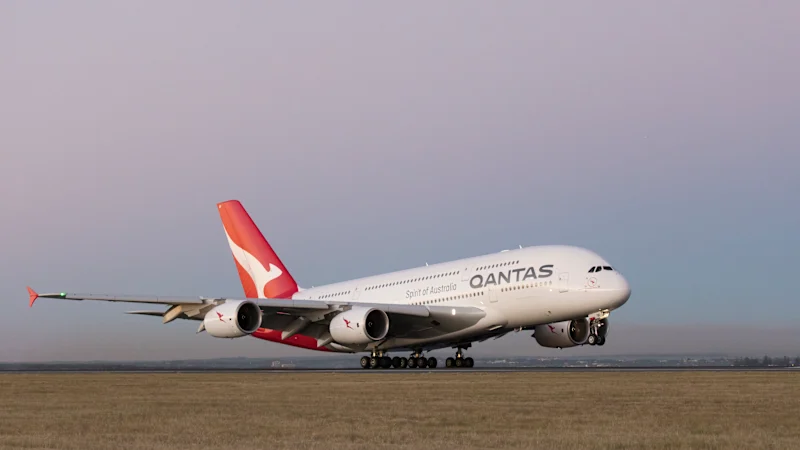
Qantas is reassessing how many seats it can offer profitably on different routes, as well as ticket prices and operating costs.
Rob Marcolina, the airline’s chief financial officer, said Qantas had experienced higher fuel costs for five or six months and was returning to measures aimed at controlling expenditure and improving returns.
“There’s just a doubling down on the costs and where we can maximise profitability,” he said.
Qantas’s fuel bill increased by $610 million in the year to June 2026, despite the airline receiving a $400 million benefit from fuel hedging. Its outlook assumes global jet fuel prices will remain elevated for the rest of the year while hostilities continue.
Airlines face higher fuel exposure
Virgin Australia, which used extensive hedging to protect profits from the oil shock in the last financial year, is expected to face a significantly higher bill ahead.
The airline remains 96 per cent hedged against Brent crude in the first half of its 2027 financial year. However, its hedging against jet fuel refining margins has fallen from about 80 per cent to 20 per cent.
“Therefore, yes, we are more exposed,” Virgin chief financial officer Race Strauss said.
Fuel costs were flat for Virgin in the 2026 financial year but could rise by as much as $700 million in the first half of 2027. Strauss said the availability of refining-margin hedges was also an issue because a counterparty was needed for each contract.
Motorists are already paying more. The national average price of regular unleaded reached $2.13 a litre by the end of last week, a 37 per cent increase since July, while average diesel prices rose 45 per cent to $2.61 a litre.
Peter Khoury, a spokesman for the National Roads and Motorists Association, said the situation in the Middle East had worsened during the week and pushed Australia’s regional Tapis crude benchmark up 37 per cent since July.
“The world needs an immediate de-escalation of violence and freedom of shipping to return so that these prices can fall and the world can return to some degree of normality,” he said.
Malcolm Roberts of the Australian Institute of Petroleum said the market was now less optimistic about an early end to the conflict, leaving uncertainty over whether oil would remain above $US100 a barrel or move to another price level.
