


The US naval blockade of Iran is deepening the country’s economic crisis, with attempts to divert trade through neighbouring states creating severe congestion rather than replacing the lost maritime routes.
More than 80% of Iran’s trade by tonnage previously passed through southern ports. Since those routes were closed, the US Central Command has said it redirected 109 commercial vessels to enforce the blockade.
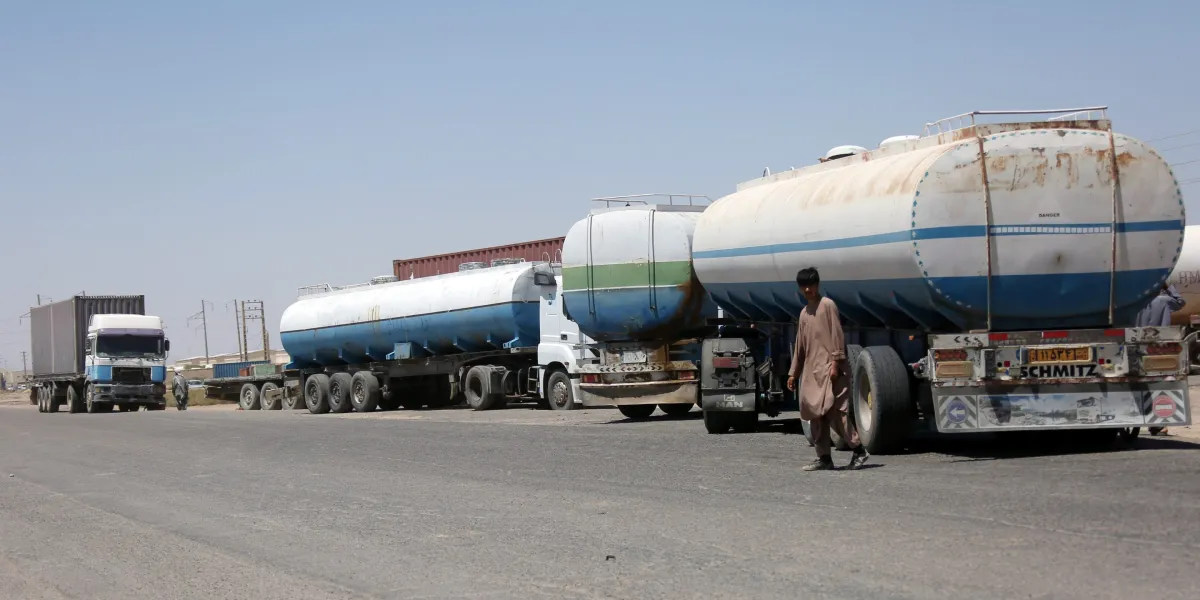
Truck convoys have instead built up along Iran’s borders with Turkey, Pakistan, Afghanistan, Iraq and Turkmenistan. Trade with Turkey rose by 19% to 3.2 billion US dollars in the first six months of the year, but border systems have struggled to process the additional traffic.
At one crossing with Turkey, 3,700 lorries were reportedly stranded on the Iranian side. Queues have stretched for miles, with some drivers waiting more than three weeks to move their cargo across.
The delays are damaging supplies of perishable food and increasing the cost of essential goods. Inflation in Iran has now reached 90%, according to the material.
A Turkish driver transporting used cars into Iran said the return journey could involve a 24-day wait at the border. An Iranian lorry driver reported spending 23 days at a crossing on the Afghan border in mid-June.
Land routes fail to replace Iran’s sea trade
At the Turkmenistan border, a shortage of warehouses and inadequate registration procedures have also restricted the movement of goods by rail.
Although trade with some neighbouring countries has increased, Iran’s overall trade has fallen sharply. Customs figures for the five months to August 22 show non-oil exports down 28% year on year to 15 billion dollars, while imports fell 26% to 17 billion dollars.
The disruption has also affected fuel supplies. Iran imports much of its petrol because it lacks enough refining capacity for the oil it produces, and shortages have led Tehran to raise prices in an attempt to curb demand.
Majidreza Hariri, head of the Iran-China Joint Chamber of Commerce, said transporting a container between Iran and China cost about 3,000 dollars by sea, but 12,000 dollars by land. With about two million containers passing through Iran’s southern ports each year, he estimated that the additional transport burden could cost 18 billion dollars annually.
“Under these circumstances, there is little alternative but to find a way to restore and maintain the southern trade corridors” through the Gulf, a member of Iran’s Chamber of Commerce said.
Hariri said land routes might provide enough basic goods for Iran to survive in the short term, but predicted the economy would eventually “grind to a halt”.
President Donald Trump is relying on economic pressure to help end the conflict, while Supreme Leader Ayatollah Mojtaba Khamenei has also expressed concern about the state of the economy. Experts have cautioned, however, that Iran’s leadership may be prepared to endure hardship for longer than the American public will tolerate higher petrol prices.
Other oil-producing countries in the Persian Gulf have continued to move more oil through the Strait of Hormuz, despite Iranian drone and missile attacks intended to deter shipping.
Admiral Brad Cooper, head of the US Central Command, said the US military had supported the passage of one billion barrels of oil through the strait over the past two months, while assisting more than 2,000 commercial vessels.
With the main shipping lanes cleared of mines, the volume of crude oil, cargo and liquefied natural gas passing through the strait over the past fortnight was at its highest level in six months. Cooper said Iran had exported no oil under what he called an “ironclad blockade”.
