


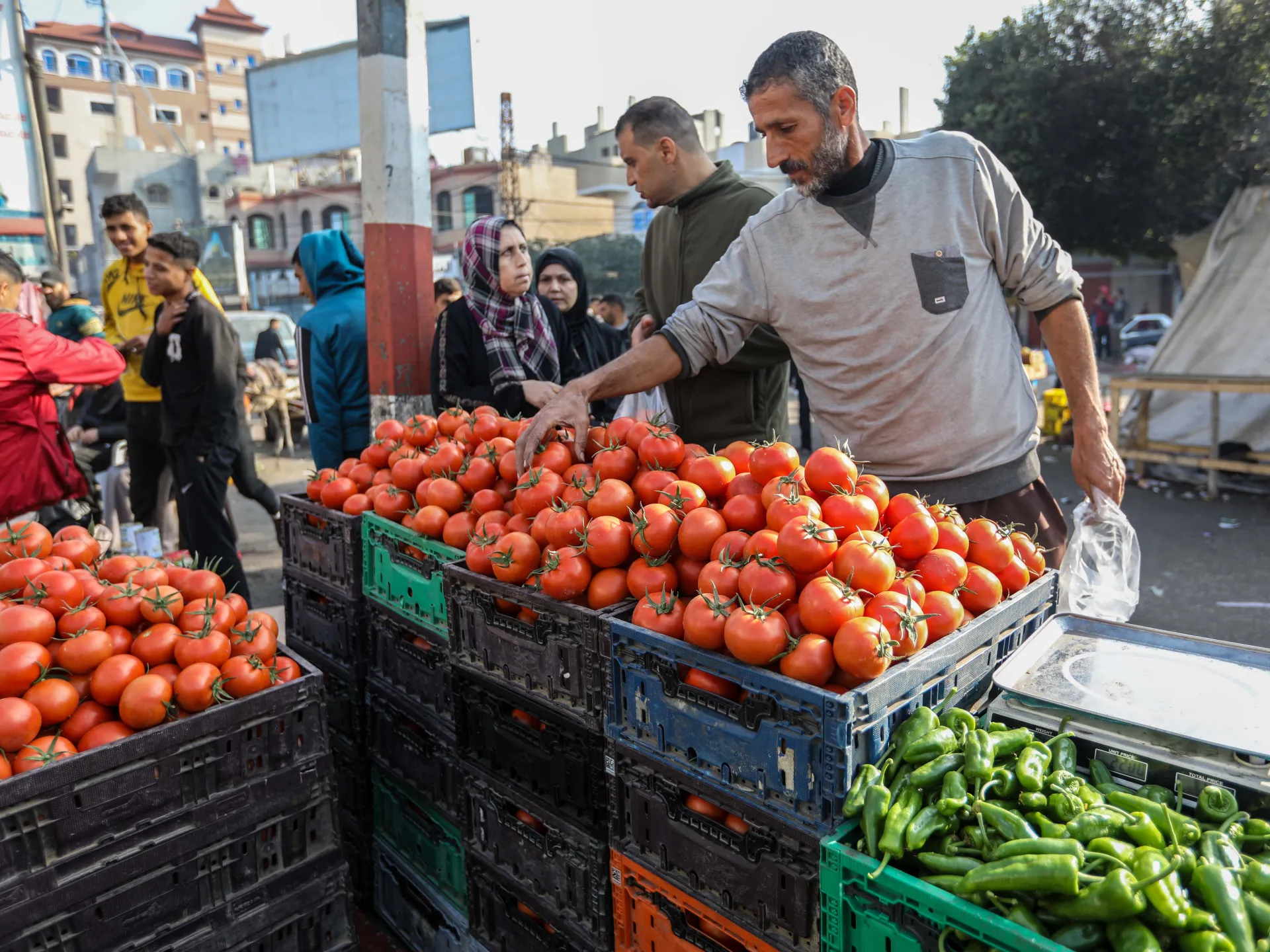
Commercial shipments into Gaza have been halted for a second day, cutting off a key supply route for food and other essentials as Israeli authorities and Hamas-linked officials dispute the reason for the stoppage.
COGAT, the Israeli military body responsible for overseeing humanitarian affairs in Gaza, said the suspension followed a dispute over fees and payment requirements imposed on local traders.
It claimed merchants had refused to continue after Hamas demanded a 10,000 shekel (£3,220) charge for every lorry entering Gaza, alongside a requirement that 30% of sales be conducted in cash.
Gaza’s government media office rejected the allegation, describing it as a “blatant disinformation campaign and false statement”. It said the payment was voluntary and went towards aid for widows, orphans and others in need.
The office also said cash payments had been encouraged because of an acute shortage of cash in the territory, but insisted they were not compulsory.
Commercial goods halt threatens Gaza supplies
The suspension affects imports including fruit, meat and winter clothing, adding to concerns over access to affordable supplies for Gaza’s 2.1 million residents ahead of winter.
Humanitarian organisations generally bring in staples such as flour, while private traders supply more perishable food. Aid workers have warned that relief deliveries alone cannot meet the needs of the population and that functioning markets are needed to prevent prices from rising.
“The humanitarian sector on its own cannot meet the needs of all the people,” said Shaina Low, a spokesperson for the Norwegian Refugee Council. “The markets need to be functioning.”
Nahed Sheheiber, head of Gaza’s private truckers’ union, also denied Israel’s account and said restrictions imposed by Israel were responsible for the disruption.
“The Israeli coordinator is claiming that Gaza’s merchants are responsible, but the truth is that the Israelis are the ones who imposed the restrictions,” he said.
Sheheiber’s union met Gaza’s Ministry of Economy after the COGAT announcement, saying fees cited by Israel were being used as a pretext to stop commercial goods entering the territory.
A global hunger monitor warned in July that more than two-thirds of Gaza’s population could face acute hunger by the end of the year.
Under a US-mediated agreement, Israel is required to allow at least 600 lorries carrying humanitarian aid into Gaza each day. Diplomats say the daily total is usually much lower, while Sheheiber put it at about 300, with roughly two-thirds carrying commercial goods.
