


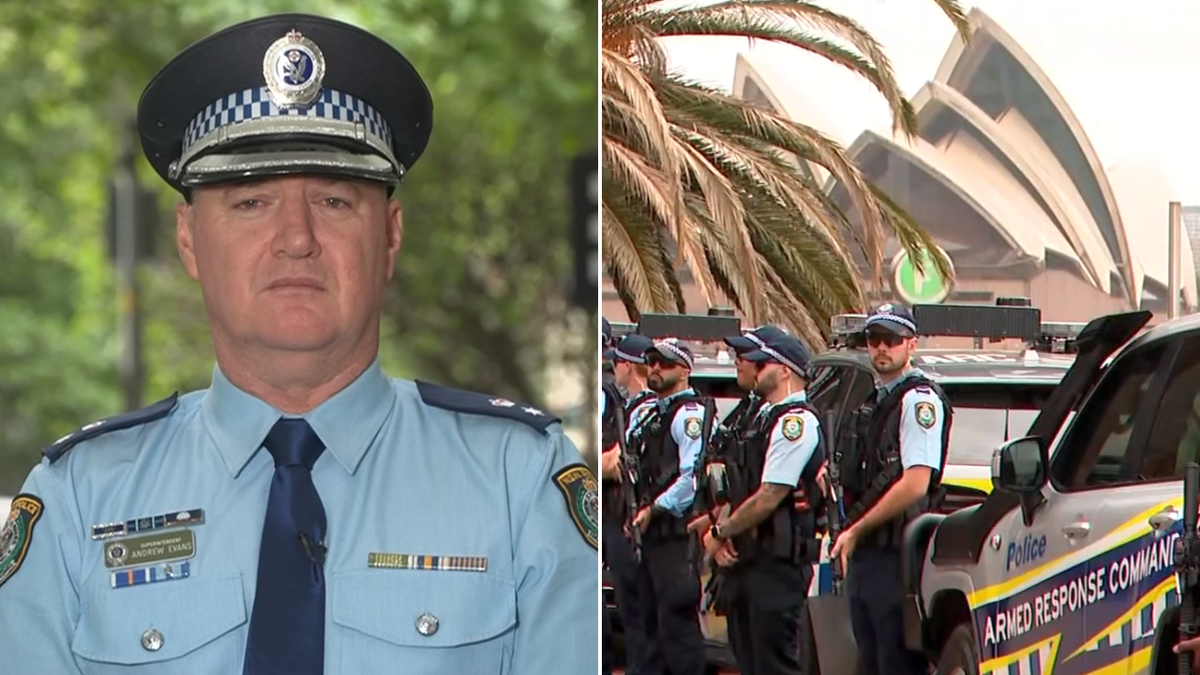
NSW Police have launched a permanent Armed Response Command across Sydney, deploying 100 specially trained officers with high-powered rifles to crowded public spaces amid a heightened terrorism threat.
The specialist unit began operations on Sunday, with officers assigned to priority locations, major events, sporting matches, places of worship and other busy sites. Its role includes responding to serious threats such as active armed offender incidents.
Detective Superintendent Andrew Evans, the command’s leader, said the unit had completed more than 70 tasks in its first 24 hours, spending more than 60 hours at operational sites.
The command was established after the December 2025 Bondi terror attack and is Australia’s first permanent dedicated rapid armed response police capability. A 24-hour operations centre will use real-time intelligence to determine where officers are deployed.
Armed patrols intended to deter attacks
Detective Superintendent Evans said the highly visible patrols were intended to deter potential terrorists by ensuring police were positioned to respond quickly.
“That highly visible policing strategy and tactic is renowned around the world to deter would-be terrorists from attacking citizens,” he said.
He said Australia’s national security environment had changed significantly, with the terrorism threat level currently assessed as probable. “In New South Wales, we’ve got ahead of that, and we’ve created the Armed Response Command,” he said.
The presence of heavily armed officers in public places may be confronting for some members of the community. Multicultural liaison officers will be embedded in the command’s operations centre to monitor community sentiment.
Alex Ryvchin, co-chief executive of the Executive Council of Australian Jewry, said the increased police capability was a necessary response to the Bondi attack.
“Terrorism changes the way we live, and the massacre at Bondi, which saw long arms deployed against defenceless Australians, was always going to result in an increased police capability to deal with such horrors,” he said.
“No Australian wants to see officers with military weapons on our streets but the sight of body bags is far worse.”
Mr Ryvchin said intelligence assessments indicated the threat of mass violence remained and praised police and the state government for increasing their preparedness.
Detective Superintendent Evans encouraged members of the public to speak to officers about the new approach, saying the response from Sydney residents had been overwhelming.
Police draw on overseas models
The officers were chosen through an expression-of-interest process, followed by rigorous vetting and six months of specialist training. They were required to pass the training before joining the command.
NSW Police examined armed response models in Belgium and London while developing the unit, and also sought advice from the New York Police Department.
“We took the best bits of each of those models, and we’ve now made the Armed Response Command here in New South Wales,” Detective Superintendent Evans said.
