


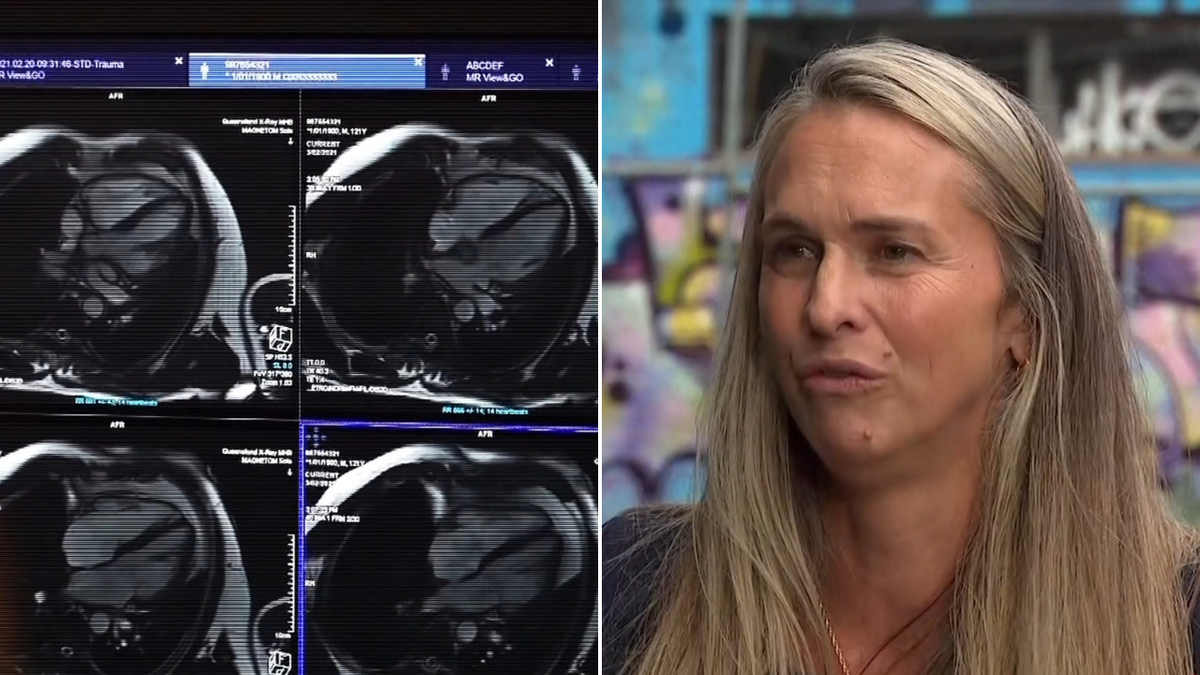
Australian women are at the centre of a renewed campaign to improve the recognition and treatment of heart disease after Olympic swimmer Libby Trickett revealed she was sent home with what doctors believed was anxiety before discovering, eight months later, that she had suffered a heart attack.
Trickett, a seven-time Olympic medallist and mother of five, was 40 when she experienced what she thought was a panic attack. She has since been diagnosed with spontaneous coronary artery dissection, a form of heart attack that can affect otherwise healthy women.
“Never in a million years could I have ever imagined that I would have had a heart attack at the age of 40,” Trickett said.
She said her symptoms were initially attributed to anxiety and that she was sent home.
“If my GP had known the signs of a heart attack in a woman, maybe I wouldn’t have been in the position where I went undiagnosed for eight months,” she said.
The case has renewed calls for doctors and the public to recognise that cardiovascular disease can present differently in women. Symptoms may include fatigue, breathlessness, nausea, back or jaw pain, rather than the severe chest pain more commonly associated with a heart attack.
Dr Charlotte Hespe, a general practitioner, said women could experience symptoms that were less immediately recognised as cardiac.
“Women also present quite differently. They may have fatigue, they may have breathlessness, they may just sort of have some pain in their jaw,” she said.
Women’s heart disease panel to examine delayed diagnoses
Former MasterChef contestant Mandy Hall has also spoken about being repeatedly told her symptoms were caused by anxiety. The Heart Foundation said Hall was eventually found to have a 90 per cent blockage in a major artery.
“I was told repeatedly that I was suffering from anxiety,” Hall said.
The Heart Foundation says almost one Australian woman dies from coronary heart disease every hour, while research indicates women are less likely than men to receive treatment for a heart attack or angina in hospital.
More than half a million Australian women are living with conditions affecting the heart and blood vessels, according to the federal Department of Health. Cardiovascular disease accounted for about one in four female deaths in Australia in 2022.
Clinicians, researchers and advocates have been meeting at Parliament House as pressure grows for changes to the way women’s cardiovascular health is assessed and managed.
The federal government formally announced the Ministerial Expert Panel on Women’s Health in March, making heart health its first area of focus. The panel is chaired by Assistant Health Minister Rebecca White and includes medical experts, consumer advocates and representatives from organisations including the Heart Foundation, Her Heart and the Stroke Foundation.
“Women are not just little men and the symptoms that we experience when it comes to our cardiovascular health needs to be considered,” White said.
The panel is examining earlier detection, diagnosis, treatment and ongoing care, with its recommendations expected to inform future reforms. The government says the work will also consider the experiences of women and gender-diverse people who have lived through cardiovascular disease.
