


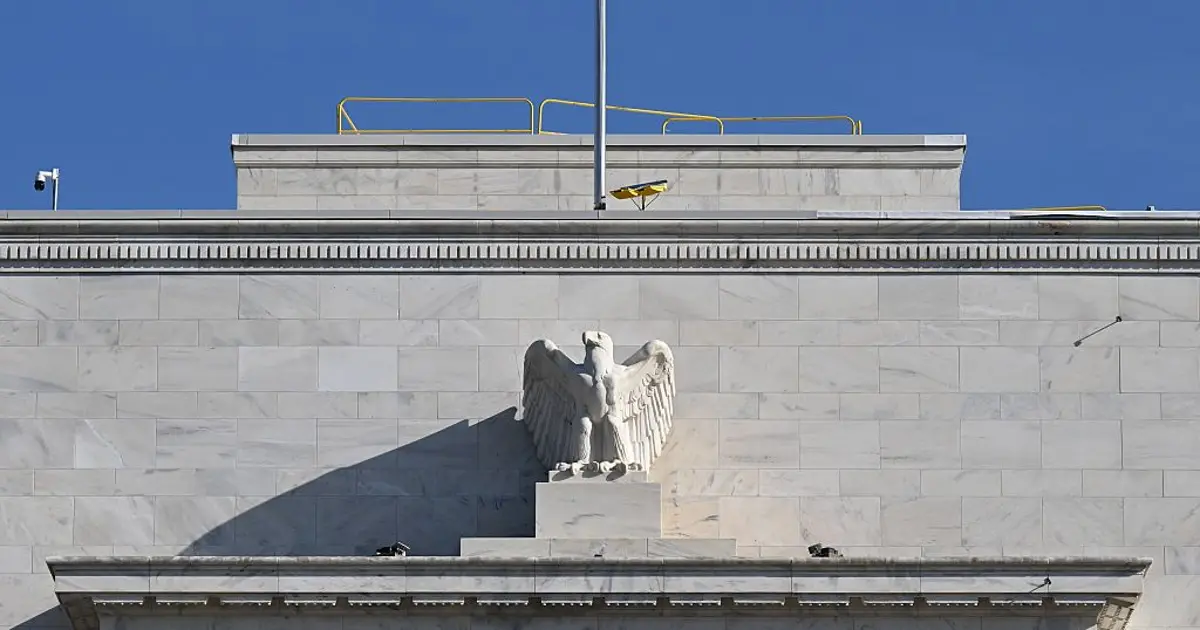
The US Federal Reserve has held its key interest rate at between 3.75% and 4%, despite inflation remaining well above its 2% target and pressure for further action.
The decision, announced in Washington on Wednesday, followed a quarter-point increase at the Fed’s previous meeting in September. Officials said they wanted more evidence before deciding whether borrowing costs should rise again.
“Inflation remains elevated,” the central bank said in its statement, adding that the accumulation of further information would help determine the policy needed to return inflation to its 2% goal. ([federalreserve.gov](https://www.federalreserve.gov/newsevents/pressreleases/monetary20261028a.htm?utm_source=openai))
The vote was 10-2, with Fed governor Lisa Cook and Beth Hammack, president of the Federal Reserve Bank of Cleveland, arguing for another quarter-point increase. The split highlights the disagreement inside the central bank over how aggressively to respond to persistent price pressures. ([federalreserve.gov](https://www.federalreserve.gov/newsevents/pressreleases/monetary20261028a.htm?utm_source=openai))
Inflation keeps pressure on the Federal Reserve
Consumer prices rose 3.7% in the year to September, up from 3.4% in August, according to the US Bureau of Labor Statistics. Prices increased by 0.6% over the month, with petrol and other energy costs making a significant contribution. ([bls.gov](https://www.bls.gov/news.release/archives/cpi_10142026.htm?trk=article-ssr-frontend-pulse_little-text-block&utm_source=openai))
Core inflation, which excludes food and energy, rose 2.6% over the year. The Fed’s preferred measure, the personal consumption expenditures price index, is due to be published on Thursday and is expected to show further acceleration.
The decision came as the US economy continued to show resilience. The Fed said economic activity was expanding at a strong pace, while job gains had kept pace with the workforce and unemployment had changed little.
Fed chairman Kevin Warsh raised interest rates in September for the first time in more than three years, resisting calls from President Donald Trump for lower borrowing costs. The move was intended to bring inflation back to target more quickly.
Wednesday’s statement offered no clear indication of whether officials still expected to raise rates again before the end of the year. Investors had been weighing the possibility of a further increase at the Fed’s December meeting, although the latest decision leaves the timing uncertain.
The central bank’s next steps will depend heavily on incoming inflation and employment data. The rate decision also comes shortly before the US midterm elections, adding to scrutiny of the Fed’s efforts to maintain independence from political pressure.
