


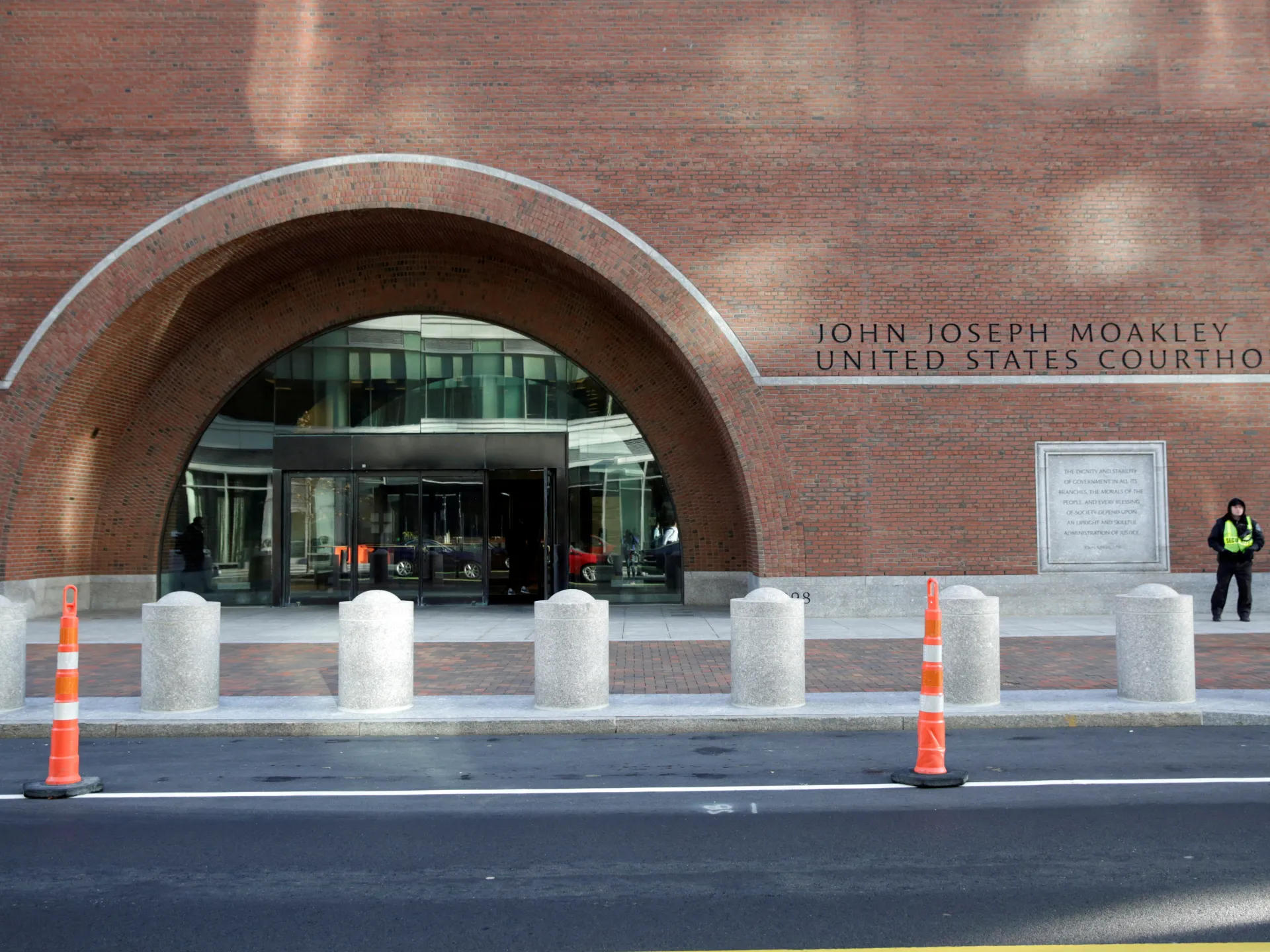
A federal jury in Boston has convicted Rwandan American Eric Nshimiye of perjury and obstruction of justice over claims that he lied about his involvement in the 1994 Rwandan genocide.
Nshimiye, 55, was found guilty on four counts of perjury and one count of obstruction of justice on Tuesday. He had been accused of giving false evidence during the 2019 trial of Jean Leonard Teganya, a former medical school roommate who was convicted of helping to perpetrate the genocide.
Both men were studying at a medical university in Butare during the violence. Nshimiye told the court that neither he nor Teganya had taken part in the killing and rape of Tutsis.
Prosecutors alleged that Nshimiye had concealed his role in the violence for decades, including when he provided information to US immigration officials after moving to the country. He became a US citizen in 2009.
The US Department of Homeland Security arrested him at his home in Ohio in 2024, accusing him of lying during an interview about his time in Rwanda. An immigration fraud charge was dropped before the trial began.
Defence challenges evidence in genocide case
Witnesses from Rwanda told jurors they remembered Nshimiye taking part in killings and other violence against Tutsis in Butare. Other witnesses said he belonged to the pro-Hutu National Revolutionary Movement for Development and the Interahamwe, the paramilitary group blamed for most of the killings.
The genocide was carried out over about 100 days by hardline members of Rwanda’s Hutu majority and claimed the lives of more than 800,000 people, according to evidence presented at the trial.
Nshimiye’s defence argued that he had never been implicated in tribunals held in Rwanda or internationally, including the International Criminal Tribunal for Rwanda and the country’s gacaca community justice system.
His lawyers also pointed to what they described as inconsistencies in the testimony of government witnesses. They called others who said Nshimiye had been with them in Kigali and elsewhere in Rwanda during the genocide, and argued that Rwandan authorities had interfered with the investigation by meeting witnesses before they gave evidence in Boston.
After the verdict, his lawyers asked the court to count the two and a half years he has already spent in custody towards any sentence. They argued that he should be released because the time served exceeded the usual sentence for the offences of which he was convicted.
His family, including his US-born children, attended the proceedings. His son Tresor Nshimiye said the result had been difficult to accept.
“It was quite shocking, difficult to process at first because we were expecting a different outcome. We were expecting to bring him home,” he said.
Assistant Attorney General A Tysen Duva, of the US Justice Department’s Criminal Division, said Nshimiye had hidden his involvement in the genocide and had lied both to immigration officials and the federal jury.
“For nearly three decades, this defendant concealed his involvement in the 1994 Rwandan genocide and the heinous acts of violence he committed, including clubbing people to death,” Mr Duva said in a statement.
Nshimiye’s case is one of several genocide-related prosecutions under way in the United States. Prosecutors charged Faustin Nsabumukunzi, a 65-year-old beekeeper in Long Island, New York, in April 2025 with concealing his alleged role in the violence, while Vincent Nzigiyimfura, 65, of Dayton, Ohio, was charged with a similar offence two months later.
