


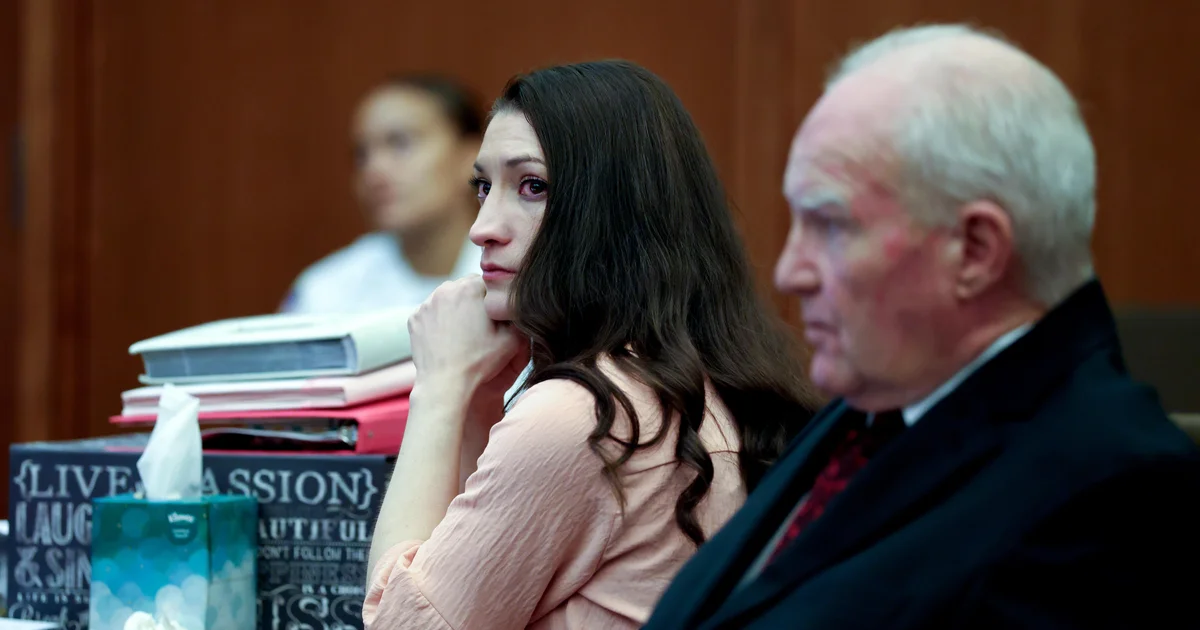
The murder trial of Lindsay Clancy ended without a verdict on Friday, 4 September, after a Massachusetts jury failed to reach a unanimous decision over whether she was criminally responsible for the deaths of her three children.
Judge William Sullivan declared a mistrial on the seventh day of deliberations at Plymouth Superior Court, bringing an end to weeks of testimony and intense debate over Clancy’s mental state at the time of the killings in January 2023.
The 12-member jury had repeatedly told the court it was deadlocked. A note from the foreperson indicated that one juror was preventing agreement, prompting Clancy’s defence team to ask for that juror to be questioned or removed.
That request was rejected. The Massachusetts Supreme Judicial Court also declined to intervene after defence lawyers sought an emergency appeal, and Judge Sullivan formally discharged the jury later on Friday.
What happens to Lindsay Clancy after the mistrial?
Clancy remains in custody and is expected to return to Tewksbury State Hospital, where she has been held under psychiatric care since 2023.
The mistrial does not amount to an acquittal. The charges against Clancy remain unresolved, and the Plymouth County District Attorney’s Office must now decide whether to pursue a second trial.
Prosecutors could seek to try her again on first-degree murder charges, pursue lesser charges, negotiate a plea agreement or decide not to proceed with a retrial.
District Attorney Timothy Cruz said no immediate decision would be announced. “I’m going to be meeting with our team, and we will address this case further at the appropriate time in the context of an official court proceeding,” he said after the hearing.
The court is due to reconvene on 29 September to consider the next steps.
Mr Cruz defended the decision to prosecute Clancy for first-degree murder, saying: “This was and has always been about getting justice for those three little babies.”
Defence lawyer Kevin Reddington said he would be prepared for a retrial if one was ordered, although he had previously suggested that Clancy was not emotionally ready to face the case again. Asked on Friday whether she would be ready if proceedings resumed in the autumn, he replied: “She’ll be ready.”
Why did the jury fail to reach a verdict?
The jury had to choose unanimously between five possible outcomes: first-degree murder, second-degree murder, manslaughter, not guilty or not guilty by reason of insanity.
The central question was whether Clancy understood the nature and wrongfulness of her actions, or whether a severe mental illness meant she could not be held criminally responsible.
Prosecutors argued that she had planned the killings and knew the difference between right and wrong. The defence said she was suffering from postpartum psychosis, had been overmedicated and was unable to control her actions.
Both sides accepted that Clancy had been seriously mentally ill, but disputed the extent of her responsibility. Jurors heard from 85 witnesses and considered more than 200 pieces of evidence during the trial.
The panel deliberated for more than 36 hours across seven days. It told the judge three times that it could not reach a unanimous decision, despite repeated instructions to continue trying.
Defence lawyers argued that the juror identified as the holdout had failed to apply the legal test for reasonable doubt. The prosecution opposed the request to remove the juror, and the judge ruled that the deliberations should end when it became clear that agreement was impossible.
Clancy was charged with killing her children, Cora, Dawson and Callan, at the family home in Duxbury on 24 January 2023. The prosecution said the children’s deaths were deliberate, while the defence maintained that Clancy’s psychiatric condition meant she should not be convicted.
A second trial could allow both sides to alter their approach. Prosecutors may seek to present a narrower case focused on whether Clancy knew her actions were wrong, while the defence could continue to rely on the argument that postpartum psychosis left her unable to understand or control what she was doing.
