


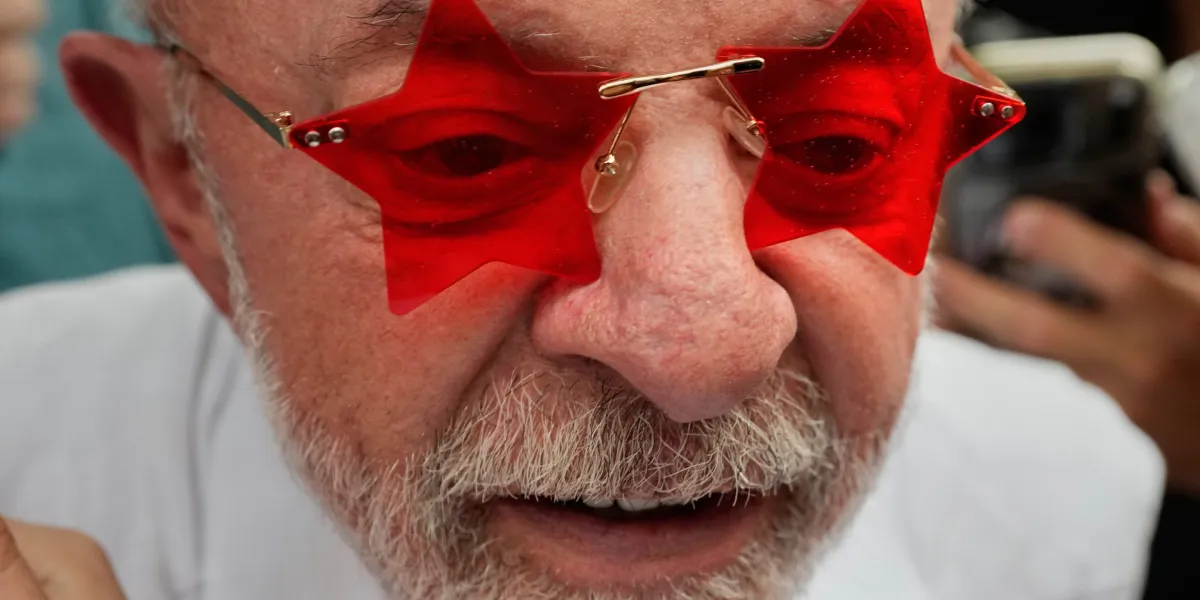
Luiz Inácio Lula da Silva has been re-elected as Brazil’s president, defeating Flávio Bolsonaro by nearly 4.4 million votes in a result likely to prolong tensions with Donald Trump and resist growing US influence in Latin America.
Brazil’s electoral court said that, with all votes counted, Lula had secured 51.8% of the vote. His victory gives him a fourth non-consecutive term as president and marks a setback for a regional trend towards right-of-centre candidates aligned with Mr Trump.
Mr Bolsonaro, the son of former president Jair Bolsonaro, refused to concede and called for the election result to be annulled. He cited confusion at polling stations after voting hours were extended by two hours shortly before polls were due to close.
Bolsonaro challenges Brazil election result
The extension was ordered by Supreme Court Justice Cristiano Zanin after requests from both campaigns. Lula’s campaign had raised concerns about problems affecting buses transporting voters in São Paulo and Salvador, while Mr Bolsonaro cited heavy rain in southern Brazil, where he has greater support.
The decision delayed the start of the count, although it was unclear how many polling stations remained open beyond the original closing time. Polling stations in Brasília and Rio de Janeiro closed shortly after the scheduled 5pm deadline.
Mr Bolsonaro criticised Mr Zanin, who was previously Lula’s lawyer, accusing him of “changing the rules of the game in the middle of the game”.
“It’s impossible to recognise the results of the election in the context of these things that happened,” he said.
Mr Bolsonaro can ask Brazil’s electoral authorities or Supreme Court to declare the election invalid, and can request a recount if he presents evidence of fraud. However, legal experts said the extension alone was unlikely to provide sufficient grounds to overturn the result.
Joao Pedro Padua, a law professor at Fluminense Federal University, said the unusual decision would have to be shown to have affected voters’ ability to express their choice freely. “There doesn’t seem to have been any such impact,” he said.
Kassio Nunes Marques, the president of the electoral court and a Supreme Court justice appointed by Jair Bolsonaro, said the extension had not affected the outcome.
Lula pledges to defend Brazil’s sovereignty
Lula celebrated with his wife, First Lady Rosângela da Silva, and political allies after the result was confirmed. Supporters gathered along São Paulo’s main avenue and at Rio de Janeiro’s Cinelândia Square, with car horns sounding in the streets as the victory was announced.
Addressing the crowds, Lula promised to respect Brazilians regardless of their gender or religion and attacked his opponent’s campaign. “This was a defeat for denialism and lies,” he said. “I must confess that every time I attended a debate, I felt embarrassed.”
He also renewed his commitment to national sovereignty, declaring: “Either the homeland remains free, or we die for Brazil. This country will not accept being anyone’s backyard.”
The result means Brazil, Latin America’s largest economy, is likely to continue resisting Mr Trump’s demands despite pressure from increased tariffs. Lula has been one of the US president’s most vocal critics.
Rodrigo Valentim, a 51-year-old businessman who supports Mr Bolsonaro, said another Lula administration would damage the economy. “I don’t understand how people can vote for Lula,” he said. “The country is collapsing.”
A difficult campaign for Lula
Lula had finished behind Mr Bolsonaro in the first round earlier this month, losing by more than 2.2 million votes. His eventual victory was the first since the end of Brazil’s military dictatorship in 1985 in which the candidate who came second in the first round went on to win the presidency.
The election was fought against concerns over living costs and public safety. Mr Bolsonaro focused on a tough approach to crime and promised to reduce food prices, while Lula offered costly incentives in an effort to attract undecided voters.
Both candidates faced corruption-related suspicions involving relatives and political allies. Lula had previously spent more than a year in prison after corruption convictions that were later annulled, following the discovery of messages indicating that the judge who convicted him had been biased.
After losing the first round, Lula reorganised his campaign, sought to appeal to younger voters and urged millions of Brazilians to defend democratic values and his political legacy.
He is due to begin his new term on 5 January 2027. At 80, he joins Mr Trump and Nicaragua’s President Daniel Ortega among the oldest presidents in the Americas.
