


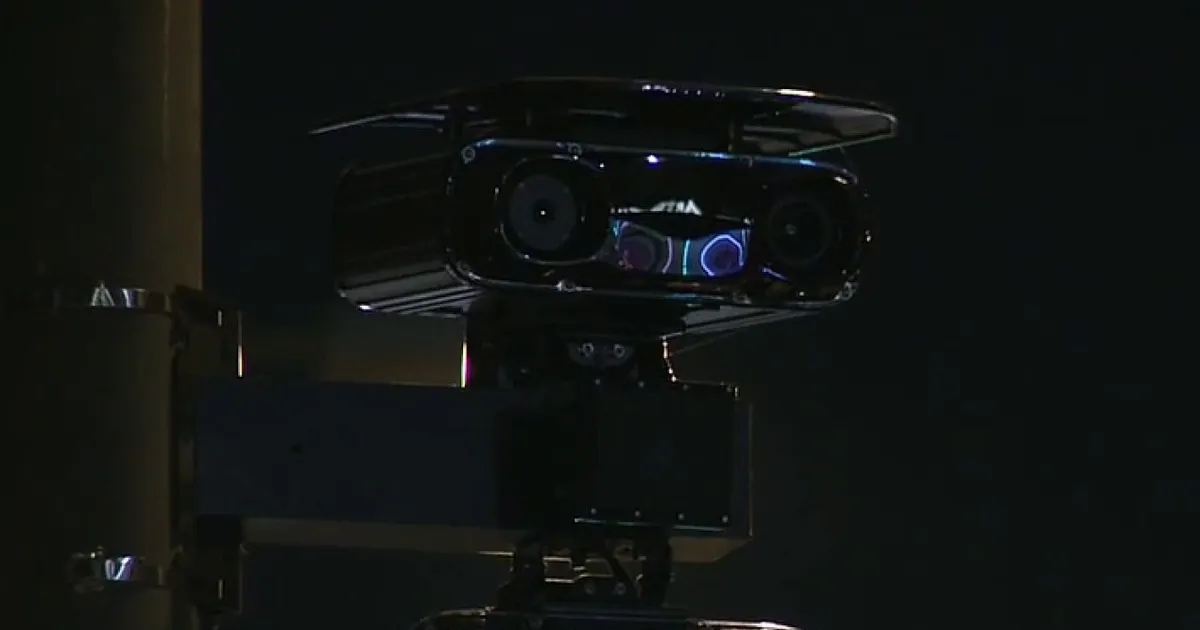
Los Angeles has switched on its first speed cameras, launching a city-wide road safety programme that supporters say could prevent fatal crashes but critics fear will expand the use of surveillance technology on public streets.
The initial rollout covers 20 cameras, with the Los Angeles Department of Transportation (LADOT) planning to expand the system to 125 locations across the city by the end of the year.
At the junction of La Cienega Boulevard and Pickford Street, cameras were seen flashing repeatedly as vehicles passed through on Sunday night.
Brian Meung, who lives nearby, said he supported the measures after noticing the devices operating on his daily journeys.
“It is a great idea, honestly. I mean, it’s safer,” he said.
The cameras will initially issue warnings for 60 days at each location. After that period, drivers recorded travelling at least 11mph above the posted speed limit could receive civil penalties ranging from $50 to $500.
The city says the system is intended to target excessive speeding rather than ordinary traffic offences. LADOT has said the cameras capture rear number plates when a vehicle exceeds the threshold, rather than recording the faces of drivers or every vehicle passing by.
Under the programme’s privacy rules, information collected for enforcement cannot be shared with law enforcement agencies without a court order and must be deleted after 120 days, according to city guidance.
But concerns about the expansion of automated monitoring have emerged alongside the safety campaign.
One resident questioned whether the new equipment could become part of a wider system for tracking motorists, saying it felt as though the city was placing cameras “everywhere to kind of test what’s happening”.
Tony Jacobs, the owner of Showshow Books, said he was troubled by the growing presence of high-tech surveillance on Los Angeles streets.
“I think it’s very disturbing to have another high-tech surveillance device on the streets,” he said.
Jacobs compared the speed cameras with Flock, a company whose automated number plate readers are used to collect vehicle information and assist investigations.
“They say it’s just for speeders,” he said. “Yes, they do. But that was the thing with Flock. Suddenly, the data is there to be accessed by all sorts of people.”
The programme is expected to cost the city up to approximately $38.5 million over five years, prompting questions from some residents about whether the money could be better spent elsewhere.
Critics have pointed to homelessness, open drug use and illegal dumping as more visible problems that they believe should receive greater attention from City Hall.
Speed cameras come as crash concerns grow
LADOT says speeding was directly attributed to about one in five fatal crashes in Los Angeles in 2024. The department has presented the cameras as one part of a broader effort to reduce serious injuries and deaths on the city’s roads.
For Christian Garcia, the issue is personal. He recently returned to the La Cienega Boulevard area with a friend to remember Eric, who was killed in a crash at the location the previous month.
“His name is Eric. He was loved by friends, family,” Garcia said.
Garcia believes excessive speed contributed to the collision.
“That’s what caused this. Could have all been prevented,” he said.
Despite the wider debate over privacy and cost, he hopes the flashing cameras will make motorists reconsider their behaviour.
“People start seeing the flashing, seeing the news, they’ll be like, ‘Let’s slow down in these areas,’” Garcia said.
The city is due to activate the remaining speed safety systems in stages. Once fully deployed, the programme will operate across 125 locations selected on the basis of speeding, crash data and the presence of vulnerable road users, including children and older people.
