


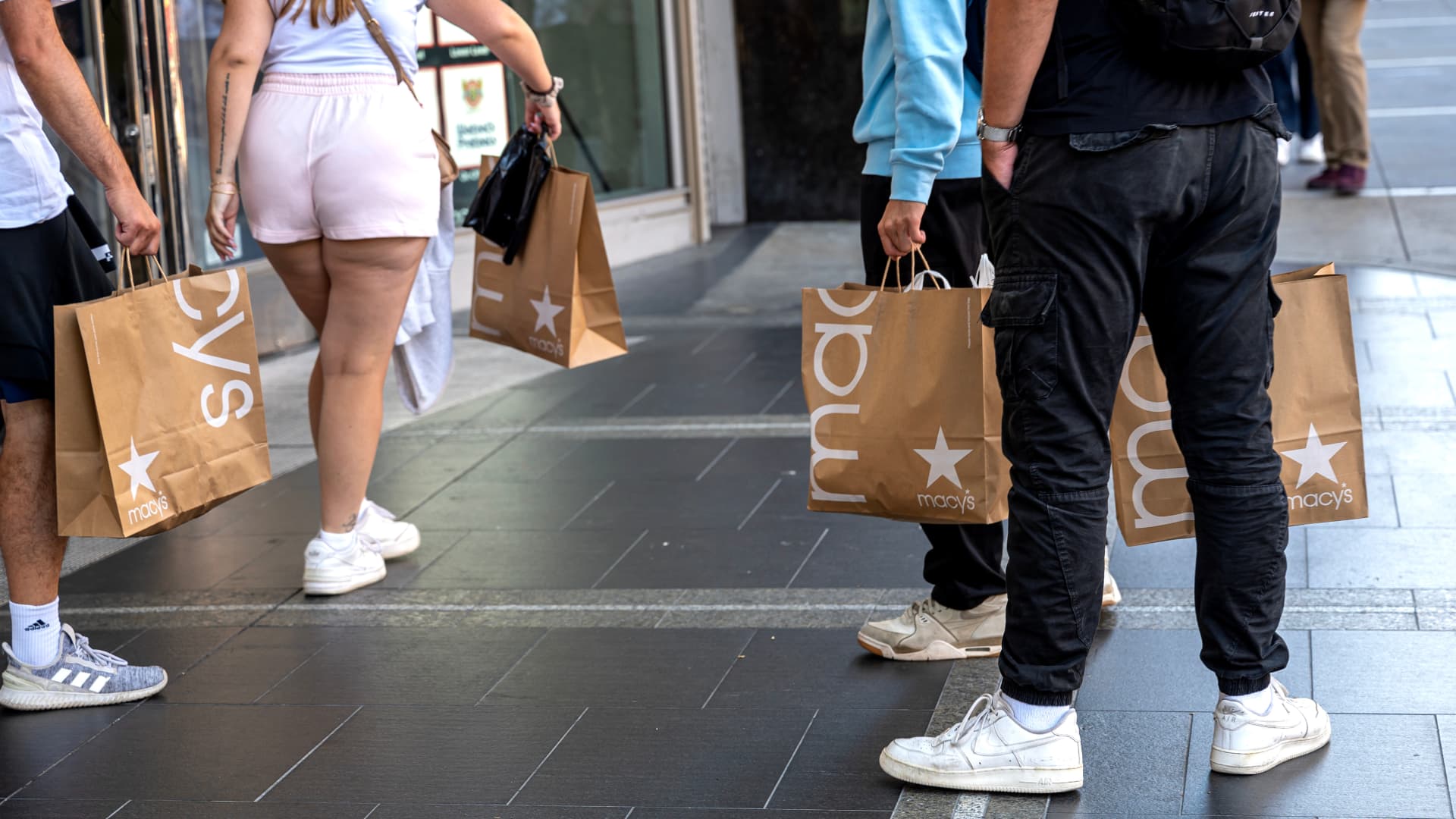
Macy’s has raised its full-year forecast after reporting stronger sales across its business in the second quarter, as chief executive Tony Spring’s turnaround plan continues to gain momentum.
The US department store group said comparable sales rose 2.7% in the three months to early August. Sales at its flagship Macy’s chain increased 1.1%, with growth led by revamped “reimagined” stores that have received new layouts, product ranges and customer service improvements.
Luxury chain Bloomingdale’s was the standout performer, recording an 11.3% rise in comparable sales. Beauty retailer Bluemercury also posted growth of 6.2%.
Revenue edged up to about $4.87 billion from $4.81 billion a year earlier, exceeding the $4.83 billion expected by analysts surveyed by LSEG. Macy’s reported net income of $169 million, or 62 cents a share, compared with $87 million, or 31 cents a share, in the same period last year.
Adjusted earnings were 40 cents a share. Credit card revenue rose 2%, or $3 million, which Macy’s attributed to the continued health of its credit portfolio and stable losses on card lending.
Macy’s raises full-year guidance
The company now expects annual net sales of between $21.68 billion and $21.83 billion, up from its previous range of $21.5 billion to $21.75 billion.
Its forecast for comparable sales growth has also been lifted to between 1% and 1.5%, compared with the earlier expectation of growth of 0.5% to 1.2%. Adjusted earnings per share are now expected to come in between $2.15 and $2.35, against the previous range of $2 to $2.20.
The revised earnings forecast includes an estimated five-cent-per-share benefit from refunds of tariffs previously paid by the company.
Macy’s said it had received $116 million in tariff refunds and planned to invest about $96 million of the money in its stores and wider recovery strategy. Mr Spring said the company preferred to use the funds for lasting improvements rather than temporary price cuts.
“I think it’s a different Macy’s Inc. today,” Mr Spring told CNBC. “We’re in a healthier position. We’re catering to our customers while we’re also becoming a more interesting investment option for our shareholders.”
He said the company had kept back a small portion of the refunds because of uncertainty over fuel costs, adding that Macy’s wanted to avoid being “surprised by anything else”.
Mr Spring said the retailer was seeing different spending patterns among income groups. Wealthier shoppers continued to spend on fashion, while households facing pressure from interest rates, food and petrol costs were seeking greater value and turning more often to discount ranges.
Macy’s is approaching the end of a three-year turnaround programme focused on improving its strongest locations, upgrading the shopping experience and expanding the performance of Bloomingdale’s and Bluemercury.
