


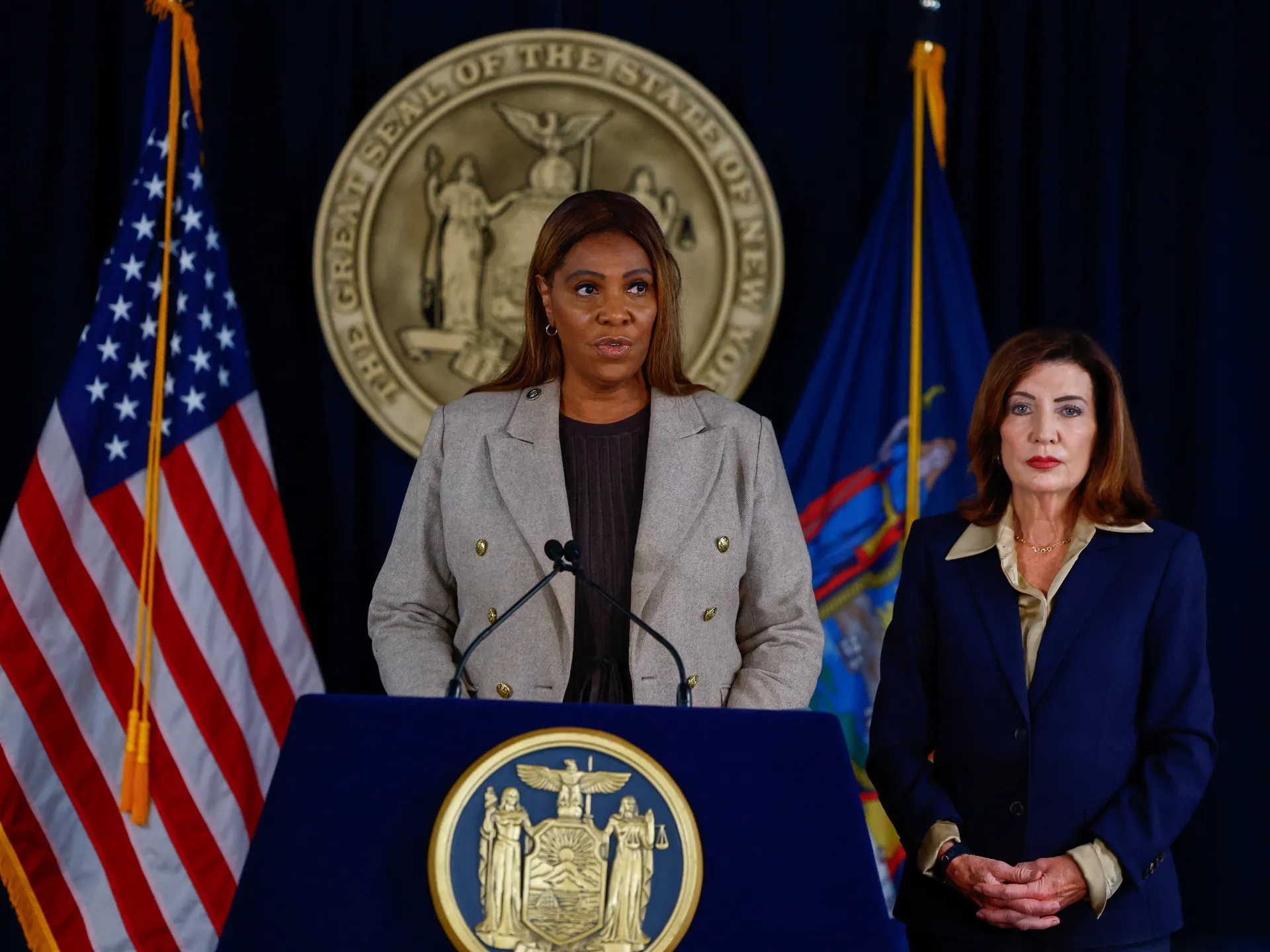
New York Governor Kathy Hochul has appointed Attorney General Letitia James as a special prosecutor to investigate allegations that a former Cornell University student was gang-raped at a fraternity house in October 2024.
Ms Hochul said newly released information had damaged her confidence in the handling of the case by local authorities, including Cornell University Police and the Tompkins County district attorney’s office.
An executive order signed by the governor requires Ms James to examine the alleged assault and, if warranted, present evidence to a grand jury and pursue a prosecution. The attorney general’s office will now control the criminal investigation rather than the county prosecutor.
“In what world does the district attorney not even interview her, or anyone else involved, or even request the full transcript?” Ms Hochul said at a news conference. “And I want the truth. I think every parent in this state, every New Yorker wants the truth in this case.”
Questions over the Cornell investigation
The governor’s order says Tompkins County District Attorney Matthew Van Houten decided not to prosecute in November 2024 without speaking to the woman. It also says he relied, at least in part, on a Cornell police account that omitted her allegation that she had been sexually assaulted.
Mr Van Houten reopened the investigation on Monday after the woman filed a civil lawsuit accusing seven members of the Chi Phi fraternity of sexually assaulting her.
He has defended his original decision, saying prosecutors reviewed a six-page sworn statement given by the woman to Cornell police in November 2024. He said the statement did not allege that she had been drugged against her will and described her participation in sexual activity as voluntary and consensual.
According to Mr Van Houten, several prosecutors and investigators reviewed the statement and concluded that the facts, as presented, did not establish a crime under New York law.
Ms Hochul has disputed that account, saying the woman’s full statement to police was not passed on to prosecutors. She referred to reports that the woman told investigators she was “100% confident” she had been raped.
Cornell has said its police department gave prosecutors the evidence it had collected, including a Snapchat screenshot. The university said it had also conducted a separate disciplinary investigation, which resulted in expulsions and suspensions.
The university is carrying out an independent review of its handling of the allegations.
New York consent law under scrutiny
The appointment of a special prosecutor has also revived debate over how New York law defines a person’s capacity to consent to sexual activity.
Under the current law, a person is considered mentally incapacitated when drugs or alcohol have been given to them without their consent. A bill introduced in June would extend that provision to cases in which someone voluntarily consumed alcohol or drugs but became so intoxicated that they were temporarily unable to control their conduct, where the accused knew or reasonably should have known of their condition.
Lawmakers said the Cornell allegations highlighted what they described as a gap in the existing law.
“If someone is too intoxicated to consent, it should not matter whether they chose to use drugs or alcohol,” Ms Hochul said. “Voluntary intoxication is not a licence for sexual assault or gang rape, period.”
Lindsey Boylan, a New York City Council candidate and the first woman to publicly accuse former governor Andrew Cuomo of sexual harassment, said Ms Hochul should support both the independent investigation and changes to state law.
