


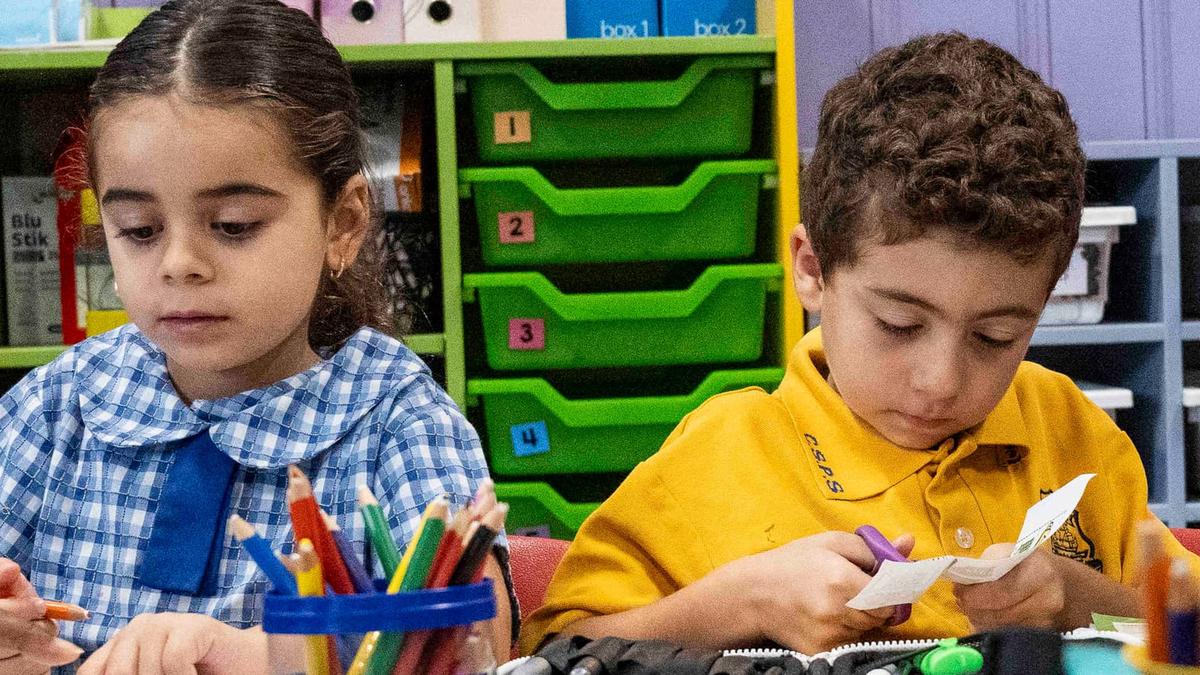
NSW Premier Chris Minns has scrapped bring-your-own-device requirements for public primary schools, meaning families will not have to buy a laptop or tablet for their children because of a school policy from 2027.
The change is intended to reduce pressure on household budgets and limit the amount of time young children spend using screens for schoolwork. Although bringing a device was not formally compulsory, some schools set online classroom or homework tasks that effectively left parents paying for expensive equipment.
Mr Minns said the policy would help children focus on established methods of learning, including reading books and writing by hand.
“The evidence is clear that too much screen time is distracting kids from learning,” he said.
“Just because technology is available doesn’t mean it has to replace what we know works, reading from books and writing.
“So we’re getting back to basics – putting books back in kids’ hands, pens on paper and making sure screens are only used when they actually help students learn.”
NSW public primary schools to receive books
The NSW Government will also provide books to children attending kindergarten orientation at public schools from next year, with the aim of encouraging reading as they begin school.
Deputy Premier and Education Minister Prue Car said parents should not need to spend more than $1,000 on a device because of a BYOD requirement at their child’s school.
“There is no need for parents to fork out over a thousand dollars on an expensive laptop or tablet for their child this Christmas because of a BYOD requirement at their public school,” she said.
Ms Car said handwriting supported brain development and recall, while reading from paper and interacting directly with teachers and classmates offered benefits that were not available through a screen.
The decision reverses a 2013 policy introduced by the O’Farrell Liberal-National government after the Rudd Labor government’s digital education resolution scheme.
It follows an agreement by Australian education ministers to consider screen-time limits in schools. A new Australian Schools Digital Detox Taskforce will advise on further measures to address excessive screen time and digital device use.
The NSW Government cited a Macquarie University report which found that 84 per cent of high school students and 57 per cent of primary school students said they were distracted when using screens in class.
