


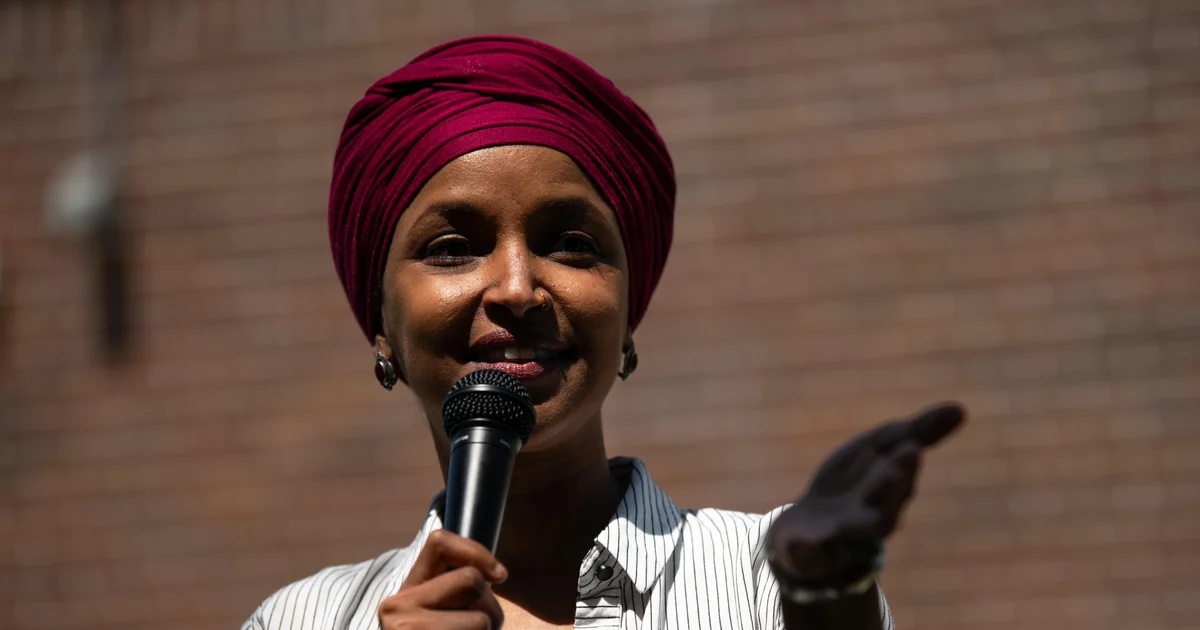
Lawyers for US Representative Ilhan Omar have accused the Justice Department of breaching a magistrate judge’s orders during the search of her Washington DC home, claiming agents failed to follow safeguards intended to protect her constitutional rights as a member of Congress.
In a letter sent on 16 October, attorneys Amy Jeffress and Joshua Matz demanded the immediate return of Ms Omar’s property and asked the department to preserve all video and audio recordings made during the operation.
They described the investigation as “vindictive, retributive, and politically motivated”, arguing that it threatened the separation of powers and violated the Minnesota Democrat’s rights.
The Justice Department rejected the allegations. A department spokesman said the letter was “riddled with false allegations and inaccuracies”, adding: “Our attorneys and law enforcement partners complied with all court orders and legal obligations, as they always do.”
The spokesman also accused the lawyers of using the dispute for publicity, saying: “Leaking a letter to the press right after sending it is not good faith. It is a publicity play.”
Dispute over safeguards during Ilhan Omar home search
Homeland Security Investigations agents searched Ms Omar’s home on Monday under a warrant issued as part of a criminal investigation into her family’s history, including possible fraud and false statements in immigration paperwork.
Her personal mobile phone was among the items seized. Grand jury subpoenas were also issued to some of her family members several days before the search.
The warrant was presented to a magistrate judge about a week before it was carried out. Prosecutors and the judge then engaged in extended discussions after concerns were raised that it did not include procedures to protect Ms Omar’s legislative privileges under the Constitution’s speech or debate clause.
That protection requires the executive branch, in a criminal investigation involving a sitting member of Congress, to allow the member to screen seized material for legislative privilege before it is reviewed by investigators. Prosecutors initially argued that the protection did not apply because the search took place at Ms Omar’s home rather than her congressional office.
Ms Omar’s lawyers allege that agents were required to notify both her and the House of Representatives’ Office of General Counsel when the warrant was executed, but failed to do so.
They also claim that agents prevented her from contacting her lawyer for more than an hour after the search began, despite an order requiring her and her counsel to be given a copy of the warrant at the outset.
The timing of the search and the grand jury subpoenas has prompted concern among former prosecutors. Justice Department guidelines state that prosecutors and agents should avoid overt investigative measures that could affect an election or give a candidate an advantage or disadvantage.
Ms Omar’s lawyers argued that the operation came unusually close to an election and wrote: “Historically, the Department has refrained from this type of investigative activity so close to an election, so as to avoid even the appearance of politically motivated law enforcement actions.”
They also said there was “no legitimate basis for any suggestion that she has violated any law concerning her citizenship status”, describing the case as arising from “a years-old, tired conspiracy theory concerning conduct stretching back decades.”
Ms Omar has frequently been criticised by President Trump and his allies, who have also made derogatory remarks about her Somali heritage and religion and repeatedly accused her of immigration fraud.
Markwayne Mullin, the Secretary of Homeland Security, referred publicly to the investigation in a podcast interview on Friday, calling it a “strong case”. He said multiple warrants had been served on Monday, that a judge had authorised the action and that investigators expected to present their case to a grand jury.
Federal officials rarely discuss ongoing criminal investigations in detail because of due process protections and grand jury secrecy rules.
