


Public housing tenants in Cloverdale, Western Australia, say alleged disruptive behaviour at a neighbouring property has left them feeling unsafe and driven one family to consider leaving the area.
Megan, whose name has been changed, moved into her small, well-kept home after spending time in a women’s refuge while escaping an abusive relationship. She said the local community had initially been friendly, with neighbours sharing parcels and gathering to mark the death of a dog.
She said the atmosphere changed after new tenants moved into the public housing property next door several years ago.
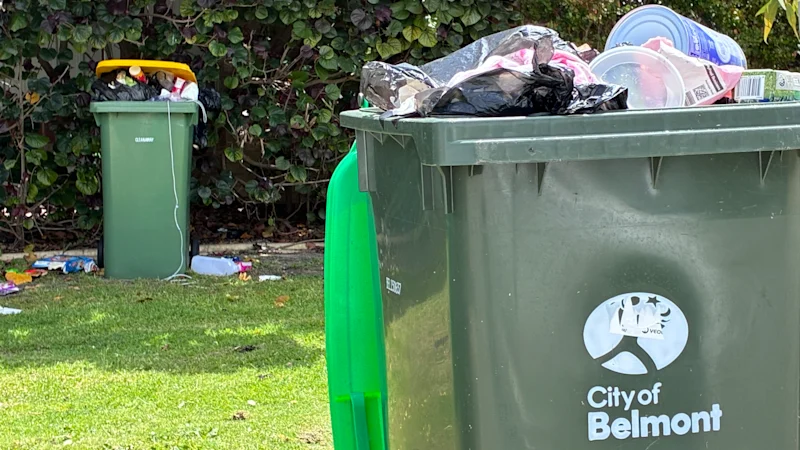
According to Megan, overflowing bins, sheets hung in the carport and unfamiliar men arriving at all hours became regular occurrences. She also said cars with missing numberplates or stripped paint were left outside, while drug use was sometimes visible on the street.
Neighbours have alleged that tenants at the property were involved in drug dealing, break-ins to cars and homes, and the abuse of children. Those claims have been reported to police and the Department of Housing and Works, although they have not been proven.
“There’s a little girl there who has some fair developmental problems,” Megan said. “The abuse [the tenant] is inflicting on her has had me in tears.”
She also recalled an incident in which a woman at the property attempted to climb the fence after believing Megan had been gossiping about her. The woman allegedly threatened to kill her, prompting Megan to call police.
Public housing complaints and police response
Brent, another neighbour whose name has been changed, said the situation had continued to deteriorate. He said people were frequently moving in and out of the property, and that four children were living in a two-bedroom home alongside visitors who stayed overnight.
“It’s not healthy,” he said. “I’ve got a baby who is two years old. I don’t want them seeing this.”
Brent said he had contacted the Department of Housing’s disruptive behaviour team about four or five times, but felt he had been discouraged from making a formal complaint and was repeatedly directed to police.
“It is absolutely frustrating … they demotivate you in any possible way from even talking to them,” he said.
He and Megan said they believed police and the department did not communicate effectively, making it difficult to deal with tenants accused of causing problems.
Megan said she had become reluctant to complain because of the stress involved. She has installed security cameras around her property and sometimes leaves to stay with a friend when the situation becomes overwhelming.
“I’ve given up a little bit,” she said. “I just try to make peace. I’ve also got a disability, so the stress of it all is just – to me – too much.”
She said she was concerned that people in greater need of public housing were missing out on homes. Megan pointed to her best friend, a single mother with a baby, as someone she believed would have valued such accommodation.
Brent said an older neighbour had also been forced to leave her home after its ceiling collapsed and was now struggling with the cost of renting elsewhere. He said neighbours had helped her with groceries because she could not afford to cover food and household bills.
Brent has decided to sell his family home and move away from the area, despite once hoping to remain there for the rest of his life.
“I would like to ask the Minister – would you live next to that sort of neighbour?” he said. “Would you raise your kids next to this neighbour, where you see antisocial behaviour day in day out, and drugs, and all this actually happening right in front of your house?”
Housing department says complaints must be reported
Housing Minister John Carey said residents needed to report problems directly to the department if action was to be taken.
“Our government is committed to integrating social and affordable housing across all communities, with a number of large scale build to rent projects underway in my electorate,” he said.
“We are the landlord for some of the most vulnerable in our society, and I expect all tenants to adhere to their obligations and respect their neighbours.”
Mr Carey said the Department of Housing and Works worked with tenants and external support agencies to manage tenancy issues and help people maintain their tenancies where possible.
“Complaints must be made to the department’s disruptive behaviour reporting line in order for any disruptive behaviour to be investigated,” he said.
He added that the department was committed to acting when behaviour was serious or ongoing, but said its powers were limited.
“The decision to evict ultimately sits with the magistrate, who will only grant an order for vacant possession if they are satisfied that there has been a breach of the tenancy agreement, and that the tenant has been given every opportunity to rectify the breach and has failed to do so,” he said.
“The department is not a law enforcement agency and any criminal behaviour should be reported to the police.”
