


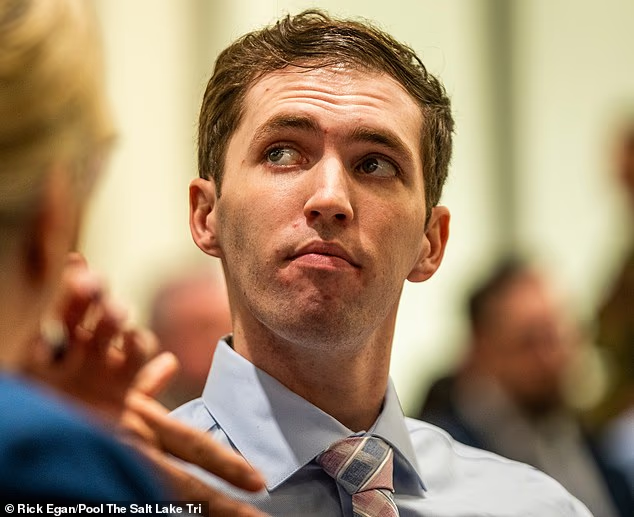
Tyler Robinson will stand trial for the alleged murder of conservative activist Charlie Kirk after a Utah judge ruled prosecutors had presented sufficient evidence to support an aggravated murder charge, leaving the death penalty available if he is convicted.
District Judge Tony Graf made the decision in Provo on Tuesday, 1 September 2026, following closing arguments in an unusually lengthy preliminary hearing. Robinson, 23, is accused of shooting Kirk in the neck during a Turning Point USA event at Utah Valley University on 10 September 2025.
Graf said the evidence, viewed in the light most favourable to the prosecution, supported a reasonable belief that Robinson was the person who shot Kirk. He also found probable cause for an allegation that the shooting knowingly endangered other people attending the event.
That finding is significant because it allows Utah County prosecutors to pursue the death penalty. Aggravated murder can also carry life imprisonment without parole, or a sentence of between 25 years and life, depending on the outcome of the case.
The judge ordered Robinson to stand trial on all seven counts before him. The defendant had previously denied the murder allegation, while his lawyers have sought to prevent the case from proceeding on a capital charge.
The case against Tyler Robinson
Prosecutors say Robinson fired a high-powered rifle from a rooftop towards Kirk as he addressed a crowd of more than 3,000 people. They argued that he must have known others were placed in danger when he took aim in the direction of the audience.
Ryan McBride, a deputy Utah County attorney, told the court that Robinson had returned to the campus after scouting possible vantage points and had changed into clothing that could conceal the weapon. Surveillance footage allegedly showed him reaching the rooftop before the shooting and fleeing moments afterwards.
The prosecution also relied on DNA evidence said to link Robinson to the suspected rifle and to a screwdriver found near the rooftop. The weapon was recovered wrapped in a towel in woodland close to the university.
Investigators further cited an inscription on a bullet allegedly found in the rifle which read, “Hey Fascist! CATCH!” They said the wording, alongside messages and a handwritten note attributed to Robinson, pointed to a political motive.
Prosecutors allege Robinson wrote that he had had enough of Kirk’s “hatred” and that he had the opportunity to “take out Charlie Kirk”. They also referred to evidence from Lance Twiggs, Robinson’s former partner and roommate, who told investigators that Robinson later said he wished he had not carried out the killing.
Robinson surrendered to police the day after the shooting. His lawyers have challenged the reliability of the DNA evidence and disputed the prosecution’s interpretation of the screwdriver, shooting targets and other material presented during the hearing.
Defence challenge to death penalty allegation
Defence attorney Staci Visser argued that the evidence did not establish the legal test required for the aggravated charge. She said Robinson had a specific target and that prosecutors had not shown he intended to threaten anyone else in the crowd.
The defence maintained that only one shot had been fired and that it struck the intended target. Prosecutors countered that firing a rifle into a gathering of thousands created an obvious and grave risk of further deaths, even if no other person was hit.
Kirk’s parents, Robert and Kathryn Kirk, attended the hearing, while his widow, Erika Kirk, sat beside them. In a statement, the family said the ruling marked an important step in their pursuit of justice, but added that every stage of the case carried the weight of the loss suffered by Kirk’s children.
The case will now move towards trial, although further disputes over expert evidence, ballistics, DNA testing and the possible capital sentence are expected before a jury is selected.
