


The cost of Australia’s Snowy 2.0 pumped hydro project has surged to a potential $25 billion, while completion has been delayed until late 2029 as construction teams confront difficult geology and rising building costs.
Snowy Hydro has revised the project’s estimated cost from $12 billion to $22.2 billion, with a contingency allowance taking the possible final bill to $25 billion. The figure is more than four times the original estimate for the scheme.
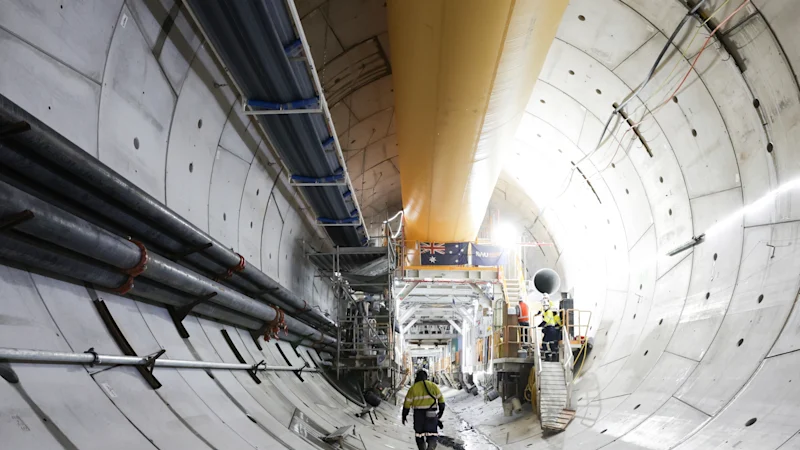
The 2200-megawatt project, being built beneath the Snowy Mountains in New South Wales, requires 27 kilometres of tunnels beneath Kosciuszko National Park. It is intended to store electricity by pumping water uphill when supply is plentiful, then releasing it through turbines when demand rises.
Energy planners regard Snowy 2.0 as a major part of Australia’s transition away from ageing coal-fired power stations. The project is designed to provide enough stored energy to power three million homes for a week and support the electricity grid when wind and solar generation is low.
When the scheme was conceived in 2017, then prime minister Malcolm Turnbull said it could be completed for $2 billion within four years. By the time it received final investment approval in 2018, the projected cost had risen to almost $6 billion.
Snowy Hydro chief executive Dennis Barnes described the latest increase as “incredibly disappointing”, but said the project’s importance to energy security remained undiminished.
“The scale of Snowy 2.0’s energy storage is world-leading – more than half of the total energy storage the grid needs by 2050 will come from Snowy 2.0 alone,” he said.
Mr Barnes said the project’s long-duration storage would act as “the grid’s insurance policy against multi-day wind and solar droughts”, helping to reduce the risk of blackouts and price spikes.
He attributed most of the cost increase to “design immaturity”, arguing that insufficient planning at the project’s outset had concealed the scale and geotechnical difficulty of the work. Snowy Hydro reset its contract with principal construction contractor Future Generation Joint Venture in 2023, after moving away from a fixed-price arrangement.
Mr Barnes said the change had protected the project from an even larger increase. “Moving from a fixed-price contract, which was never suitable for such scale, uniqueness and complexity, has protected the project from an even greater cost increase,” he said.
Government and opposition clash over Snowy 2.0 cost blowout
Federal Energy Minister Chris Bowen and Finance Minister Katy Gallagher blamed the previous Coalition government for approving plans that were not sufficiently developed.
They said the revised schedule and cost reflected construction-sector pressures and major geological problems, made worse by the project’s design immaturity. The ministers said the government remained focused on securing the best outcome for taxpayers, energy consumers and the national grid.
They also pointed to a new independent economic assessment which found that Snowy 2.0 would increase access to lower-cost renewable energy and reduce the need for expensive gas generation during periods of high evening demand.
Opposition energy spokesman Dan Tehan called on Mr Bowen to apologise and said he should resign or be removed as energy minister, arguing that the cost increases had occurred under his watch.
The latest blowout comes as federal and state governments depend on new renewable generation and storage to replace coal-fired power stations scheduled to close. The Australian Energy Market Operator and major electricity companies say wind and solar backed by gas, batteries and pumped hydro offer the cheapest route to maintaining reliability.
Wholesale electricity prices across eastern Australia fell by 27 per cent year-on-year in the September quarter, according to data due to be released by the market operator. AEMO said the growing use of grid-scale batteries was helping shift lower-cost renewable power from the daytime into evening demand peaks.
